Traveler’s Prayer in Hebrew
Embark on a journey of spiritual serenity with the Traveler’s Prayer in Hebrew, known as Tefilat HaDerech. This ancient Jewish prayer offers a heartfelt plea for divine protection and guidance for all travelers, whether by land, air, or sea. Learn its timeless words and embrace a sense of peace on every adventure, connecting with a tradition spanning centuries that brings comfort and mindfulness to your travels.
Every journey, whether it’s a quick trip across town or an epic adventure across continents, begins with a mix of excitement and perhaps a touch of apprehension. We pack our bags, check our tickets, and mentally prepare for the road ahead. But beyond the logistical preparations, many cultures and faiths have traditions that offer a spiritual layer of protection and peace for those on the move. For Jewish people, one of the most cherished and ancient of these traditions is the Traveler’s Prayer in Hebrew, known as Tefilat HaDerech.
Imagine standing on the cusp of a new adventure, a deep breath filling your lungs as you prepare to leave the familiar behind. It’s in these moments that the Traveler’s Prayer in Hebrew becomes more than just words; it transforms into a heartfelt plea, a spiritual anchor, and a source of profound comfort. This short yet powerful prayer has accompanied generations of travelers, offering solace and strength as they navigated the unknown, trusting in a higher power for safe passage and a peaceful return.
In this comprehensive article, we’ll embark on our own journey to explore the rich history, deep meaning, and practical application of the Traveler’s Prayer in Hebrew. We’ll delve into its beautiful text, learn how and when to recite it, and understand why this timeless tradition continues to resonate with modern travelers today, offering a sense of peace and protection for anyone hitting the road, sky, or sea.
Key Takeaways
- Tefilat HaDerech’s Essence: The Traveler’s Prayer in Hebrew, ‘Tefilat HaDerech,’ is an ancient Jewish supplication for safe passage during any journey.
- Core Purpose: It is recited to seek divine protection, guidance, and peace, asking for safe travel and a peaceful return home.
- Optimal Recitation Timing: Traditionally, it is recited at the very beginning of a journey, specifically after leaving the immediate city limits or populated area.
- Traditional Language: The prayer is historically and most meaningfully recited in its original Hebrew, though translations are available for understanding.
- Spiritual Comfort: Reciting the Traveler’s Prayer in Hebrew offers profound spiritual comfort, fostering a sense of connection to tradition and a mindful awareness of one’s journey.
- Universal Resonance: While deeply rooted in Jewish faith, its core message of seeking safety and well-being resonates universally with travelers of all backgrounds.
Quick Answers to Common Questions
What is the main purpose of the Traveler’s Prayer in Hebrew?
The main purpose of the Traveler’s Prayer in Hebrew, or Tefilat HaDerech, is to seek divine protection and guidance for a safe and peaceful journey, asking for rescue from potential dangers and a secure return home.
When should one recite Tefilat HaDerech?
One should recite Tefilat HaDerech at the beginning of a journey, traditionally after leaving the city limits or about 3.5 miles (a parsa) outside of an inhabited area. In modern times, it’s often recited once the trip truly begins, like in a car or at the airport.
Is it mandatory to recite the Traveler’s Prayer in Hebrew?
For religiously observant Jews, reciting the Traveler’s Prayer in Hebrew is a cherished and highly recommended custom, though it may not be strictly mandatory in the same way as daily prayers. It is seen as a vital spiritual safeguard.
Can women recite the Traveler’s Prayer in Hebrew?
Yes, women are encouraged to recite the Traveler’s Prayer in Hebrew, just as men are. Its message of seeking divine protection is equally relevant and beneficial for all Jewish travelers.
What if I don’t know Hebrew?
If you don’t know Hebrew, you can still recite the Traveler’s Prayer using a transliterated version (Hebrew sounds written in English letters) or even recite it in English, keeping the intention in mind. However, reciting the Traveler’s Prayer in Hebrew itself is considered ideal.
📑 Table of Contents
What is Tefilat HaDerech? The Essence of the Traveler’s Prayer
At its heart, the Traveler’s Prayer in Hebrew, or Tefilat HaDerech (תפילת הדרך), simply means “Prayer of the Way” or “Prayer for the Road.” It’s a special supplication recited by Jewish individuals before embarking on a journey. This isn’t just any prayer; it’s a specific, time-honored request to God for protection from various dangers that can be encountered during travel, and for a safe, successful return home. It reminds us that while we plan and prepare, there are elements beyond our control, and a gentle reminder to place our trust in divine providence.
Historical Roots and Rabbinic Wisdom
The practice of reciting the Traveler’s Prayer in Hebrew is incredibly ancient, with its origins dating back to the Talmudic period, around the 3rd to 6th centuries CE. Back then, travel was far more perilous than it is today. Journeys were often undertaken on foot, horseback, or by caravan, exposing travelers to natural dangers like harsh weather, wild animals, and difficult terrain, as well as human dangers such as bandits and thieves. The Sages of the Talmud, recognizing these inherent risks, instituted this prayer as a way for travelers to seek divine mercy and protection.
The rabbis understood the psychological and spiritual needs of travelers. They knew that facing the unknown could be daunting, and a structured prayer provided both comfort and a sense of connection to God. This tradition has been passed down through generations, becoming an integral part of Jewish life, ensuring that the Traveler’s Prayer in Hebrew remains a cherished practice for millions around the globe, regardless of where their journey might take them.
The Core Text and its Translation
The text of the Traveler’s Prayer in Hebrew is concise yet remarkably comprehensive, covering various aspects of potential danger and desired well-being. It is typically recited while standing, though if circumstances don’t allow, one can sit. The prayer generally begins with a blessing and then proceeds with specific requests for safety. The power of this prayer lies not only in its words but also in the heartfelt intention behind them, making the Traveler’s Prayer in Hebrew a profound experience.
The Hebrew Text and its Pronunciation
Understanding the actual words of the Traveler’s Prayer in Hebrew can deepen its meaning and impact for you. While many people recite it phonetically, having a grasp of the original Hebrew script and its sounds can be a truly enriching experience. Let’s break down this beautiful prayer, offering both the Hebrew script, a clear transliteration, and an accessible English translation. This makes the Traveler’s Prayer in Hebrew more approachable for everyone.
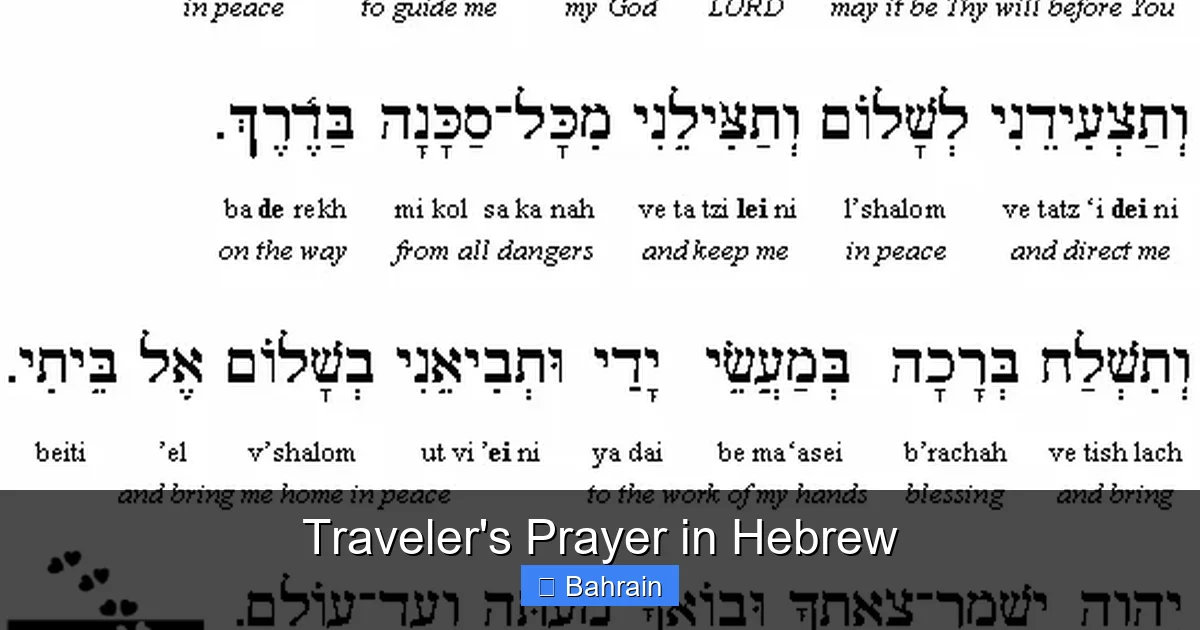
Visual guide about Traveler’s Prayer in Hebrew
Image source: hebrew4christians.com
The Hebrew Script and its Beauty
The Hebrew language itself is ancient and sacred. Each letter has a unique form and often symbolic meaning. Reciting the Traveler’s Prayer in Hebrew connects you directly to centuries of tradition and the spiritual heritage of the Jewish people. Here is the most commonly recited version:
יְהִי רָצוֹן מִלְּפָנֶיךָ, ה’ אֱלֹהֵינוּ וֵאלֹהֵי אֲבוֹתֵינוּ, שֶׁתּוֹלִיכֵנוּ לְשָׁלוֹם, וְתַצְעִידֵנוּ לְשָׁלוֹם, וְתַדְרִיכֵנוּ לְשָׁלוֹם, וְתִגָּלֵנוּ לְחַיִּים וּלְשִׂמְחָה וּלְשָׁלוֹם, וְתַחֲזִירֵנוּ לְשָׁלוֹם. וְתַצִּילֵנוּ מִכָּל יָדוֹ שֶׁל אָדָם וְחַיָּה רָעָה וּמִכָּל מִינֵי פּוּרְעָנִיּוֹת הַמִּתְרַגְּשׁוֹת לָבוֹא לָעוֹלָם, וּמִכָּל מִינֵי פֻּרְעָנֻיּוֹת וְחֳלָיִים. וְתִשְׁלַח בְּרָכָה בְּכָל מַעֲשֵׂה יָדֵינוּ, וְתִתֵּן חֵן וְחֶסֶד וְרַחֲמִים בְּעֵינֶיךָ וּבְעֵינֵי כָל רוֹאֵינוּ, וְתִשְׁמְרֵנוּ וְתַצִּילֵנוּ מִכָּל דָּבָר רָע, וְתַגִּיעֵנוּ לִמְחוֹז חֶפְצֵנוּ לְחַיִּים וּלְשִׂמְחָה וּלְשָׁלוֹם. כִּי אֵל שׁוֹמֵעַ תְּפִלַּת כָּל פֶּה אַתָּה. בָּרוּךְ אַתָּה ה’, שׁוֹמֵעַ תְּפִלָּה.
Pronunciation Guide for Beginners
Don’t worry if Hebrew looks intimidating! Here’s a simplified transliteration and English translation to help you get started with the Traveler’s Prayer in Hebrew. Practice saying it aloud, and soon it will feel natural:
Transliteration:
Yehi ratzon milfanecha, Adonai Eloheinu v’Elohei avoteinu, shetolikheinu l’shalom, v’tatz’ideinu l’shalom, v’tadrikheinu l’shalom, v’tag’ieinu l’chayim ul’simcha ul’shalom, v’taz’zireinu l’shalom. V’tatzileinu mikol yad adam v’chaya ra’a umikol minei puraniot hamitragshot lavo la’olam, umikol minei puranuyot v’cholayim. V’tishlach brachah b’chol ma’aseh yadeinu, v’titen chen v’chesed v’rachamim b’einecha uv’einei kol ro’einu, v’tishmereinu v’tatzileinu mikol davar ra, v’tagieinu limchoz cheftzeinu l’chayim ul’simcha ul’shalom. Ki Eil shome’a tefilat kol peh Atah. Baruch Atah Adonai, shome’a tefilah.
English Translation:
“May it be Your will, Adonai, our God and God of our fathers, that You lead us toward peace, guide our footsteps toward peace, direct us toward peace, and bring us to life, joy, and peace, and bring us back in peace. May You rescue us from the hand of every foe, from ambush, from wild beasts on the road, and from all types of punishments that gather to come to the world. May You send blessing in all the work of our hands, and grant us grace, kindness, and mercy in Your eyes and in the eyes of all who see us, and may You guard us and rescue us from every evil thing, and bring us to our desired destination for life, joy, and peace. For You are God who hears the prayer of every mouth. Blessed are You, Adonai, who hears prayer.”
When and How to Recite the Traveler’s Prayer
Reciting the Traveler’s Prayer in Hebrew isn’t just about uttering words; it’s about connecting with a tradition and setting an intention for your journey. There are specific guidelines and customs that help enhance the prayer’s meaning and effectiveness. Knowing these practices ensures that you observe this cherished custom correctly, fostering a deeper spiritual connection with your travels.
Timing Your Prayer: Before You Go
The optimal time to recite the Traveler’s Prayer in Hebrew is at the very beginning of your journey. Traditionally, this means once you have left the populated area of your city or town, specifically after traveling about 3.5 miles (a *parsa* in Hebrew measurement). This signifies that you are truly “on the road.” However, in modern times, with rapid travel, many people choose to recite it once they are in their car, at the airport gate, or just before their train departs. The key is to recite it when the journey truly begins for you, before facing its potential challenges. You only need to say the Traveler’s Prayer in Hebrew once per journey, even if you make stops along the way, as long as the entire trip is considered one continuous journey.
Who Should Recite It?
Anyone who identifies as Jewish and is embarking on a journey can and should recite the Traveler’s Prayer in Hebrew. This includes men and women, young and old. If traveling in a group, one person can recite the prayer aloud, and the others can answer “Amen.” This communal recitation adds another layer of meaning, reinforcing the idea of shared protection and solidarity among travelers. It’s a beautiful moment of collective intention before a trip.
Conditions and Customs: From Solo Trips to Family Journeys
- Standing: Ideally, the Traveler’s Prayer in Hebrew is recited while standing. However, if you are in a situation where standing is not possible or safe (e.g., on a moving bus or plane), you can recite it while seated. The intention and focus are what truly matter.
- Intention (Kavanah): As with all Jewish prayers, reciting the Traveler’s Prayer in Hebrew with sincere intention (kavanah) is paramount. Don’t just rush through the words; take a moment to reflect on your journey, the potential risks, and your desire for divine protection.
- Distance: The prayer is generally recited for journeys that are more than 72 minutes (approximately 3-4 miles or 5.7 km) outside of an inhabited area. For very short trips, it’s not strictly required, but many still choose to say it for added peace of mind.
- Flexibility: While the traditional guidelines are there, the essence of the prayer is to seek protection. So, if you forget to say it at the exact moment you leave the city limits, you can still recite it a little later, as long as you are still early in your journey. The spirit of the Traveler’s Prayer in Hebrew prioritizes seeking divine help over rigid adherence to timing.
The Deeper Meaning and Spiritual Significance
Beyond its literal words, the Traveler’s Prayer in Hebrew carries a profound spiritual weight. It’s not just a checklist item before a trip; it’s an act of faith, a moment of mindfulness, and a way to connect with ancient wisdom. This prayer enriches the travel experience, transforming it from a mere physical movement into a spiritual journey. It emphasizes reliance on a higher power, bringing a sense of calm and perspective to our adventures, whether we’re traveling locally or venturing to far-off lands like Bahrain.
A Plea for Divine Protection
The most immediate and obvious meaning of the Traveler’s Prayer in Hebrew is its role as a plea for divine protection. It acknowledges that human efforts, however meticulous, are not foolproof. We might plan every detail, but unforeseen circumstances can always arise. By reciting the prayer, we humbly acknowledge God’s ultimate control and ask for His benevolent guardianship. This surrender to a higher power can be incredibly liberating, alleviating anxiety and fostering a sense of peace, knowing that we are placing ourselves in capable hands.
Cultivating Mindfulness on the Go
In our fast-paced world, travel can often feel rushed and stressful. The Traveler’s Prayer in Hebrew offers a precious moment to pause, breathe, and be present. It encourages mindfulness, prompting us to consider the journey ahead, to appreciate the privilege of travel, and to be aware of our surroundings. This brief spiritual interlude before a journey can help set a positive tone, fostering a sense of gratitude for the ability to travel and for the safety we hope to experience.
Connecting with Tradition and Community
Reciting the Traveler’s Prayer in Hebrew links you to an unbroken chain of tradition spanning thousands of years. You become part of a global community of Jewish travelers who, throughout history, have turned to these same words for comfort and strength. Whether you’re a seasoned traveler or embarking on your first solo trip, this connection provides a powerful sense of belonging and continuity. It’s a reminder that you’re never truly alone on your journey, spiritually speaking.
Integrating Tefilat HaDerech into Modern Travel
While the Traveler’s Prayer in Hebrew is ancient, its relevance is timeless. In an age of air travel, high-speed trains, and global connectivity, the underlying need for safety, peace of mind, and divine guidance remains as strong as ever. Integrating this beautiful prayer into your modern travel routine is easier than you might think, and it can profoundly enhance your overall experience. Whether you’re heading to a bustling city or a serene desert landscape, the Traveler’s Prayer in Hebrew offers a consistent source of comfort.
Digital Aids and Accessibility
Gone are the days when you needed a physical prayer book to carry the Traveler’s Prayer in Hebrew with you. Today, the prayer is readily available on numerous digital platforms:
- Smartphone Apps: Many Jewish prayer apps include Tefilat HaDerech, often with Hebrew text, transliteration, and translation.
- Websites: A quick search online will yield the full text and often audio recordings to help with pronunciation.
- Print-outs: For those who prefer a physical copy, easily printable versions can be carried in a wallet or passport holder.
These resources make it incredibly convenient to access the Traveler’s Prayer in Hebrew, no matter where you are in the world.
For Travelers in Diverse Settings
The universal human desire for safety transcends geographical and cultural boundaries. While the Traveler’s Prayer in Hebrew is rooted in Jewish tradition, its sentiment resonates widely. Whether you are traveling for business to a vibrant economic hub like Bahrain, exploring historical sites, or visiting family across the globe, the act of seeking protection for your journey is a deeply human one. For Jewish individuals in diverse communities, the Traveler’s Prayer in Hebrew serves as a private yet powerful ritual, affirming their faith and seeking blessings for their travels, no matter how near or far, or how familiar or exotic the destination. It’s a personal moment of reflection that can be observed respectfully in any environment.
Beyond the Words: A Mindset of Gratitude
Ultimately, incorporating the Traveler’s Prayer in Hebrew into your travel routine is about more than just reciting words. It’s about cultivating a mindset. It encourages:
- Gratitude: Being thankful for the opportunity to travel and the anticipation of new experiences.
- Awareness: Being present and mindful of your surroundings, appreciating the journey itself.
- Trust: Placing trust in a higher power for protection, which can help alleviate travel anxieties.
This holistic approach makes the Traveler’s Prayer in Hebrew a powerful tool for enhancing not just safety, but also the joy and spiritual fulfillment of your travels.
Conclusion
The Traveler’s Prayer in Hebrew, Tefilat HaDerech, stands as a beautiful testament to the enduring human need for safety, comfort, and divine connection during life’s many journeys. From ancient caravans facing unpredictable dangers to modern travelers navigating bustling airports, the essence of this prayer remains unchanged: a heartfelt plea for protection and a peaceful return home. It’s a bridge connecting us to generations of travelers who found solace in its words, and a reminder that even in our most independent moments, we are part of a larger, spiritual tapestry.
Whether you’re embarking on a short day trip or an extensive international adventure, taking a moment to recite the Traveler’s Prayer in Hebrew can transform your journey. It offers not just a spiritual safeguard, but also a precious opportunity for mindfulness, gratitude, and a profound connection to your heritage. May your travels always be blessed with peace, safety, and joy, guided by the timeless wisdom of the Traveler’s Prayer in Hebrew. Safe travels, and may you always return home in peace.
Frequently Asked Questions
Is the Traveler’s Prayer only for long journeys?
While traditionally recited for journeys of more than 3-4 miles outside a populated area, many people choose to recite the Traveler’s Prayer in Hebrew for shorter trips as well, especially if they feel a need for extra protection or comfort. The spirit of the prayer encourages seeking safety for any travel.
Can I recite Tefilat HaDerech on public transport?
Yes, you can absolutely recite Tefilat HaDerech on public transport. While standing is ideal, if you are on a bus, train, or airplane, you can respectfully recite the Traveler’s Prayer in Hebrew while seated, focusing on your intention.
Are there different versions of the Traveler’s Prayer in Hebrew?
While the core text of the Traveler’s Prayer in Hebrew is largely standardized, there might be slight variations in specific phrases or additions found in different prayer books or traditions (e.g., Ashkenazi vs. Sephardic). However, the main body of the prayer remains consistent.
What does “Tefilat HaDerech” mean?
“Tefilat HaDerech” is a Hebrew phrase that directly translates to “Prayer of the Way” or “Prayer for the Road.” It perfectly encapsulates its purpose as a prayer for safe travel and guidance.
Do I need a prayer book to recite it?
No, you do not necessarily need a prayer book. While many prayer books (siddurim) contain the Traveler’s Prayer in Hebrew, you can find the text readily available online, in apps, or simply memorize it to recite it anywhere, anytime you need.
Can non-Jews recite the Traveler’s Prayer in Hebrew?
While the Traveler’s Prayer in Hebrew is a Jewish prayer with specific theological underpinnings, its universal message of seeking safety and divine protection resonates with many people. Non-Jews can certainly read or recite the prayer as a personal spiritual practice, respecting its origins and meaning.