5th Wheel Vs Travel Trailer
Embarking on an RV adventure means facing a big decision: 5th wheel vs travel trailer. While both offer mobile living, 5th wheels typically provide superior towing stability and a more spacious, residential feel due to their unique hitch and split-level design. Travel trailers, on the other hand, offer greater versatility with your tow vehicle and a lower initial cost, making them ideal for a wider range of budgets and travel styles. Ultimately, your best choice hinges on your budget, towing capacity, desired comfort, and how you plan to use your RV.
Key Takeaways
- Towing Experience: 5th wheels generally offer a more stable and less fatiguing towing experience due to their hitch placement over the truck’s rear axle, while travel trailers require careful weight distribution and sway control.
- Living Space: 5th wheels often provide more interior height, larger living areas, and distinct private spaces with their split-level design, giving a more residential feel compared to the single-level layout of most travel trailers.
- Tow Vehicle Requirements: 5th wheels exclusively require a pickup truck with a specific 5th wheel hitch, often a heavy-duty model. Travel trailers are more versatile, able to be towed by a wider range of SUVs and trucks, provided they meet the weight capacity.
- Cost Considerations: Travel trailers typically have a lower entry price point, both for the RV and the required tow vehicle. 5th wheels, due to their size and features, generally represent a higher initial investment.
- Maneuverability: Despite their larger size, 5th wheels can be surprisingly easier to maneuver and back up due to the pivot point being directly over the truck’s axle. Travel trailers, with their extended hitch, can feel longer and trickier for some to manage.
- Versatility of Tow Vehicle: With a travel trailer, you can unhitch at your campsite and use your tow vehicle for local excursions without the RV. A 5th wheel hitch occupies the truck bed, limiting its use for other cargo when towing.
Quick Answers to Common Questions
Which is easier to tow, a 5th wheel or a travel trailer?
Generally, a 5th wheel is considered easier and more stable to tow due to its hitch point being over the truck’s rear axle, which significantly reduces sway compared to a travel trailer.
Can I tow a 5th wheel with an SUV?
No, 5th wheels specifically require a pickup truck equipped with a special 5th wheel hitch installed in the truck bed; SUVs are not capable of towing a 5th wheel.
Are 5th wheels more expensive than travel trailers?
Typically, 5th wheels have a higher purchase price than most travel trailers due to their larger size, more complex construction, and often more luxurious amenities, plus the added cost of a heavy-duty tow truck.
Which offers more living space: 5th wheel or travel trailer?
5th wheels generally offer more interior living space, higher ceilings, and a more residential feel with their split-level design, making them a popular choice for full-time living.
Can I use my tow vehicle for daily driving if I have a 5th wheel?
Yes, but the 5th wheel hitch will occupy a significant portion of your truck’s bed, potentially limiting its use for other cargo, and you’ll be driving a large truck daily.
📑 Table of Contents
5th Wheel Vs Travel Trailer
So, you’ve caught the RV bug? That incredible feeling of freedom, hitting the open road, waking up to new scenery every day – it’s truly special! But before you start packing your bags and dreaming of endless horizons, there’s a big decision waiting: are you going to opt for a 5th wheel or a travel trailer? This isn’t just about picking a design; it’s about choosing a lifestyle, a towing experience, and a home on wheels that perfectly fits your adventures. It can feel a bit overwhelming, right?
Don’t worry, you’re not alone! Many aspiring RVers find themselves pondering the pros and cons of these two popular choices. Both a 5th wheel and a travel trailer offer the joy of mobile living, but they go about it in very different ways. Each has its unique characteristics, from how it hitches to your vehicle to the kind of interior space it provides, and even the type of adventures it’s best suited for. Understanding these differences is key to making a choice you’ll be happy with for years to come.
In this comprehensive guide, we’re going to break down everything you need to know about the 5th wheel vs travel trailer debate. We’ll explore towing experiences, delve into interior layouts, compare costs, and discuss how each type of RV fits into different camping styles. By the end, you’ll have a clear picture of which option might be your perfect travel companion, helping you hit the road with confidence and excitement!
Understanding the Basics: What Are They?
Before we dive deep into the comparison, let’s get a clear understanding of what a 5th wheel and a travel trailer actually are. They both fall under the umbrella of “towable RVs,” meaning they need another vehicle to pull them, but that’s where many of the similarities end.
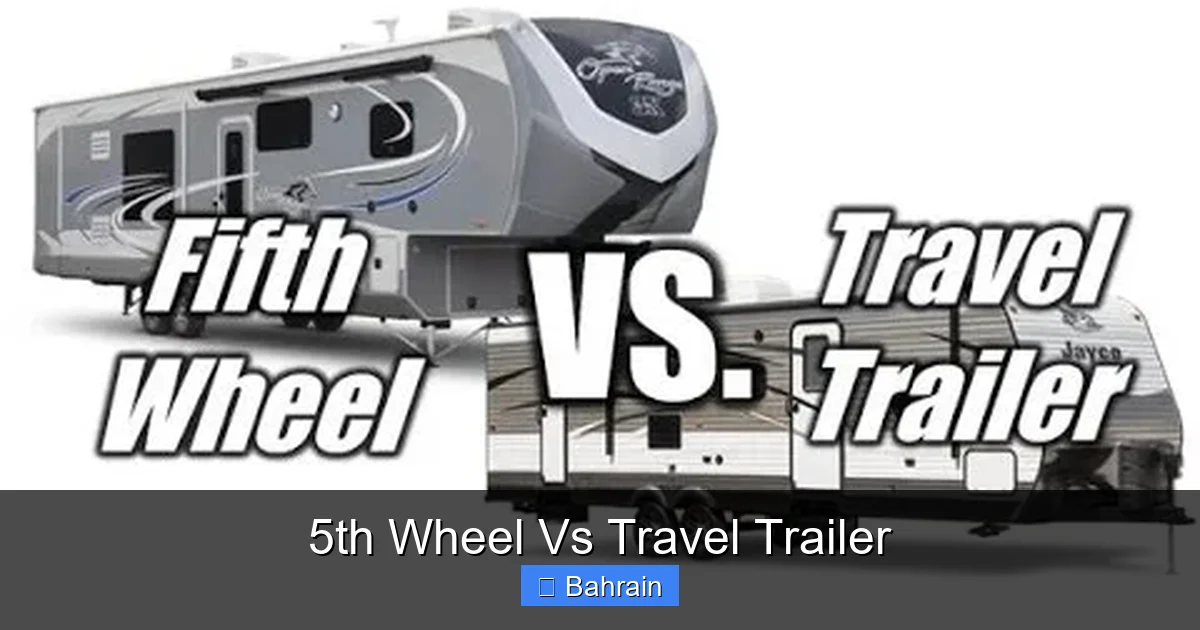
Visual guide about 5th Wheel Vs Travel Trailer
Image source: i.ytimg.com
What is a 5th Wheel?
A 5th wheel gets its distinctive name from its unique hitching mechanism. Instead of connecting to a bumper hitch or a receiver on the rear of your tow vehicle, a 5th wheel utilizes a special “fifth wheel hitch” that sits directly in the bed of a pickup truck, usually centered over the rear axle. This type of hitch is similar to those found on semi-trucks, creating a more secure and integrated connection.
The design of a 5th wheel is also quite distinct. They typically feature a raised forward section that extends over the truck’s bed, providing a separate bedroom or living area. This split-level design often allows for higher ceilings in the main living space and a more residential feel. 5th wheels are generally larger and heavier than most travel trailers, offering more square footage, storage, and amenities.
What is a Travel Trailer?
A travel trailer, on the other hand, is arguably the most common type of towable RV. It connects to your tow vehicle using a standard hitch receiver mounted on the rear of your vehicle, such as a bumper-pull hitch or a weight distribution hitch. This versatility means they can be towed by a wider range of vehicles, from larger SUVs to various sizes of pickup trucks, depending on the trailer’s weight.
Travel trailers come in an astonishing array of sizes, from tiny teardrops and pop-ups that can be pulled by a small SUV, to large, multi-axle units that rival the length of some 5th wheels. They are characterized by their single-level interior floor plan, offering a consistent height throughout the living space. Their diversity in size and style makes them a popular choice for many different types of travelers and budgets.
Towing Experience: Stability, Maneuverability, and Safety
One of the most significant differences between a 5th wheel and a travel trailer lies in the towing experience. This isn’t just about getting from point A to point B; it’s about comfort, confidence, and safety on the road.
5th Wheel Towing Advantages
Because the 5th wheel hitch sits directly over the rear axle of the pickup truck, the weight of the trailer is distributed more effectively. This creates a much more stable towing platform. RVers often describe towing a 5th wheel as feeling more “connected” to the truck, almost like driving a very long single vehicle rather than pulling a separate unit. This connection significantly reduces sway, which is the side-to-side motion that can be unnerving and even dangerous, especially in windy conditions or when passed by large trucks.
The reduced sway and enhanced stability translate into a more relaxed and less fatiguing towing experience, particularly on long journeys. You’ll often find that 5th wheel owners boast about how easily their rigs track behind their trucks. This superior stability is a major selling point for those who plan extensive travel or live in their RVs full-time.
Travel Trailer Towing Considerations
Travel trailers, with their hitch point at the very rear of the tow vehicle, are more susceptible to sway. This doesn’t mean they are inherently unsafe, but it does mean that proper setup and equipment are crucial. A quality weight distribution hitch (WDH) is almost always recommended, if not required, for travel trailers. A WDH helps distribute the trailer’s tongue weight more evenly across the axles of both the tow vehicle and the trailer, improving stability and handling.
Additionally, sway control devices are often integrated into WDHs or can be added separately. These devices help dampen any side-to-side motion. While these tools greatly enhance safety, towing a travel trailer can still feel less planted than a 5th wheel, especially in adverse conditions. The longer distance between the hitch and the tow vehicle’s rear axle can create a longer “lever arm” effect, amplifying any sway.
Maneuverability
Surprisingly, despite their often larger size, 5th wheels can be easier to maneuver and back up for many drivers. The pivot point for a 5th wheel is directly above the truck’s rear axle, which makes the trailer respond more intuitively to steering inputs. When you turn the truck, the trailer follows a tighter arc, making sharp turns and parking in tight spots less daunting. Backing up, too, tends to be more straightforward because the trailer mirrors the truck’s movements more closely.
Travel trailers, with their extended A-frame tongue, have a pivot point further behind the tow vehicle. This creates a longer overall length when coupled, which can make backing up and tight turns more challenging for some drivers. It requires a bit more practice and understanding of how the trailer will react to steering inputs. However, with practice, many travel trailer owners become quite adept at maneuvering their rigs.
Interior Living Space and Amenities
When you’re comparing 5th wheel vs travel trailer, the interior living space is a huge factor. After all, this will be your home away from home, or even your full-time home!
5th Wheel Interior Design
The defining feature of a 5th wheel’s interior is its split-level design. The raised front section that extends over the truck bed almost always houses the main bedroom, giving it a private, elevated feel, often with higher ceilings than you might expect. This distinct separation of spaces can make a 5th wheel feel more like a traditional house, offering a clear division between the sleeping area, living room, and kitchen.
Thanks to their generally taller stature, 5th wheels often boast higher interior ceilings throughout, especially in the main living areas. This openness can make the space feel much larger and less confined. You’ll also frequently find more extensive storage options, larger kitchens with residential-sized appliances, and bigger bathrooms in 5th wheels, making them very appealing for longer trips or full-time living. Many high-end 5th wheels even feature multiple slides, expanding the living space significantly when parked.
Travel Trailer Interior Design
Travel trailers, by contrast, typically feature a single-level floor plan from front to back. This creates a continuous, unbroken living space which some people prefer for its open feel. While they may not have the elevated bedroom of a 5th wheel, travel trailers come in an incredible variety of layouts and sizes. You can find everything from small, compact units designed for solo adventurers to large bunkhouse models perfect for families.
Modern travel trailers are packed with amenities, offering comfortable living rooms, well-appointed kitchens, and comfortable bedrooms. While ceiling heights might be slightly lower than in a 5th wheel, clever design and features like panoramic windows can still make the interior feel spacious and inviting. They often excel at offering innovative floor plans that maximize every inch, from convertible dinettes to efficient bathroom designs. The single-level design can also be advantageous for accessibility.
Comparing Specific Features
- Kitchens: 5th wheels often have larger, more residential-style kitchens with ample counter space, full-size refrigerators, and larger pantries. Travel trailers also offer excellent kitchens, but they might be more compact, especially in smaller models.
- Bathrooms: Many 5th wheels feature full-sized bathrooms with spacious showers, sometimes even a separate tub. Travel trailers range from wet baths in smaller units to generous dry baths in larger models, but they may not always match the sheer size of a 5th wheel’s facilities.
- Bedrooms: The elevated bedroom in a 5th wheel usually allows for a permanent queen or king-sized bed with walk-around space. Travel trailers also offer comfortable bedrooms, but in many models, the bed might be closer to a wall or part of a convertible space to save room.
- Storage: Due to their larger size and design, 5th wheels generally provide more interior and exterior storage space, including basements and numerous cabinets. Travel trailers, while innovative with storage solutions, might have less overall capacity, depending on the model.
Cost Comparison: Purchase Price, Maintenance, and Setup
Budget is almost always a deciding factor when purchasing an RV. The 5th wheel vs travel trailer comparison isn’t just about the initial sticker price, but also the total cost of ownership, including the tow vehicle, maintenance, and insurance.
Initial Purchase Price
Generally speaking, travel trailers tend to have a lower entry price point than 5th wheels. You can find small, basic travel trailers for relatively modest sums, making RVing accessible to a wider range of budgets. Even larger, well-equipped travel trailers can sometimes be more affordable than a comparably sized 5th wheel.
5th wheels, due to their more complex construction, larger size, and often more luxurious amenities, typically command a higher price tag. They are often seen as a step up in the RV world, and their pricing reflects that. However, within both categories, there’s a huge range, from entry-level models to high-end luxury rigs, so it’s always possible to find exceptions.
Towing Vehicle Cost
This is a critical consideration. A 5th wheel exclusively requires a pickup truck, and often a heavy-duty (e.g., F-250/350, Ram 2500/3500, Silverado/Sierra 2500/3500) model, especially for larger units. These trucks are significantly more expensive to purchase, operate, and maintain than smaller vehicles. You also need to factor in the cost of the 5th wheel hitch itself, which can range from a few hundred to a couple of thousand dollars, plus installation.
Travel trailers offer more flexibility. Depending on the trailer’s weight, you might be able to tow it with an existing large SUV, a minivan, or a half-ton pickup truck (e.g., F-150, Ram 1500, Silverado/Sierra 1500). If you already own a capable vehicle, this can be a huge saving. If you need to buy a new tow vehicle, a half-ton truck or large SUV is generally less expensive than a heavy-duty truck. The necessary hitch equipment (weight distribution hitch with sway control) is also typically less expensive than a 5th wheel hitch setup.
Maintenance and Insurance
Both types of RVs require regular maintenance – tires, brakes, roof seals, appliance checks, etc. However, given their often larger size and more complex systems, 5th wheels might have slightly higher maintenance costs over time, though this can vary greatly based on the specific model and usage. Insurance costs for 5th wheels can also be a bit higher due to their higher value and larger size, but again, this depends on your specific policy and the RV’s value.
Travel trailers, being generally simpler and often smaller, might incur slightly lower maintenance and insurance costs. However, neglect any RV, and your costs will quickly climb! Regular preventative maintenance is key for both.
Resale Value
Both 5th wheels and travel trailers generally hold their value fairly well compared to other vehicles, assuming they are well-maintained. The demand for both remains strong in the RV market. High-quality, well-cared-for units in both categories will always fetch a good price. The key is condition and popular floor plans.
Camping Lifestyle and Practicality
Your lifestyle and how you plan to use your RV will heavily influence whether a 5th wheel or travel trailer is the better fit. Are you a weekend warrior or a full-time nomad?
Full-Timing vs. Weekend Trips
For full-time RVers or those planning extended stays, a 5th wheel often shines. The increased living space, residential amenities, and superior towing stability for long distances make them excellent choices for living on the road for months or years. The separated living areas provide a sense of privacy and comfort that is invaluable when living in a compact space.
Travel trailers, with their vast range of sizes, are incredibly versatile. Smaller units are perfect for weekend getaways and short trips, easy to set up and break down. Larger travel trailers can absolutely be used for extended travel and even full-timing, especially if you prioritize a single-level living space or specific amenities available in a travel trailer model. They offer flexibility for various trip lengths and styles.
Accessibility to Campsites
The sheer size of many 5th wheels can sometimes limit access to certain campsites. Older national parks or state parks might have length restrictions that make it difficult for very long 5th wheels to fit. While most modern RV parks can accommodate large rigs, it’s always wise to check park rules, especially if you prefer off-grid or more rustic camping.
Travel trailers, given their wider range of sizes, offer more flexibility here. A smaller travel trailer can access virtually any campsite, including those tucked away in more remote or historic parks. Even larger travel trailers often have a slightly smaller footprint than comparable 5th wheels, potentially offering a bit more maneuverability in tighter campgrounds.
Setup and Break-down Time
Both types of RVs require some setup and break-down time at a campsite. This includes leveling, connecting utilities (water, sewer, electric), and deploying slide-outs. 5th wheels, with their hydraulic or electric leveling systems, can sometimes be quicker to level than travel trailers, which often rely on manual leveling jacks or separate automatic systems. However, both have their own routines.
One notable difference: when you unhitch a 5th wheel, the truck bed is occupied by the hitch. If you want to use your truck for hauling things or for day trips, you might need to remove the hitch (if it’s not a gooseneck adapter or specific type), which can be a hassle. With a travel trailer, once unhitched, your tow vehicle is completely free for errands, sightseeing, or hauling gear, which is a major convenience for many.
Versatility of Tow Vehicle
As mentioned, the tow vehicle for a 5th wheel is exclusively a pickup truck, and it becomes a dedicated RV hauler. This means if you need a daily driver or a vehicle for other purposes, you’re using a large truck that might have lower fuel efficiency and be less nimble for city driving. The bed of the truck is also largely taken up by the 5th wheel hitch, limiting its use for other cargo when the RV is attached.
The travel trailer offers immense versatility in this regard. Your tow vehicle, whether an SUV or a pickup, is completely free to be used as a family vehicle, for commuting, or for hauling sports equipment once the trailer is parked. This dual-purpose capability of the tow vehicle is a significant advantage for many families or individuals who don’t want a dedicated truck just for RVing.
Making Your Decision: Factors to Consider
There’s no single “best” choice in the 5th wheel vs travel trailer debate. The ideal RV for you depends entirely on your personal circumstances, preferences, and travel dreams. Here are the key factors to weigh:
Budget
Be honest about what you can afford, not just for the RV itself, but also for the tow vehicle, insurance, maintenance, and campsite fees. If budget is a primary concern, travel trailers often offer a more accessible entry point into the RV lifestyle.
Towing Vehicle Capacity
Do you already own a capable tow vehicle? If you have a heavy-duty pickup, a 5th wheel might be a natural fit. If you have an SUV or a half-ton truck, a travel trailer is likely a more practical choice. Remember to always know your vehicle’s towing capacity and never exceed it.
Travel Style and Duration
Are you planning short weekend trips, extended vacations, or full-time living? For long-term travel and residential comfort, a 5th wheel often provides a superior experience. For versatility, easier access to various campsites, and shorter trips, a travel trailer could be ideal.
Number of Travelers
Are you traveling solo, as a couple, or with a large family? Both 5th wheels and travel trailers come in family-friendly bunkhouse models. However, the distinct living zones of a 5th wheel might offer more privacy for multiple occupants.
Personal Comfort Preferences
Do you prefer the open, single-level layout of a travel trailer, or the more residential, split-level feel of a 5th wheel? Do you prioritize a large kitchen and bathroom, or are you happy with more compact amenities? Think about what features are non-negotiable for your comfort on the road.
Consider renting both a 5th wheel and a travel trailer for short trips if possible. Experiencing them firsthand will give you invaluable insight into which one feels right for you.
Conclusion
Choosing between a 5th wheel and a travel trailer is a significant decision that will shape your RV adventures. Both options offer incredible opportunities to explore, relax, and create lasting memories. There’s no right or wrong answer, only the best fit for your unique needs and desires.
If you prioritize superior towing stability, a more spacious and residential interior, and don’t mind investing in a heavy-duty pickup truck, a 5th wheel could be your ultimate mobile sanctuary. It’s often the preferred choice for full-timers and those who spend extended periods on the road, offering comfort and a true home-away-from-home feel.
On the other hand, if versatility in tow vehicles, a lower initial cost, greater access to diverse campsites, and a more straightforward single-level living space appeal to you, then a travel trailer is likely the way to go. Its adaptability makes it a fantastic option for weekend warriors, families, and those seeking a versatile adventure companion.
Ultimately, the best advice we can give is to thoroughly research, visit dealerships, walk through different models, and critically assess your own lifestyle, budget, and comfort requirements. The journey of finding your perfect RV is part of the adventure itself. Happy trails!
Frequently Asked Questions
What is the main difference in hitching between a 5th wheel and a travel trailer?
A 5th wheel uses a specialized “fifth wheel hitch” mounted in the bed of a pickup truck, connecting over the truck’s rear axle. A travel trailer connects to a standard hitch receiver on the rear bumper or chassis of a tow vehicle, typically requiring a weight distribution hitch for stability.
Which RV type is better for full-time living?
Many full-time RVers prefer 5th wheels due to their larger living spaces, higher ceilings, residential amenities, and superior towing stability for long-distance travel. However, larger travel trailers can also be comfortable for full-time living, depending on personal preferences and layout.
Do I need a special driver’s license to tow a 5th wheel or travel trailer?
In most regions, a standard driver’s license is sufficient for towing either a 5th wheel or a travel trailer, as long as the combined weight of the tow vehicle and RV does not exceed certain limits (which vary by location). Always check local regulations in your area, such as Bahrain, or wherever you plan to travel, as some very large rigs might require a commercial or specialized license.
What are the pros of a travel trailer over a 5th wheel?
Travel trailers offer greater versatility in tow vehicles (SUVs, light-duty trucks), a lower initial purchase cost, and the ability to easily unhitch and use your tow vehicle for separate excursions once at camp. They also come in a wider range of sizes, suitable for more diverse campsites.
Are 5th wheels harder to park than travel trailers?
Despite their often larger size, many people find 5th wheels easier to maneuver and back up due to the pivot point being directly over the tow vehicle’s rear axle. Travel trailers, with their extended A-frame tongue, can feel longer and require more practice to park precisely.
How does the interior height compare between the two?
5th wheels typically offer higher interior ceilings, especially in the main living areas, thanks to their raised front section and overall taller design. Travel trailers usually have a consistent, single-level interior height, which can feel less expansive but offers a continuous floor plan.