How to Become a Nevada Resident
Thinking about making Nevada your new home? You’re not alone.
Many are drawn to Nevada’s unique lifestyle and its unbeatable tax advantages. But how do you officially become a Nevada resident? It’s more than just packing up and moving. You need to prove that Nevada is now your permanent home.
You’ll discover the clear, simple steps to establish your residency. From showing your intent to stay, updating your documents, to enjoying the perks that come with being a Nevada resident—this guide covers it all. Keep reading to unlock the secrets of making Nevada truly yours and start benefiting from its financial and lifestyle advantages today.

Credit: www.ndow.org
Residency Basics
Understanding the basics of Nevada residency helps make the process clear. Residency is not just about living in Nevada. It involves legal steps to prove you live and plan to stay in the state. This section explains key points to establish Nevada residency.
Physical Presence Requirements
To become a Nevada resident, you must live in the state. Physical presence means you spend time living in Nevada. Usually, you need to be physically present for at least six months. This shows you truly live in Nevada, not just visiting.
Intent To Domicile
Intent to domicile means you plan to make Nevada your permanent home. You can show this by registering to vote in Nevada. Opening local bank accounts and choosing local doctors also helps. Filing a “Declaration of Domicile” with the court is another proof. You should also close accounts and cancel memberships in your old state. Changing your mailing address to Nevada supports your intent.
Timeframe To Establish Residency
Establishing residency usually takes six months. This period includes living in Nevada and proving your intent to stay. Some benefits, like in-state tuition, may require you to be a resident for one year. Keep important documents that prove your stay, like leases and bills. The state checks these to confirm your residency status.

Credit: www.youtube.com
Proving Nevada Residency
Proving Nevada residency requires clear evidence of your intent and physical presence. The state wants to see that Nevada is your permanent home. This involves several key actions that show your commitment to living in Nevada. Each step helps build your case for residency.
Registering To Vote
Register to vote in Nevada as soon as possible. This shows your intent to participate in local elections. Voter registration is a strong proof of residency. You must provide a Nevada address when registering. It signals that you consider Nevada your home state.
Local Bank Accounts Setup
Open bank accounts at local Nevada banks. Use your new Nevada address for all financial documents. This step links your finances to the state. Local accounts make it easier to handle daily expenses. It also supports your claim of living in Nevada.
Filing Declaration Of Domicile
File a Declaration of Domicile with the county clerk’s office. This legal document states your intent to make Nevada your permanent home. It is an official way to declare residency. Keep a copy for your records. This form strengthens your residency proof.
Severing Ties With Previous State
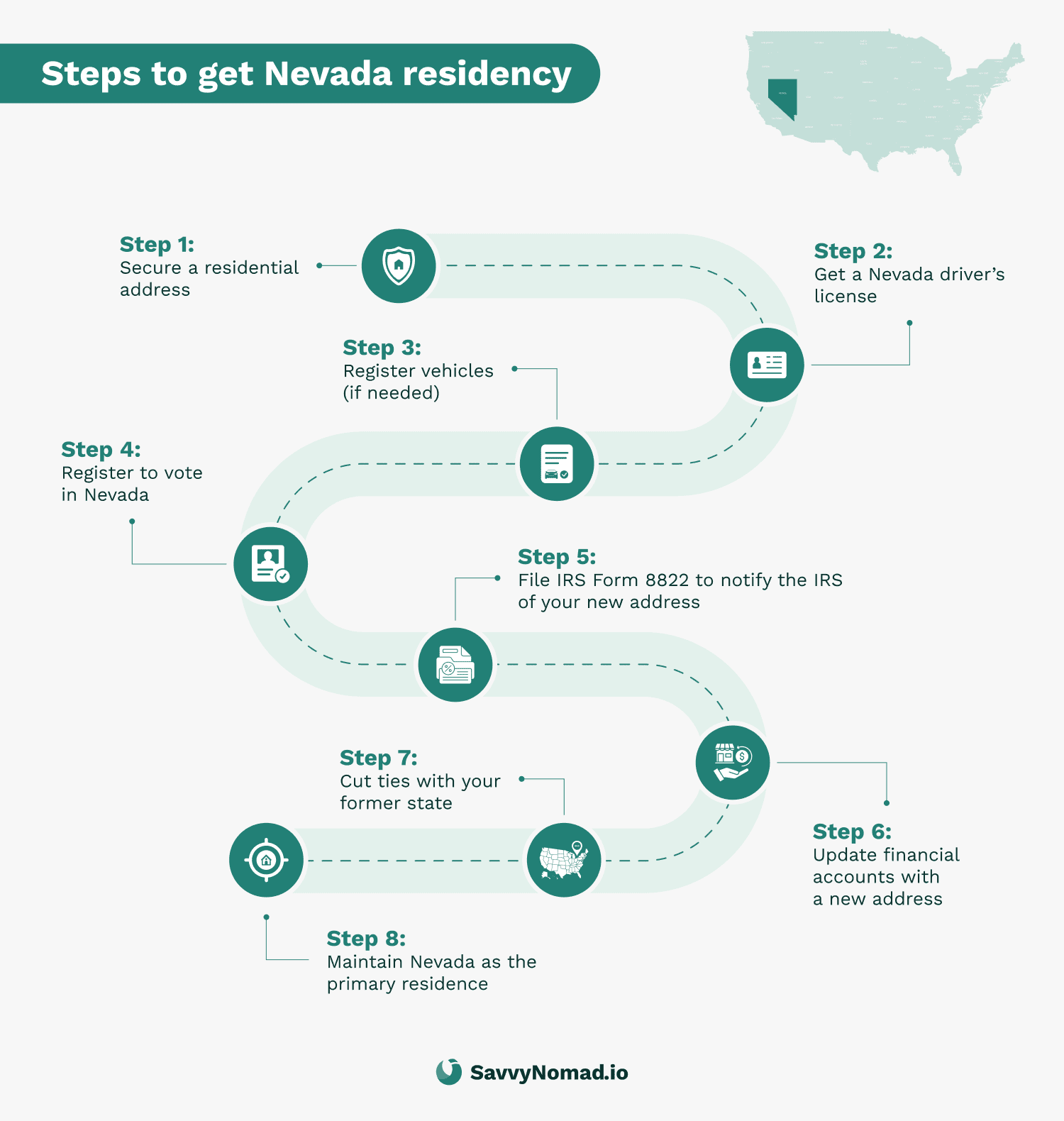
Close old bank accounts and cancel memberships in your former state. Forward all mail to your Nevada address. This reduces connections to your previous home. Changing your driver’s license and car registration to Nevada also helps. These actions show you have left the old state behind.
Tax Advantages
Becoming a Nevada resident offers clear tax advantages that can save you a lot of money. Nevada does not tax income at the state level. This means your wages, salaries, and retirement income remain untouched by state taxes. The state also keeps property taxes low, making home ownership more affordable.
Essentials like groceries and medications are free from sales tax in Nevada. This helps reduce everyday expenses for families and individuals. Inheritance tax does not apply to residents after they have lived in the state for a certain period. These benefits make Nevada a smart choice for people seeking tax relief.
No State Income Tax
Nevada does not charge state income tax on any earnings. Residents pay no tax on wages or salaries. Retirement income is also fully exempt. This policy helps workers keep more of their money. Many people move to Nevada to enjoy this tax relief.
Low Property Taxes
Property taxes in Nevada rank among the lowest in the country. Owner-occupied homes benefit from capped rates. This keeps housing costs manageable. Low property taxes attract home buyers and investors. It is easier to afford a home in Nevada than in many other states.
No Sales Tax On Groceries And Medications
Nevada exempts groceries and prescription medications from sales tax. This reduces costs on everyday essentials. Families save money on food and health care products. The exemption helps stretch budgets for many residents. It also supports healthy living by lowering medication costs.
No Inheritance Tax After Residency
After living in Nevada for three years, residents pay no inheritance tax. This rule protects heirs from extra tax burdens. It encourages people to establish long-term residency. Families benefit from passing down assets without heavy taxation. This makes Nevada favorable for estate planning.
Additional Resident Benefits
Becoming a Nevada resident offers more than just tax advantages. Residents gain access to a variety of benefits that enhance daily life. These include discounts, special services, and programs designed to support diverse needs. Understanding these perks helps new residents settle in confidently and make the most of living in Nevada.
Tourism And Entertainment Discounts
Nevada residents enjoy discounts at major resorts and entertainment venues. Popular casinos and shows offer reduced prices for locals. This makes enjoying Nevada’s famous nightlife and events easier on the wallet. Residents can explore world-class entertainment without paying full price.
Outdoor Recreation Access
The state’s natural beauty is a big plus for residents. Nevada offers discounted or free access to state parks and recreational areas. Hiking, fishing, and camping spots are more affordable for locals. This encourages a healthy, active lifestyle amid stunning landscapes.
Veterans Services And Fee Waivers
Veterans living in Nevada receive special support and fee waivers. These include reduced costs for hunting and fishing licenses. Access to healthcare and state programs is also streamlined. Nevada honors its veterans with practical benefits to ease daily life.
Support For Seniors And Families
Senior citizens and families find helpful programs in Nevada. Services include healthcare assistance and caregiver support. Discounts on utilities and property tax relief may apply. These programs aim to improve quality of life for older adults and households.
Nevada Registry Programs
Residents can participate in various registry programs for safety and health. Examples include organ donor registration and address confidentiality programs. These registries provide peace of mind and protect personal information. Joining such programs is simple and beneficial.
Updating Legal Documents
After moving to Nevada, updating your legal documents is essential. It confirms your new residency and helps you access local services. Each document must reflect your Nevada address and status. This step is key to fully establishing yourself as a Nevada resident.
Driver’s License And Vehicle Registration
Apply for a Nevada driver’s license within 30 days of moving. Visit the Nevada Department of Motor Vehicles with your current license and proof of address. You may need to pass a vision test. Register your vehicle in Nevada too. This process involves submitting your title and paying registration fees. Updating these documents avoids legal problems and fines.
Voter Registration
Register to vote in Nevada to participate in local and national elections. You can register online, by mail, or in person. Provide proof of Nevada residency, such as a driver’s license or utility bill. Voting registration confirms your intent to live in Nevada. It also allows you to have a say in your community’s future.
Bank And Financial Accounts
Update your bank and financial accounts with your new Nevada address. Contact your bank to change your address on file. This ensures you receive important statements and notices. Some banks may require proof of your Nevada residency. Local accounts make it easier to access services and build credit history.
Credit: blog.savvynomad.io
Living In Nevada
Nevada offers a unique lifestyle with vast deserts, vibrant cities, and friendly communities. Many find the state appealing for its warm climate and outdoor activities. Establishing residency means more than just living here. It involves becoming part of the local culture and daily life.
Building connections and spending time locally helps solidify your presence. This makes your residency genuine in the eyes of the state. Nevada welcomes those who engage with its people and places.
Spending Majority Of Time Locally
To prove Nevada residency, you must spend most of your time in the state. This means living here more days than anywhere else. Keep records of your time spent in Nevada to support your claim.
Work, shop, and enjoy leisure activities within the state. This shows your commitment to living in Nevada. Staying local also helps you understand the community better.
Joining Community Clubs And Libraries
Joining clubs or libraries is a great way to meet locals and build ties. Many towns have clubs for sports, hobbies, and social causes. Libraries offer programs and resources that connect residents.
Participating regularly in these places shows your intent to settle here. It also enriches your life and makes Nevada feel like home. These activities create proof of your local involvement.
Frequently Asked Questions
How Long Does It Take To Establish Residency In Nv?
Establish Nevada residency by living there for at least six months. Show intent through voter registration, local accounts, and filing a Declaration of Domicile. Update your driver’s license and sever ties with your previous state to complete the process.
What Are The Benefits Of Being A Nevada Resident?
Nevada residents enjoy no state income tax, low property taxes, and no tax on groceries or gas. They receive discounts at resorts, access veterans and senior services, and benefit from abundant outdoor recreation options. Establishing residency requires updating domicile and local documents.
How Long Do You Have To Live In Nevada To Be A Citizen?
You must live in Nevada and establish domicile by updating documents and spending most time there. Usually, six months suffices.
How Long Do You Have To Live In Las Vegas To Be A Resident?
You must live in Las Vegas for at least six months and show intent to make it your permanent home. Update your Nevada driver’s license, register to vote, and establish local ties to confirm residency.
Conclusion
Becoming a Nevada resident takes clear steps and careful planning. Live in Nevada and show your intent to stay. Register to vote, get local accounts, and file a declaration. Close ties with your old state to prove your move. Enjoy benefits like no state income tax and low property taxes.
Nevada offers many perks for residents, from discounts to outdoor fun. Follow these steps to secure your residency and enjoy all Nevada has to offer.