Travel Trailer Stabilizer Jacks
Travel trailer stabilizer jacks are crucial for a comfortable and secure camping experience. They reduce sway and movement when your trailer is parked, preventing a “tippy” feeling and enhancing overall stability. Understanding the various types and proper usage of these essential components can significantly improve your enjoyment and safety at any campsite.
Travel Trailer Stabilizer Jacks
Imagine finally arriving at your dream campsite, nestled beside a serene lake or high up in the mountains. You’ve maneuvered your travel trailer into the perfect spot, hooked up to shore power, and are ready to relax. But then, as you step inside, you feel it – a subtle but persistent wobble. Every time someone walks by, shifts in bed, or even just moves an arm, the whole trailer sways. It’s like being on a boat, and it can quickly turn a peaceful retreat into an irritating experience.
This common issue is precisely why travel trailer stabilizer jacks are absolutely essential for any RV owner. These simple yet ingenious devices are your best friends when it comes to creating a solid, stable home away from home. They transform your mobile living space from a wobbly box on wheels into a firm foundation, allowing you to truly unwind without feeling every tiny shift. If you’ve ever felt seasick in your parked RV, you know exactly what we’re talking about!
So, whether you’re a seasoned RVer or just starting your adventure, understanding travel trailer stabilizer jacks, how they work, and how to use them correctly is key to a comfortable and enjoyable camping trip. Let’s dive into everything you need to know to make your next campsite feel perfectly still.
Key Takeaways
- Purpose of Stabilizer Jacks: Travel trailer stabilizer jacks are designed to minimize movement and sway in a parked travel trailer, providing a stable and comfortable living environment, not for lifting the trailer.
- Variety of Types: There are several types of stabilizer jacks, including scissor jacks, crank-down (manual) jacks, electric/power jacks, and supplementary stabilizers like tripod jacks and wheel chocks, each with unique benefits.
- Enhanced Comfort and Safety: Proper use of stabilizer jacks dramatically reduces the feeling of movement inside the trailer, improving comfort, preventing motion sickness, and contributing to overall campsite safety.
- Correct Usage is Key: Always level your travel trailer first using leveling blocks before deploying stabilizer jacks. Jacks should be extended until they are snug against the ground or pads, applying gentle upward pressure, but never lifting the trailer off its main suspension.
- Regular Maintenance: To ensure longevity and smooth operation, stabilizer jacks require periodic cleaning, lubrication, and inspection for wear, rust, or damage, especially after exposure to harsh weather.
- Choosing the Right Jacks: Consider your trailer’s weight, the terrain you’ll encounter, ease of use, and budget when selecting the best stabilizer jacks or upgrading existing ones.
- Beyond the Jacks: For maximum stability, combine stabilizer jacks with other accessories like wheel chocks or wheel stabilizers, which further reduce movement at the tires.
Quick Answers to Common Questions
Can I use travel trailer stabilizer jacks to level my trailer?
No, stabilizer jacks are designed to reduce sway and movement once your trailer is already level. Using them to lift and level your trailer can damage the jacks or the trailer’s frame.
How many travel trailer stabilizer jacks do I need?
Most travel trailers benefit from four permanently mounted stabilizer jacks, typically one near each corner. Some RVers also add a tripod stabilizer at the tongue and wheel stabilizers for even greater stability.
What should I place under my travel trailer stabilizer jacks?
Always use jack pads, blocks of wood, or specialized RV leveling blocks under your travel trailer stabilizer jacks. This prevents them from sinking into soft ground and distributes the pressure evenly, protecting the jack feet.
How tight should I crank my travel trailer stabilizer jacks?
You should crank them until they are snug against the ground or jack pads and apply gentle upward pressure. The goal is to prevent movement, not to lift the trailer off its suspension. Overtightening can cause damage.
Do electric travel trailer stabilizer jacks draw a lot of power?
Electric stabilizer jacks draw power from your RV’s 12V battery only when extending or retracting. The power draw is generally moderate and temporary, but it’s always good to ensure your battery is well-charged or plugged into shore power during operation.
📑 Table of Contents
- What Exactly Are Travel Trailer Stabilizer Jacks?
- Types of Travel Trailer Stabilizer Jacks
- Why Are Stabilizer Jacks Essential for Your Camping Experience?
- How to Use Travel Trailer Stabilizer Jacks Correctly
- Maintenance and Troubleshooting for Your Stabilizer Jacks
- Choosing the Right Travel Trailer Stabilizer Jacks for Your Rig
- Conclusion: Embrace the Stability
What Exactly Are Travel Trailer Stabilizer Jacks?
At its core, a travel trailer stabilizer jack is a device designed to minimize the movement and sway of your parked travel trailer. Think of them as extra legs that give your trailer more points of contact with the ground, effectively bracing it against internal and external forces. It’s important to clarify right away: these jacks are for *stabilizing*, not for *lifting* your trailer off the ground. While they might bear some weight, their primary role is to create tension and prevent rocking, not to replace your main tongue jack or serve as a jack for tire changes.
When your travel trailer is parked, it’s resting on its tires and often a tongue jack at the front. This setup, while sufficient for parking, leaves it susceptible to movement. Imagine the springs of your suspension absorbing every step you take inside, or the wind pushing against the side. Stabilizer jacks counteract this by extending down from the frame of your trailer to the ground, creating a rigid connection that drastically reduces these movements. They essentially “lock” your trailer in place, ensuring a steady environment for sleeping, cooking, or just relaxing.
Why They Are Not “Leveling” Jacks
It’s a common misconception to conflate stabilizer jacks with leveling jacks. While both connect your trailer to the ground, their functions are distinct. Leveling jacks (often hydraulic or electric and much more robust) are designed to *lift* parts of your trailer to achieve a perfectly horizontal position on uneven terrain. Travel trailer stabilizer jacks, on the other hand, are deployed *after* your trailer has been leveled using other means (like leveling blocks under the tires or a powerful tongue jack). Their job is purely to add rigidity and prevent movement, not to adjust height significantly. Using them to level your trailer can damage the jacks, the trailer’s frame, or both.
Types of Travel Trailer Stabilizer Jacks
The world of travel trailer stabilizer jacks offers a few different options, each with its own advantages and ideal use cases. Understanding these types will help you choose the best solution for your rig and camping style.
Scissor Jacks
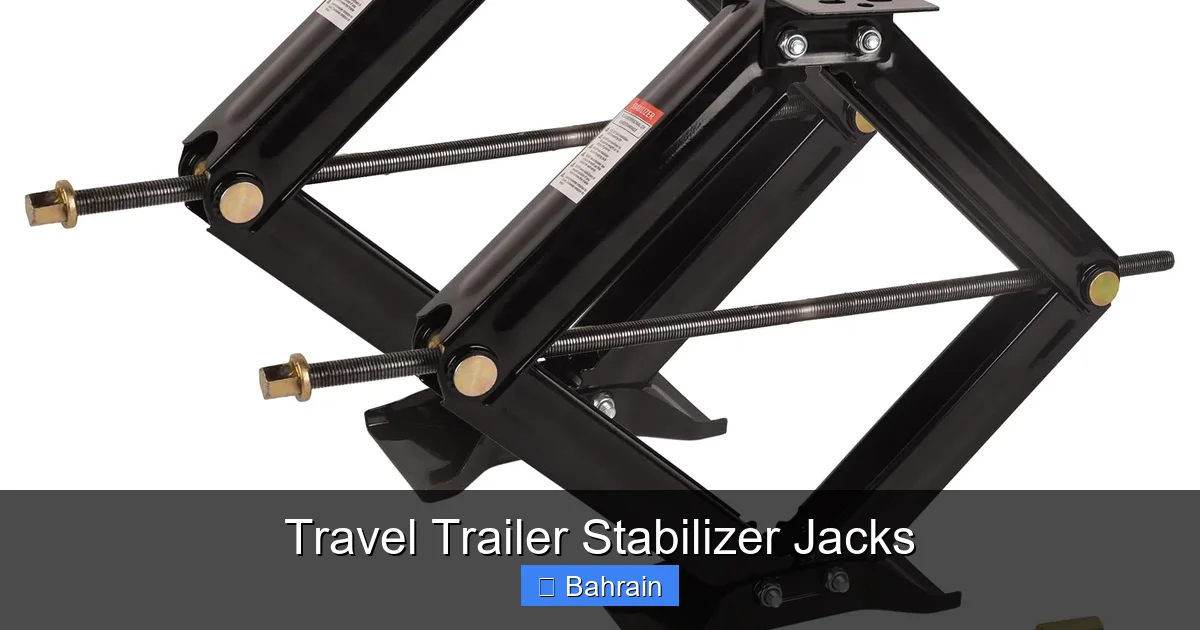
Scissor jacks are perhaps the most common type of travel trailer stabilizer jacks. They operate, as their name suggests, like a pair of scissors. A threaded rod runs through the middle, and when you turn a crank handle, the two arms of the “scissors” extend or retract. They are usually mounted permanently to the trailer’s frame, often four of them – one near each corner.
Pros:
Visual guide about Travel Trailer Stabilizer Jacks
Image source: m.media-amazon.com
- Strong and durable, capable of providing excellent stability.
- Relatively compact when fully retracted.
- Widely available and often standard equipment on many travel trailers.
Cons:
- Manual operation can be labor-intensive, especially if you have to extend them a lot.
- Can be slow to deploy and retract.
- If not maintained, the threaded rod can rust or get gritty, making operation difficult.
Crank-Down (Manual) Jacks
Crank-down jacks are another popular manual option. These typically consist of a vertical post with a footplate that extends downwards when you turn a crank. They might pivot up out of the way for travel or be permanently fixed. Similar to scissor jacks, they require manual effort to operate.
Pros:
- Simple design, generally reliable.
- Often found on smaller or older travel trailers due to their cost-effectiveness.
Cons:
- Can be less robust than scissor jacks for heavy-duty stability.
- Manual effort required, similar to scissor jacks.
- May not offer the same degree of lateral stability as scissor jacks.
Electric/Power Jacks
For those who prefer convenience, electric or power stabilizer jacks are a fantastic upgrade. These operate with the push of a button, using a motor to extend and retract the jacks. They are usually found on larger, more modern travel trailers, often integrated into an automatic leveling system. Even if not fully automatic, separate power stabilizer jacks can be incredibly helpful.
Pros:
- Effortless operation, saving time and physical strain.
- Quick deployment and retraction.
- Consistent and powerful stabilization.
Cons:
- Higher cost compared to manual options.
- Relies on your trailer’s 12V power system, so a drained battery can be an issue.
- More complex, meaning more potential points of failure (motor, wiring).
Tripod Stabilizers
These are often used in conjunction with your existing stabilizer jacks, especially for travel trailers with a front tongue jack. A tripod stabilizer is a standalone unit that sits directly under the tongue jack, providing an extra point of support at the very front of the trailer. It helps prevent front-to-back rocking that can still occur even with corner jacks deployed.
Pros:
- Adds significant front-end stability.
- Easy to deploy and store.
- Relatively inexpensive addition to your stabilization system.
Cons:
- Another piece of equipment to store and set up separately.
- Doesn’t address side-to-side movement as effectively as corner jacks.
Wheel Chocks and Wheel Stabilizers
While not strictly “jacks,” wheel chocks and wheel stabilizers play a crucial role in overall trailer stability. Traditional chocks prevent your wheels from rolling. Wheel stabilizers, however, are placed between tandem tires and expand to apply pressure against both wheels, effectively locking them in place. This prevents the tires from rocking back and forth, which can contribute significantly to overall trailer movement. Many RVers find these to be indispensable alongside their travel trailer stabilizer jacks.
Pros:
- Directly addresses movement at the wheel level.
- Relatively inexpensive and easy to use.
- Enhances the effectiveness of traditional travel trailer stabilizer jacks.
Cons:
- Only works on tandem axle trailers for wheel stabilizers.
- Still requires additional stabilizer jacks for full bracing.
Why Are Stabilizer Jacks Essential for Your Camping Experience?
You might be thinking, “Do I really need to fuss with these travel trailer stabilizer jacks?” The answer, unequivocally, is yes! Here’s why they are non-negotiable for a comfortable and safe RV trip:
Eliminate the “Wobble Factor”
This is the most immediate and noticeable benefit. Without proper stabilization, simply walking around inside your trailer can make it feel like you’re on a bouncy castle. This constant motion is annoying, distracting, and can even cause motion sickness for some people. Stabilizer jacks drastically reduce this movement, creating a solid platform that feels much more like a permanent structure. Imagine having a restful night’s sleep without feeling every small shift from your partner!
Enhance Safety
While your travel trailer stabilizer jacks won’t prevent a runaway trailer (that’s what wheel chocks and parking brakes are for!), they do contribute to overall safety. A stable trailer is less likely to have items fall off shelves or countertops. It also makes getting in and out safer, especially for children or those with mobility issues, as the steps won’t feel like they’re moving underfoot. Reduced movement also means less strain on your plumbing, electrical connections, and even structural components over time.
Protect Your Trailer and Belongings
Constant rocking and swaying can put undue stress on various parts of your travel trailer. Cabinets can wear prematurely, doors can come out of alignment, and internal fixtures can loosen. By minimizing movement, stabilizer jacks help preserve the integrity of your RV’s interior and exterior, prolonging its life and protecting your investment. Your dishes are less likely to rattle or fall, and everything just stays put.
Improve Comfort and Enjoyment
Ultimately, a stable trailer means a more enjoyable camping experience. Whether you’re cooking, eating, playing cards, or just watching a movie, doing it in a steady environment makes all the difference. It allows you to forget you’re in a mobile home and truly immerse yourself in the camping lifestyle. A stable setup makes the interior feel more spacious and less confined.
How to Use Travel Trailer Stabilizer Jacks Correctly
Getting the most out of your travel trailer stabilizer jacks isn’t complicated, but there’s a correct sequence and technique to follow. Doing it right ensures maximum stability and prevents damage to your equipment.
Step 1: Park and Level Your Trailer
This is the golden rule: always level your trailer *before* deploying your stabilizer jacks. Use leveling blocks under your tires (side-to-side) and adjust your tongue jack (front-to-back) until your trailer is perfectly level. You can use a bubble level inside your RV or a smartphone app. Remember, stabilizer jacks are for stability, not for lifting the trailer to level it.
Step 2: Chock Your Wheels
Before you even touch your stabilizer jacks, make sure your wheels are properly chocked. This prevents any accidental movement of the trailer while you’re working around it. If you have wheel stabilizers (the type that go between tandem tires), deploy those now as well. This creates a solid base before you apply tension with your jacks.
Step 3: Deploy the Front Jacks (If Applicable)
If you have a front tongue jack, you might consider lowering it first (after leveling) to take some initial weight and prevent front-to-back rocking. Some RVers also use a tripod stabilizer under the tongue jack for extra front-end support.
Step 4: Extend Your Travel Trailer Stabilizer Jacks
Start with the jacks at the back of your trailer, then move to the front. Extend each jack until its footpad makes firm contact with the ground or a jack pad (always use jack pads, especially on soft ground, to prevent the jacks from sinking). Once it makes contact, give it another half to full turn with your crank or push the button for a few more seconds. The goal is to apply gentle, upward pressure against the trailer frame.
Pro Tip: Don’t overtighten! You’re not trying to lift the trailer off its suspension. You just want them snug enough to prevent movement. Overtightening can actually warp your trailer’s frame over time or damage the jacks themselves. A good rule of thumb is to crank until you feel resistance, then maybe one more full turn.
Step 5: Check for Stability
Once all your travel trailer stabilizer jacks are deployed, go inside and walk around. Do you still feel any significant wobble? If so, you might need to slightly adjust a jack or two. Sometimes, adding a wheel stabilizer or a tripod jack will further enhance the rock-solid feeling. Some RVers also like to extend their main tongue jack a bit more after the corner jacks are set to add extra stiffness to the front.
Common Mistakes to Avoid
- Not Leveling First: As mentioned, this is the biggest no-no. It puts excessive strain on your stabilizer jacks.
- Overtightening: Can damage your jacks or trailer frame.
- Not Using Jack Pads: On soft ground, your jacks can sink, rendering them useless. Pads distribute the weight and protect the jack feet.
- Forgetting to Retract: Always retract your stabilizer jacks fully before moving your trailer. Driving with them down will cause severe damage!
- Ignoring Maintenance: Dirty or rusted jacks are hard to operate and prone to failure.
Maintenance and Troubleshooting for Your Stabilizer Jacks
Like any mechanical component on your travel trailer, stabilizer jacks require a little love and attention to ensure they work smoothly for years to come. Regular maintenance is simple and will save you headaches down the road.
Regular Cleaning
After each trip, or at least seasonally, take the time to clean your stabilizer jacks. Mud, dirt, sand, and road grime can accumulate on the moving parts, especially the threaded rod on scissor jacks. Use a stiff brush and water to remove debris. For stubborn grime, a mild degreaser can be helpful.
Lubrication is Key
Once clean and dry, lubricate the moving parts. For scissor jacks, apply a good quality silicone spray or white lithium grease to the threaded rod and pivot points. For crank-down jacks, lubricate the moving post. Electric jacks might have specific lubrication points outlined in their owner’s manual. Lubrication prevents rust, reduces friction, and makes operation much smoother.
Inspection for Wear and Tear
Periodically inspect your travel trailer stabilizer jacks for any signs of damage.
- Bent or Damaged Components: Look for bent legs, arms, or footpads.
- Corrosion/Rust: While some surface rust is normal, excessive rust can compromise strength. Address it by cleaning and repainting if necessary.
- Loose Mounts: Ensure the jacks are still securely bolted to the trailer frame. Tighten any loose bolts.
- Electrical Issues (for power jacks): Check wiring for fraying or damage. Ensure the motor operates smoothly without unusual noises.
Troubleshooting Common Issues
- Jacks are Hard to Crank: Usually a sign of dirt, rust, or lack of lubrication. Clean and lubricate thoroughly.
- Jacks Sink into the Ground: You likely didn’t use jack pads, or the ground was too soft. Always use pads, and if necessary, place a larger piece of plywood underneath the pad for extra distribution.
- Trailer Still Wobbles: Re-check leveling. Ensure all jacks are snug. Consider adding wheel stabilizers or a tripod jack. Sometimes, simply applying more pressure (without overtightening) can help.
- Electric Jacks Don’t Respond: Check your trailer’s 12V battery charge. Inspect fuses. Check electrical connections for corrosion or looseness. Consult your owner’s manual for specific troubleshooting steps.
Choosing the Right Travel Trailer Stabilizer Jacks for Your Rig
Whether you’re replacing old jacks, upgrading, or outfitting a new trailer, selecting the right travel trailer stabilizer jacks involves a few considerations.
Trailer Weight Capacity
This is paramount. Ensure the jacks you choose have a sufficient weight capacity to handle your trailer’s Gross Vehicle Weight Rating (GVWR), even though they are for stabilization, not lifting. Overloading them can lead to damage or failure.
Ease of Use
Consider your preference for manual versus electric. If you’re physically able and don’t mind the manual effort, scissor or crank-down jacks are great. If convenience is a priority, and your budget allows, electric jacks are a game-changer. Remember, the easier they are to use, the more likely you are to deploy them every time!
Mounting Type
Do you need permanently mounted jacks that bolt to the frame, or are you looking for portable, supplemental stabilizers like tripod jacks or independent wheel chocks? Most travel trailers come with permanently mounted jacks, but you can always add more.
Terrain and Camping Style
If you frequently camp on uneven or soft terrain, look for jacks with larger footpads or always plan to use robust jack pads. If you move campsites frequently, quick-deploying electric travel trailer stabilizer jacks might be a better fit.
Budget
Manual jacks are generally the most affordable option, while electric systems can be a significant investment. Weigh the cost against the convenience and stability benefits. Sometimes, investing in good quality manual jacks and supplementing with wheel stabilizers offers the best balance.
Conclusion: Embrace the Stability
Travel trailer stabilizer jacks might not be the most glamorous part of your RV setup, but they are undeniably one of the most important for a genuinely comfortable and relaxing experience. From eliminating annoying wobbles to protecting your trailer and its contents, their benefits are clear.
By understanding the different types of travel trailer stabilizer jacks, learning how to deploy them correctly, and committing to a simple maintenance routine, you’ll transform your mobile campsite into a haven of stability. No more feeling like you’re constantly rocking on the high seas! So, the next time you pull into that perfect spot, take a few extra minutes to properly stabilize your rig. You’ll be amazed at the difference it makes, allowing you to fully enjoy the peace and quiet of your camping adventures. Happy trails, and stable stays!
Frequently Asked Questions
How often should I lubricate my travel trailer stabilizer jacks?
It’s a good practice to lubricate your stabilizer jacks at least once a season, or more frequently if you camp often or in dusty/muddy conditions. Pay special attention to the threaded rods on scissor jacks and any pivot points.
Can stabilizer jacks prevent my trailer from rolling away?
No, stabilizer jacks are not designed to prevent your trailer from rolling. That safety function is provided by properly set wheel chocks and your trailer’s parking brake. Stabilizer jacks are purely for reducing movement while parked.
Are portable travel trailer stabilizer jacks as effective as permanent ones?
Permanently mounted stabilizer jacks, especially scissor or electric types, generally offer superior overall stability because they are bolted directly to the frame. Portable options like tripod jacks are excellent supplementary stabilizers but aren’t typically a full replacement for frame-mounted units.
What’s the difference between stabilizer jacks and leveling jacks?
Stabilizer jacks minimize movement and sway once your trailer is level. Leveling jacks are designed to lift and adjust the trailer’s height on uneven terrain to achieve a perfectly level position. They have distinct functions and capacities.
What if one of my travel trailer stabilizer jacks is bent or damaged?
If a stabilizer jack is bent or significantly damaged, it’s crucial to replace it promptly. A damaged jack cannot provide adequate stability and could fail, potentially harming your trailer or causing injury. Do not attempt to use a compromised jack.
Do cold temperatures affect the performance of stabilizer jacks?
Yes, cold temperatures can affect stabilizer jacks. Lubricants can become thicker, making manual jacks harder to crank. Electric jacks might operate slower, and battery performance can be reduced in cold weather. Keeping them clean and well-lubricated helps mitigate these effects.