Travel Trailer Propane Tanks
Understanding your travel trailer propane tanks is absolutely essential for a comfortable and safe RV experience. These vital tanks fuel everything from your stove and refrigerator to your furnace and water heater. This guide covers everything you need to know, from selecting the right tank size and safely handling propane to mastering refilling techniques and maintaining your system for worry-free travels.
Ah, the open road! The freedom of travel, the beauty of nature, and the comfort of your own space – that’s the magic of RVing. But what powers that comfort? What keeps your coffee hot, your fridge cold, and your shower warm, even when you’re miles from civilization? The unsung hero, my friend, is your travel trailer propane tank system.
These unassuming tanks are truly the lifeblood of your mobile home. Without properly functioning travel trailer propane tanks, your RV experience would be a lot less comfortable, a lot less convenient, and certainly a lot less fun. From cooking delicious meals to staying cozy on a chilly night, propane makes it all possible. Understanding how these systems work, how to maintain them, and how to use them safely is absolutely paramount for any RVer, new or seasoned.
This comprehensive guide is designed to be your friendly companion in mastering everything about your travel trailer propane tanks. We’ll cover the basics, delve into safety, explore maintenance, and give you practical tips to ensure your propane system is always ready for your next grand adventure. Let’s make sure your RV stays powered, safe, and ready for whatever the road throws your way!
Key Takeaways
- Propane is RV Lifeblood: Travel trailer propane tanks power essential appliances like furnaces, water heaters, refrigerators, and stoves, making them crucial for comfort and functionality on the road.
- Tank Types Matter: Most RVs use portable DOT cylinders (20lb, 30lb, 40lb) or permanently mounted ASME tanks, each with specific handling and refilling considerations.
- Safety First Always: Proper installation, leak detection, regular inspections, and careful transportation are paramount to prevent hazards associated with propane use.
- Refilling Isn’t Complicated: Understanding how to safely refill your tanks, checking Overfill Prevention Devices (OPD valves), and knowing the hydrostatic test date are key for continued use.
- Maintenance Extends Life: Regular cleaning, checking hoses and regulators, and protecting tanks from extreme weather contribute to their longevity and safe operation.
- Maximize Efficiency: Employing energy-saving tips for propane appliances and understanding your usage patterns can help extend the life of your propane supply between refills.
- Troubleshooting is Empowering: Familiarize yourself with common issues like a “lock-out” or low pressure, enabling you to quickly diagnose and often resolve minor problems yourself.
Quick Answers to Common Questions
How do I know how much propane is left in my travel trailer propane tanks?
For DOT cylinders, you can carefully pour warm water down the side of the tank; the water will feel cool where the liquid propane is, indicating the level. Many RVs also have internal gauges for both DOT and ASME tanks.
Can I store propane tanks inside my travel trailer?
No, you should never store travel trailer propane tanks inside your RV or any enclosed space. They must always be stored and transported in a well-ventilated area, like an open truck bed, and secured upright.
What is the typical lifespan of a propane regulator on an RV?
The typical lifespan of an RV propane regulator is usually between 10 to 15 years, but it can vary based on exposure to elements and usage. Regular inspection for cracks, corrosion, or inconsistent pressure is important.
Is it safe to leave my travel trailer propane tanks turned on while driving?
Most RV manufacturers and safety experts recommend turning off your travel trailer propane tanks while driving, especially when fueling up or passing through tunnels. Some areas may have regulations requiring this.
What is the difference between exchanging a propane tank and refilling one?
Exchanging a tank means swapping your empty tank for a pre-filled one, often at a convenience store. Refilling involves taking your specific empty tank to a propane dealer who fills it up, ensuring you get exactly 20, 30, or 40 pounds of propane.
📑 Table of Contents
- Understanding Your Travel Trailer Propane Tanks: The Basics
- Types and Sizes: Choosing the Right Propane Tank for Your RV
- Safe Handling and Installation of Propane Tanks
- Refilling and Maintaining Your Propane Supply
- Troubleshooting Common Propane Tank Issues
- Maximizing Propane Efficiency and Extending Tank Life
- Conclusion
Understanding Your Travel Trailer Propane Tanks: The Basics
Propane, also known as liquefied petroleum gas (LPG), is a fantastic energy source for RVs because it’s efficient, clean-burning, and relatively easy to store. Your travel trailer propane tanks store this fuel under pressure in a liquid state. When you open the valve, the liquid propane turns into gas, which then travels through a regulator to your appliances at a much lower, usable pressure.
What Does Propane Power in Your RV?
You might be surprised just how much depends on your travel trailer propane tanks! Here are some common appliances:
- Furnace: Keeps you warm during cold weather.
- Water Heater: Provides hot water for showers and washing dishes.
- Refrigerator: Many RV fridges can run on both electricity and propane, offering flexibility when boondocking.
- Stovetop/Oven: For all your culinary creations on the road.
- Outdoor Grill Connection: Some RVs have a quick-connect for an external propane grill.
- Generators: Certain generators are designed to run on propane.
As you can see, properly functioning travel trailer propane tanks are not just a luxury; they’re a necessity for a fully operational RV.
Types and Sizes: Choosing the Right Propane Tank for Your RV
Not all propane tanks are created equal, especially when it comes to RVs. There are two main types you’ll encounter, each with its own characteristics.
Visual guide about Travel Trailer Propane Tanks
Image source: thumbs.dreamstime.com
DOT Cylinders (Portable Tanks)
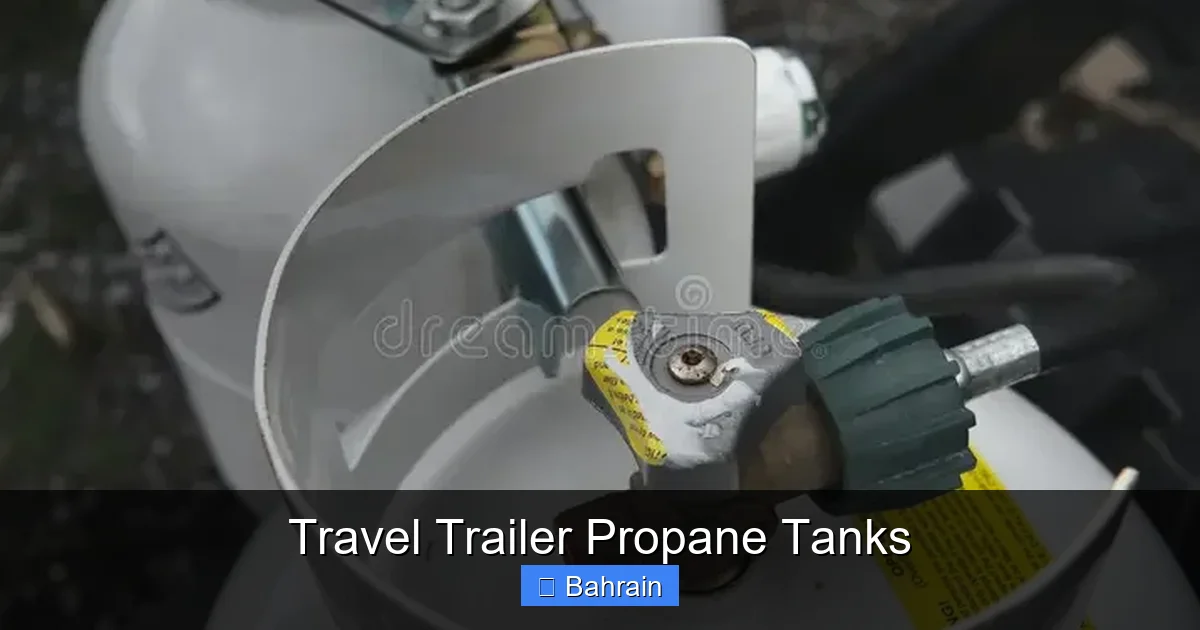
These are the most common type of travel trailer propane tanks you’ll see. They are removable, refillable, and transportable. You’ll often find two of these mounted on the front tongue of a travel trailer.
- Common Sizes:
- 20-pound (5-gallon) tanks: These are the standard grill tanks. Many smaller travel trailers or pop-ups use them. They’re easy to lift and exchange.
- 30-pound (7.5-gallon) tanks: A very popular size for mid-sized travel trailers, offering more capacity than a 20lb tank without being excessively heavy.
- 40-pound (10-gallon) tanks: Found on larger travel trailers, these provide extended propane supply but are heavier and bulkier.
- Key Feature: DOT tanks require an Overfill Prevention Device (OPD) valve, which is a safety mechanism to prevent overfilling. You can identify these by their triangular handwheel.
ASME Tanks (Permanently Mounted Tanks)
These tanks are built directly into the chassis of larger motorhomes or some fifth-wheel trailers. They are not designed to be removed for refilling.
- Characteristics: ASME tanks are often larger, typically horizontal, and usually refilled directly at the RV.
- Capacity: They are measured in gallons and can hold significantly more propane than DOT cylinders.
Choosing the Right Size
The right size of travel trailer propane tanks for you depends on your RV’s size, your typical usage, and how often you want to refill. If you boondock frequently or travel in cold climates, larger tanks or multiple smaller ones are a wise choice. Always ensure your RV’s tongue weight and frame can safely support the weight of full tanks.
Safe Handling and Installation of Propane Tanks
Propane is incredibly safe when handled correctly, but it’s a flammable gas, so safety must be your top priority. Here’s how to ensure your travel trailer propane tanks are installed and used safely.
Proper Installation and Securing
- Mounting: DOT cylinders should always be secured vertically in a sturdy holder. Most travel trailers have a dedicated bracket for two tanks.
- Connections: Ensure all connections between the tank, regulator, and RV plumbing are tight and leak-free. Use specialized wrenches, not pliers, to avoid stripping nuts.
- Tank Cover: Many travel trailers come with a hard cover over the tanks. This protects them from road debris and UV rays, which can damage hoses and paint.
Leak Detection is Critical
This is perhaps the most important safety check you can do. Always check for leaks after connecting or refilling your travel trailer propane tanks.
- The Soapy Water Test: Mix dish soap and water in a spray bottle. Spray this solution on all connections, including where the hose meets the tank and where it enters the regulator. If you see bubbles forming, you have a leak. Tighten the connection or replace the faulty part immediately.
- Smell Test: Propane has a distinct rotten egg smell added to it. If you smell it, investigate immediately.
- Propane Detector: Your RV should have an internal propane leak detector, which is different from a carbon monoxide detector. Test it regularly.
Carbon Monoxide (CO) Safety
While propane itself isn’t CO, incomplete combustion of propane can produce CO. Always have a working CO detector inside your RV and never use propane appliances like your stove for heating.
Storage and Transportation Tips
- Ventilation: Always transport spare travel trailer propane tanks in a well-ventilated area, never inside the passenger compartment of your vehicle. The bed of a truck is ideal.
- Upright Position: Always keep DOT cylinders upright.
- Shut Off Valves: Turn off the main valve on your travel trailer propane tanks when traveling, storing, or if you smell gas.
Refilling and Maintaining Your Propane Supply
Keeping your travel trailer propane tanks full and in good working order is key to uninterrupted adventures.
How to Refill Your Tanks
For DOT cylinders, you’ll typically take them to a propane dealer, RV park, or some gas stations that offer refilling services. ASME tanks are refilled directly on the RV.
- OPD Valve: The Overfill Prevention Device (OPD) valve is crucial. It stops the tank from being filled beyond 80% capacity, leaving a crucial 20% space for expansion as temperatures change. Never tamper with an OPD valve.
- Hydrostatic Test Date: DOT cylinders have a “hydrostatic test date” stamped on the collar (e.g., “05-23” for May 2023). These tanks must be re-certified every 10 years from the manufacturing date, or 5 years from the re-test date, depending on the re-tester’s stamp. Tanks past their re-certification date cannot be legally refilled.
- Finding Refill Stations: Apps like “RV LIFE Trip Wizard” or “Campendium” often list propane refill stations.
Maintaining Your Travel Trailer Propane Tanks
- Regular Inspection: Visually inspect your tanks, hoses, and regulator regularly. Look for rust, dents, frayed hoses, or cracked regulator bodies.
- Regulator Care: The regulator reduces the high pressure from the tank to a usable pressure for your RV appliances. If your regulator fails, you might experience low pressure or no propane flow. Keep it protected from the elements.
- Hose Inspection: Propane hoses can degrade over time due to UV exposure and age. Replace them if you see any cracks or wear.
- Tank Vents: Ensure the relief valve on your tanks is not obstructed. This valve safely releases pressure if it gets too high.
- Cleaning: Keep your travel trailer propane tanks clean and free of excessive rust. A light wire brushing and a coat of rust-inhibiting paint can extend their life.
Troubleshooting Common Propane Tank Issues
Even with the best care, sometimes issues arise. Knowing how to troubleshoot common problems with your travel trailer propane tanks can save you a trip to the repair shop.
The “Lock-Out” Syndrome
Have you ever opened your tank valve and gotten no propane flow, or only a trickle, even though the tank feels full? This is often due to the excess flow safety device, a feature designed to shut off propane flow if there’s a sudden surge (like a broken line).
- How to Reset:
- Turn off all propane appliances in your RV.
- Close the valve on your travel trailer propane tanks completely.
- Wait about 15-30 seconds.
- Slowly, very slowly, open the tank valve all the way.
- Slowly turn on one propane appliance (e.g., one burner on the stove). It may take a minute for the gas to reach it.
- This slow opening technique allows the pressure to equalize without triggering the safety device.
Low Pressure or Weak Flames
If your appliances seem to be running on low power (e.g., weak stove flames, water heater not getting hot enough), it could be several things:
- Low Propane Level: The most obvious culprit. Check your tank levels.
- Faulty Regulator: The regulator might be failing to deliver the correct pressure. You might need to replace it.
- Kinked Hose: Inspect the hoses from your travel trailer propane tanks to the regulator for any kinks or damage.
- Dirt/Debris: Although rare, debris can sometimes block the flow.
No Propane Flow at All
If you have absolutely no flow, double-check:
- Are the travel trailer propane tanks full?
- Are the tank valves fully open?
- Is the excess flow device tripped (try the reset procedure above)?
- Is there a blockage in the lines (rare, might require professional help)?
Always err on the side of caution. If you suspect a major issue or can’t resolve it yourself, contact a certified RV technician.
Maximizing Propane Efficiency and Extending Tank Life
Getting the most out of your travel trailer propane tanks means being smart about usage and taking good care of your equipment.
Energy-Saving Tips
- Insulate Wisely: Good RV insulation helps your furnace work less, conserving propane.
- Layer Up: Wear warmer clothes inside your RV during cooler weather instead of cranking the furnace.
- Ventilation: When cooking, use your range hood fan to remove moisture, which can make your RV feel colder.
- Electric Alternatives: When hooked up to shore power, use electric space heaters or your electric water heater element if your RV has one, saving your propane for when you’re off-grid.
- Cook Smart: Use your outdoor grill or campfire for cooking when possible, or limit oven use which consumes a lot of propane.
Extending Tank Life
- Protective Covers: Keep your travel trailer propane tanks covered to shield them from UV rays and road debris, especially if they are DOT cylinders.
- Rust Prevention: Address any rust promptly. Clean and paint areas of surface rust to prevent further corrosion.
- Proper Storage: When storing your RV for extended periods, ensure your travel trailer propane tanks are turned off and covered.
- Regular Inspections: As mentioned, regular visual inspections can catch small issues before they become big problems, extending the safe usable life of your tanks and components.
By following these tips, you’ll not only save money on refills but also ensure your travel trailer propane tanks remain a reliable source of energy for years to come.
Conclusion
Your travel trailer propane tanks are far more than just metal cylinders; they are the heart of your RV’s essential systems, enabling you to live comfortably and enjoy the full freedom of the open road. From keeping your fridge running on a hot day to ensuring a warm shower after a hike, propane is truly indispensable.
By understanding the different types and sizes of travel trailer propane tanks, prioritizing safety through proper handling and leak detection, and committing to regular maintenance and smart usage, you empower yourself to travel with confidence. Don’t let a minor propane issue derail your plans. With the knowledge gained here, you’re well-equipped to manage your propane system effectively, ensuring countless comfortable and memorable RV adventures. So, go ahead, fill ‘er up, and hit the road – your well-maintained propane tanks have got you covered!
Frequently Asked Questions
How often should I have my travel trailer propane tanks inspected?
DOT cylinders require a hydrostatic test every 10 years (or 5 years after re-certification) to be legally refilled. Beyond that, a visual inspection of your travel trailer propane tanks, hoses, and regulator should be done before each trip and at least annually for wear and tear.
What should I do if I smell propane gas in my RV?
If you smell propane, immediately turn off the main valve on your travel trailer propane tanks, open all windows and doors for ventilation, extinguish any open flames, do not operate electrical switches, and evacuate the RV. Once outside, try to locate the leak with soapy water or call a professional.
Can I convert my RV appliances to use natural gas instead of propane?
It is generally not advisable or practical to convert RV propane appliances to natural gas. RV appliances are specifically designed and jetted for propane (LPG) pressure and combustion characteristics. Such conversions can be complex, expensive, and may compromise safety and void warranties.
Why do my travel trailer propane tanks only fill to 80% capacity?
Propane tanks are only filled to 80% capacity to allow for thermal expansion of the liquid propane. If a tank were filled completely, the liquid could expand due to temperature increases, creating dangerous pressure and potentially rupturing the tank.
Are propane tank gauges always accurate?
Unfortunately, many standard propane tank gauges, especially those on DOT cylinders, are not always highly accurate, particularly when the tank is full or near empty. They are often best for giving you a general idea of your propane level rather than a precise measurement.
What temperature extremes can travel trailer propane tanks withstand?
Propane tanks are designed to safely withstand a wide range of temperatures, typically from -40°F to 130°F. However, extreme heat can increase pressure, which is why the 80% fill rule and the pressure relief valve are crucial safety features for travel trailer propane tanks.