Travel Plug for Dominican Republic
Traveling to the Dominican Republic? Most North American visitors (from the US and Canada) won’t need a specific travel plug adapter, as the Dominican Republic uses the same Type A and Type B outlets (110-120V, 60Hz). However, if you’re coming from other regions like Europe or Australia, you’ll definitely need a travel plug for Dominican Republic compatible with Type A/B sockets. Always check your device’s voltage compatibility to avoid damage, especially for high-power appliances.
Ah, the Dominican Republic! Just thinking about it conjures images of pristine white-sand beaches, crystal-clear turquoise waters, vibrant merengue music, and the intoxicating aroma of freshly brewed coffee. Whether you’re planning to soak up the sun in Punta Cana, explore the historic streets of Santo Domingo, or hike the lush mountains of Jarabacoa, one thing is certain: you’ll want your electronic devices to be fully charged and ready to capture every unforgettable moment.
But before you pack your swimsuits and sunscreen, there’s a crucial, often overlooked detail that can make or break your ability to stay connected and powered up: the travel plug. Nothing dampens vacation spirits faster than arriving at your hotel, eager to charge your phone after a long flight, only to find your charger doesn’t fit the wall socket. Understanding the electrical system in the Dominican Republic and bringing the correct travel plug for Dominican Republic is a small step that ensures a smooth, stress-free trip. Let’s dive in and demystify everything you need to know about powering your devices in this beautiful Caribbean paradise.
This comprehensive guide will walk you through the specifics of the Dominican Republic’s electrical outlets, clarify voltage requirements, and help you choose the right travel plug or adapter. We’ll cover everything from what North American travelers need (or don’t need!) to the essential gear for visitors from other parts of the world. By the end, you’ll be an expert, ready to charge up and enjoy every second of your Dominican adventure.
Key Takeaways
- No Adapter for US/Canada: Travelers from the United States and Canada typically do not need a travel plug for Dominican Republic as the electrical outlets and voltage (110-120V, 60Hz) are the same.
- Type A and B Plugs: The Dominican Republic uses Type A (two flat parallel pins) and Type B (two flat parallel pins and a round grounding pin) electrical outlets.
- Voltage Compatibility is Key: Even if your plug fits, always check that your electronic devices are compatible with 110-120V. Most modern chargers for phones, laptops, and cameras are dual-voltage (100-240V).
- Travelers from Other Regions Need Adapters: If you’re coming from countries with different plug types (e.g., Europe’s Type C/F, UK’s Type G, Australia’s Type I), you will absolutely need a travel plug for Dominican Republic.
- Voltage Converter for High-Power Devices: Appliances like hair dryers, straighteners, or shavers might require a voltage converter if they are single-voltage and not compatible with 110-120V. Check the label!
- Consider a Universal Adapter: For versatile travel, a universal adapter that covers Type A and B sockets is a smart investment, especially if you plan future international trips.
- Don’t Forget USB Chargers and Power Banks: Many devices charge via USB, so bringing a multi-port USB wall charger and a portable power bank is highly recommended to keep everything powered up on the go.
Quick Answers to Common Questions
What types of power outlets are used in the Dominican Republic?
The Dominican Republic uses Type A (two flat parallel pins) and Type B (two flat parallel pins with a grounding pin) electrical outlets.
Do I need a travel plug for the Dominican Republic if I’m from the USA or Canada?
No, travelers from the USA and Canada generally do not need a travel plug for the Dominican Republic because it uses the same Type A and B outlets and 110-120V, 60Hz electricity.
What is the voltage in the Dominican Republic?
The voltage in the Dominican Republic is 110-120V, with a frequency of 60Hz.
What’s the difference between a plug adapter and a voltage converter?
A plug adapter physically changes the shape of your plug to fit a foreign outlet, while a voltage converter changes the electrical voltage to match your device’s requirements.
Can I use my European hair dryer in the Dominican Republic without a converter?
If your European hair dryer is single-voltage (e.g., 220-240V only), you will need a voltage converter in addition to a plug adapter to use it safely in the Dominican Republic’s 110-120V system.
📑 Table of Contents
- Understanding the Dominican Republic’s Electrical System
- Do You Need a Travel Plug for Dominican Republic?
- Types of Travel Plugs for Dominican Republic You Might Encounter
- Voltage Converters vs. Plug Adapters: What’s the Difference?
- Choosing the Right Travel Plug Adapter for Your Trip
- Packing Smart: Essential Electrical Gear for the DR
- Conclusion: Power Up for Your Dominican Republic Adventure!
Understanding the Dominican Republic’s Electrical System
Before we talk about specific plugs, it’s essential to understand the basics of the electrical system in the Dominican Republic. This includes voltage, frequency, and the types of outlets used. This knowledge will directly inform whether you need a travel plug for Dominican Republic, and possibly a voltage converter.
Voltage and Frequency
The Dominican Republic operates on a voltage of 110-120V (Volts) and a frequency of 60Hz (Hertz). This is particularly good news for travelers from the United States and Canada, as these are the exact same standards used across North America. This means your standard North American appliances are designed to work perfectly within the DR’s electrical grid without issue, assuming they are in good working order.
- Voltage (V): This refers to the “pressure” of the electricity. Too much or too little can damage devices.
- Frequency (Hz): This indicates the number of cycles per second of the alternating current.
For travelers coming from regions like Europe, Asia, Africa, or Australia, which typically use 220-240V, 50Hz systems, this difference in voltage is critical. We’ll explore this more when discussing voltage converters.
Types of Electrical Outlets in the Dominican Republic
The Dominican Republic primarily uses two types of electrical outlets, which are also standard in North America:
- Type A: This plug has two flat parallel pins. It’s often found on older or simpler appliances, or those that don’t require a ground connection.
- Type B: This plug has two flat parallel pins and a third round pin (the grounding pin). It’s used for devices that require a ground connection for safety, such as laptops, hair dryers, and more powerful appliances. Type B outlets can accept both Type A and Type B plugs.
So, when you’re thinking about a travel plug for Dominican Republic, you’ll primarily be looking for an adapter that converts your native plug type to a Type A or Type B plug.
Do You Need a Travel Plug for Dominican Republic?
This is probably the most pressing question on your mind! The answer largely depends on where you’re traveling from.
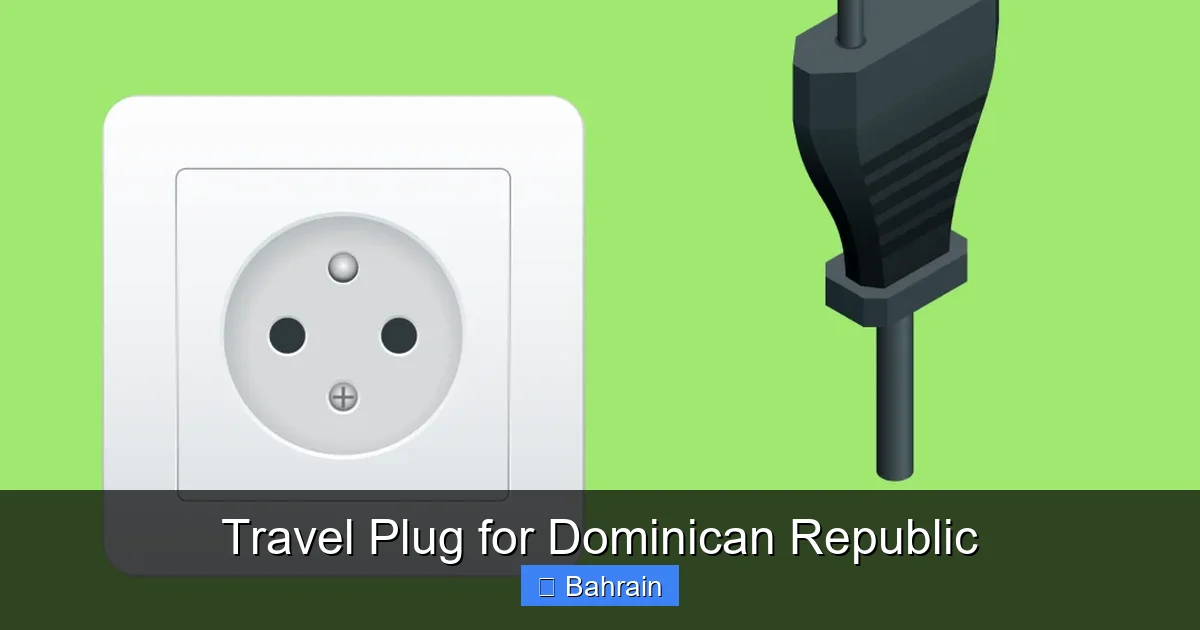
Visual guide about Travel Plug for Dominican Republic
Image source: wise.com
For Travelers from the United States and Canada
Great news! If you’re visiting the Dominican Republic from the United States or Canada, you likely will NOT need a travel plug for Dominican Republic. As mentioned, both the voltage (110-120V, 60Hz) and the plug types (Type A and Type B) are identical to what you use at home. Your phone charger, laptop power adapter, camera battery charger, and other personal electronics will plug directly into the wall outlets without any issues.
However, it’s always a good idea to check your devices, especially older ones, to ensure they are compatible with 110-120V. Most modern electronics are dual-voltage (e.g., labeled “Input: 100-240V, 50/60Hz”), meaning they can handle a range of voltages and frequencies, which makes them perfectly safe for the DR.
For Travelers from Europe, Asia, Africa, Australia, and Other Regions
If you’re coming from almost anywhere else in the world, the answer is a resounding YES, you WILL need a travel plug for Dominican Republic. Your native plug type will not fit the Type A or Type B outlets used in the DR. For example:
- Europe (most countries): Uses Type C or F plugs (two round pins).
- United Kingdom, Ireland, Singapore, Hong Kong: Uses Type G plugs (three rectangular pins).
- Australia, New Zealand, China (some regions): Uses Type I plugs (two flat pins in a V-shape with a grounding pin).
In these cases, you’ll need an adapter that physically changes the shape of your plug to fit into a Type A or Type B socket. But wait, there’s more to consider than just the plug shape!
Types of Travel Plugs for Dominican Republic You Might Encounter
Let’s look a bit closer at the two primary plug types you’ll use or adapt to when visiting the Dominican Republic.
Type A (Two Flat Parallel Pins)
This is the most basic North American plug. It’s ungrounded, meaning it doesn’t have the third round pin for safety. You’ll find it on smaller appliances like phone chargers, lamps, or some basic electronics. If your device only has two pins, it will fit into both Type A and Type B outlets.
Type B (Two Flat Parallel Pins with a Round Grounding Pin)
This is the grounded version, offering an extra layer of safety. The third round pin connects the device to the earth, preventing electrical shock in case of a fault. Most modern laptops, hair dryers, toasters, and other higher-power appliances use Type B plugs. If your device has three pins, it will only fit into a Type B outlet. This is the most common type of travel plug for Dominican Republic you’ll adapt to if your original plug isn’t Type A or B.
2-Prong vs. 3-Prong: What’s the Deal?
When selecting a travel plug for Dominican Republic, consider if your devices are 2-prong or 3-prong. A 3-prong (grounded) plug adapter offers better safety for your devices. While a 2-prong adapter might fit into a Type A socket, it won’t provide the grounding protection that a 3-prong device or adapter would in a Type B socket. For sensitive electronics, always opt for grounded connections where available.
Voltage Converters vs. Plug Adapters: What’s the Difference?
This is where many travelers get confused, but understanding the difference is vital for protecting your electronics.
Plug Adapters (Physical Fit)
A plug adapter (or simply “adapter”) is a simple device that changes the physical shape of your plug to fit into a foreign wall socket. It does NOT change the voltage. If your home country uses Type G plugs (like the UK) and you’re going to the Dominican Republic (Type A/B), you need a plug adapter to make your plug fit into the DR’s outlets. This is what you primarily need when we talk about a travel plug for Dominican Republic for non-North American visitors.
Voltage Converters (Electrical Transformation)
A voltage converter (or “transformer”) is a more complex device that actually changes the voltage of the electricity. For example, if you have a European hair dryer designed for 220-240V and you’re using it in the Dominican Republic (110-120V), you would need a voltage converter to step down the higher voltage to the lower voltage required by the DR’s system. Without it, your 220V hair dryer would likely not work at full power, or worse, it could be damaged if it’s not dual-voltage.
When Do You Need a Converter?
You need a voltage converter if:
- Your appliance is single-voltage (e.g., only 220-240V) AND
- The local voltage (110-120V in the DR) is different from your appliance’s required voltage.
How to Check: Look at the label on your device or its power adapter.
- If it says “Input: 100-240V, 50/60Hz,” it’s dual-voltage and compatible worldwide. You only need a plug adapter if your plug doesn’t fit.
- If it says “Input: 220-240V, 50Hz” (and nothing else), it’s single-voltage. You’ll need a converter for the Dominican Republic.
Most modern phone chargers, laptop chargers, and camera battery chargers are dual-voltage. However, high-heat appliances like hair dryers, straighteners, curling irons, and electric shavers are often single-voltage. Always check! Using a 240V-only hair dryer in a 120V socket might just result in weak performance, but plugging a 120V-only device into a 240V socket (the opposite scenario) can destroy it and pose a fire hazard.
Choosing the Right Travel Plug Adapter for Your Trip
If you’ve determined you need a travel plug for Dominican Republic, how do you choose the best one?
Universal Travel Adapters
These are fantastic investments, especially if you travel frequently to different countries. A good universal adapter will have interchangeable pins or retractable prongs that can convert to various plug types, including Type A and Type B, and often Type C, G, I, etc. Many also come with built-in USB charging ports, which are incredibly convenient for charging multiple devices simultaneously.
Pros: Versatile, compact, often includes USB ports.
Cons: Can be slightly bulkier than a single-country adapter, might be more expensive. Ensure it’s not just an adapter but can also handle the voltage for your devices if they are single voltage (many universal adapters are just plug shapers, not converters).
Single-Country Adapters (Type A/B)
If you only travel to countries with Type A/B outlets and don’t need the versatility of a universal adapter, a simple Type A/B adapter is a straightforward choice. These are generally smaller and less expensive.
Pros: Compact, affordable.
Cons: Only works for Type A/B outlets, less flexible for future travel.
Features to Look For in Your Travel Plug for Dominican Republic
- USB Ports: Many devices charge via USB, so multiple USB ports (especially USB-C) on your adapter can reduce the number of wall chargers you need to carry.
- Surge Protection: Power surges can happen anywhere. An adapter with built-in surge protection can help safeguard your valuable electronics from unexpected electrical spikes.
- Multiple Outlets: Some adapters offer more than one AC outlet, allowing you to plug in several devices directly without needing additional power strips.
- Quality and Safety Certifications: Always buy adapters from reputable brands. Look for safety certifications (e.g., CE, RoHS, FCC) to ensure they meet international safety standards.
Packing Smart: Essential Electrical Gear for the DR
Beyond just the travel plug for Dominican Republic, a few other items can make your charging experience much smoother.
Portable Power Bank
A fully charged power bank is your best friend for long days exploring, beach outings, or unexpected power outages (which can sometimes occur in certain areas of the DR). It ensures your phone, camera, or other USB-chargeable devices stay powered even when you’re far from an outlet.
Multi-Port USB Wall Charger
With multiple devices like phones, tablets, smartwatches, and wireless earbuds, having a single wall charger with 3-5 USB ports can be a lifesaver. This means you only need one adapter for the wall, and all your USB devices can charge simultaneously.
Small Power Strip (with Surge Protection)
Even if you’re traveling from North America and don’t need a plug adapter, wall outlets in hotels can be scarce, especially near bedsides. A small, compact power strip with surge protection (and maybe even some USB ports) can be incredibly useful. Just remember that if you’re using it with an adapter, the power strip itself should be rated for the correct voltage or be dual-voltage.
Extension Cord
Similar to a power strip, a short extension cord can come in handy if the outlets are inconveniently located behind furniture or too far from where you want to use your device.
Checking Device Labels – A Final Reminder
Before you leave, take a moment to double-check the labels on all your electronic devices. Look for the “Input” specifications. This simple check will confirm whether your device is dual-voltage (100-240V) or single-voltage, and whether you need just a travel plug for Dominican Republic or also a voltage converter.
For example:
- Phone Charger: Often reads “Input: 100-240V ~ 50/60Hz”.
Conclusion: Dual-voltage, only needs a plug adapter if your native plug is not Type A/B. - Hair Dryer: Might read “Input: 220-240V ~ 50Hz”.
Conclusion: Single-voltage, will need a voltage converter AND a plug adapter if your native plug is not Type A/B. Consider leaving it at home and using a hotel-provided one, or buying a travel-specific dual-voltage hair dryer.
Conclusion: Power Up for Your Dominican Republic Adventure!
Preparing for your trip to the Dominican Republic should be exciting, not stressful. By understanding the local electrical system and ensuring you have the correct travel plug for Dominican Republic, you can avoid any frustrating charging mishaps and keep all your devices ready for action. Whether you’re a North American traveler who simply plugs and plays, or an international visitor needing a reliable adapter (and possibly a converter), a little foresight goes a long way.
So, take a few minutes to check your devices, pack the right electrical essentials, and then focus on the fun stuff – planning your excursions, practicing your Spanish phrases, and dreaming of those incredible Caribbean sunsets. With your electronics powered up and ready, you’ll be able to capture every memory, navigate with ease, and share your amazing Dominican Republic experience with the world. Enjoy your trip!
Frequently Asked Questions
What if my device only has two pins but the outlet has three holes (Type B)?
A two-pin plug (Type A) will safely fit into a three-hole (Type B) outlet. The third, round hole on the Type B outlet is for grounding and is simply not used by a two-pin plug, but your device will still receive power.
Should I bring a power strip to the Dominican Republic?
Bringing a small, compact power strip (preferably with surge protection and USB ports) is highly recommended. Hotel rooms often have limited outlets, and a power strip allows you to charge multiple devices simultaneously using just one wall socket, even without a specific travel plug for Dominican Republic if you’re from North America.
Are electrical surges common in the Dominican Republic?
While power surges can occur anywhere, having a surge protector (either as part of your universal adapter or a separate power strip) is a good precaution to protect your valuable electronics from potential damage due to voltage fluctuations.
Can I charge my phone directly from a USB port on a universal travel adapter?
Yes, many modern universal travel adapters include built-in USB ports (both USB-A and USB-C). These are specifically designed to charge your USB-powered devices directly, often eliminating the need for separate phone or tablet wall chargers.
Is it safer to use a hotel’s provided hair dryer than bringing my own?
If your own hair dryer is a single-voltage device (e.g., 220-240V only) and you’re traveling from a region with higher voltage, it’s generally safer and more convenient to use a hotel-provided hair dryer or purchase a travel-specific dual-voltage one. This avoids the need for a bulky voltage converter.
Where can I buy a travel plug for Dominican Republic if I forget to bring one?
While it’s always best to purchase one before your trip, you might find basic plug adapters at airports, larger electronics stores in major Dominican cities like Santo Domingo, or sometimes even at your hotel’s gift shop. However, selection might be limited and prices could be higher.