Travel Plug Adapter for Philippines
Planning a trip to the beautiful Philippines? Don’t let power issues dim your adventure! You’ll need the correct travel plug adapter for Philippines to keep all your essential electronics charged. The country primarily uses Type A and B sockets (two flat pins or two flat pins with a round ground), operating at 220V/60Hz. Most modern devices are dual voltage, requiring only a simple adapter, but older appliances might need a voltage converter. Be prepared to ensure a smooth, fully powered journey!
Ah, the Philippines! A breathtaking archipelago of over 7,000 islands, famous for its pristine beaches, vibrant coral reefs, lush rice terraces, and incredibly warm, welcoming people. Picture yourself lounging on a white-sand beach in Boracay, diving in Palawan’s crystal-clear waters, or exploring the bustling streets of Manila. Your phone is buzzing with amazing photos, your laptop is ready for quick travel updates, and your camera battery is about to give up the ghost. Suddenly, a wave of panic hits: How will you charge all your gadgets?
This is where the humble but mighty travel plug adapter for Philippines comes into play. It’s often an overlooked detail in travel planning, yet it can make or break your ability to stay connected, capture memories, and even manage essential communication while abroad. Imagine missing out on that perfect sunset shot because your camera battery is dead, or being unable to navigate because your phone ran out of juice. A little preparation goes a long way in ensuring your trip to the Philippines is smooth and fully powered.
Navigating the world of international electricity can seem a bit daunting at first. Voltage, frequency, socket types – it’s a lot to consider. But don’t worry! This comprehensive guide will demystify everything you need to know about electricity in the Philippines and help you choose the perfect travel plug adapter for Philippines, ensuring all your devices stay charged and ready for every adventure. Let’s dive in and get you fully prepared!
Key Takeaways
- Socket Types: The Philippines primarily uses Type A (two flat parallel pins) and Type B (two flat parallel pins with a round grounding pin) electrical outlets. Some older establishments might occasionally have Type C sockets.
- Voltage and Frequency: The standard electricity supply in the Philippines is 220 Volts (V) and 60 Hertz (Hz). This is crucial to remember for your electronic devices.
- Adapter vs. Converter: Most modern electronic devices (smartphones, laptops, cameras) are dual voltage, meaning they only require a simple travel plug adapter for Philippines. A voltage converter is only necessary for single-voltage appliances from 100-120V countries that are not dual voltage (e.g., some hair dryers, curling irons).
- Dual Voltage Check: Always check your device’s charger label. If it states “INPUT: 100-240V, 50/60Hz,” it is dual voltage and only needs an adapter.
- Safety First: Using the wrong adapter or forcing a plug can damage your devices or pose a fire hazard. Always ensure your travel plug adapter for Philippines fits snugly and is appropriate for your device’s voltage requirements.
- Where to Buy: It’s best to purchase your travel plug adapter for Philippines before you leave, from online retailers or electronics stores, for better selection and potentially lower prices. Limited options might be available locally.
- Power Strips & USB Chargers: Consider bringing a universal power strip with surge protection and multiple USB ports (compatible with 220V) to charge several devices simultaneously with just one travel plug adapter for Philippines.
Quick Answers to Common Questions
What type of plug adapter do I need for the Philippines?
You will primarily need a travel plug adapter for Philippines that accommodates Type A (two flat parallel pins) and Type B (two flat parallel pins with a round grounding pin) electrical outlets.
Do I need a voltage converter for the Philippines?
Most modern electronic devices (phones, laptops, camera chargers) are dual voltage (100-240V) and only need a simple travel plug adapter for Philippines. A voltage converter is only necessary if you have a single-voltage appliance (e.g., 110V only) from a 100-120V country.
What is the voltage in the Philippines?
The standard electricity voltage in the Philippines is 220 Volts (V) with a frequency of 60 Hertz (Hz).
Can I use my US hairdryer in the Philippines?
If your US hairdryer is rated for 110-120V only, you will need a voltage converter in addition to a travel plug adapter for Philippines. If it’s a dual-voltage hairdryer (100-240V), then only an adapter is needed.
Where can I buy a travel plug adapter for Philippines?
It is highly recommended to buy your travel plug adapter for Philippines before your trip from online retailers, electronics stores, or travel shops, as selection and prices are usually better than buying upon arrival.
📑 Table of Contents
- Understanding the Basics: Philippines’ Electrical Standards
- Identifying Your Needs: What Devices Are You Bringing?
- Choosing the Right Travel Plug Adapter for Philippines
- Do You Need a Voltage Converter or Just an Adapter?
- Practical Tips for a Smooth Charging Experience in the Philippines
- Where to Buy Your Travel Plug Adapter for Philippines
- Conclusion: Power Up Your Philippine Adventure!
Understanding the Basics: Philippines’ Electrical Standards
Before you even think about buying a travel plug adapter for Philippines, it’s crucial to understand the foundational electrical standards used throughout the country. This knowledge is your first line of defense against damaging your precious electronics or, worse, creating a safety hazard.
Voltage and Frequency
The standard electricity supply in the Philippines is 220 Volts (V) and operates at a frequency of 60 Hertz (Hz). This is a vital piece of information, especially if you’re coming from a country with a different standard, such as the United States or Canada, which typically use 110-120V at 60Hz. Most countries in Europe, Asia, and Australia use 220-240V.
* 220V: This means the “push” of electricity is stronger than in 110V countries.
* 60Hz: This refers to the cycles per second of the alternating current. For most modern electronic devices, the frequency difference (e.g., from 50Hz to 60Hz or vice versa) is less critical than the voltage, as many are designed to handle both.
Socket Types in the Philippines
This is where your travel plug adapter for Philippines becomes essential. The Philippines primarily uses two main types of electrical outlets:
* Type A: This socket has two flat parallel slots. It’s the same type commonly found in North and Central America, and Japan.
* Type B: This socket has two flat parallel slots and a third round pin for grounding. It’s also prevalent in North and Central America, and Japan. Type B is essentially a grounded version of Type A.
While Type A and B are the most common, you might occasionally encounter Type C sockets (two round pins) in some older buildings or accommodations. However, focusing on A and B will cover the vast majority of your needs for a travel plug adapter for Philippines. If you bring a universal adapter, it will usually include the Type C option as well. It’s always a good idea to have an adapter that covers both A and B, or a universal one that covers multiple types including these.
Identifying Your Needs: What Devices Are You Bringing?
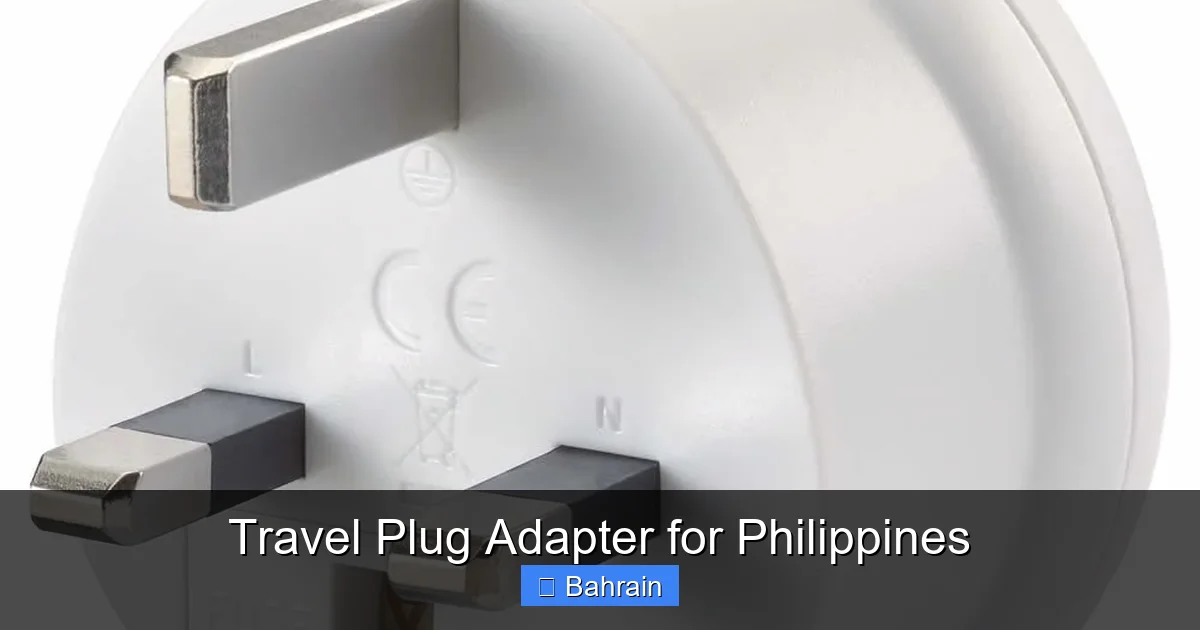
Visual guide about Travel Plug Adapter for Philippines
Image source: gapyeartravelstore.com
To select the right travel plug adapter for Philippines, you first need to take stock of all the electronic devices you plan to bring. This inventory will help you determine not only the number of adapters you might need but also whether you require anything more than a simple adapter, such as a voltage converter.
Common Travel Electronics
Think about your daily essentials and what keeps you connected and entertained:
- Smartphones: iPhone, Android devices.
- Laptops: MacBooks, Windows laptops.
- Tablets: iPads, Android tablets.
- Cameras: DSLRs, mirrorless cameras, point-and-shoots, GoPros.
- Portable Chargers/Power Banks: To keep your devices juiced on the go.
- Smartwatches/Fitness Trackers: Apple Watch, Fitbit, Garmin.
- Headphones: Noise-canceling headphones, earbuds.
Higher-Power Appliances (Be Cautious!)
Some travelers also bring personal care appliances. These are the ones that often require more consideration:
- Hair Dryers: Often high wattage.
- Hair Straighteners/Curling Irons: Also high wattage.
- Electric Razors: Usually lower wattage but still need a check.
- Travel Kettles/Small Coffee Makers: High wattage.
Checking Your Device’s Voltage Compatibility
This is the single most important step after identifying your devices. Look at the small print on the power adapter or charger of each device. You’re looking for the “INPUT” specifications.
* Dual Voltage Devices: Most modern electronics (smartphones, laptops, tablets, camera chargers, most USB chargers) are designed to be “dual voltage.” This means they can handle a range of voltages, typically displayed as “INPUT: 100-240V, 50/60Hz.” If your device’s charger shows this, you are in luck! You only need a simple travel plug adapter for Philippines to physically connect your device to the wall socket. The device itself will automatically adjust to the 220V supply.
* Single Voltage Devices: Older appliances or specific high-power devices (like some hair dryers, curling irons, or travel irons) might only be designed for a single voltage, typically “INPUT: 110-120V” (if you’re from North America) or “INPUT: 220-240V” (if you’re from Europe, etc.).
* If your device is 110-120V only and you plug it into a 220V Philippine outlet with just an adapter, it will likely be severely damaged, short circuit, or even catch fire. For these devices, you will need a voltage converter (transformer) in addition to your travel plug adapter for Philippines.
* If your device is 220-240V only, and you are traveling from a 220-240V country, you just need a travel plug adapter for Philippines.
Always prioritize checking the voltage specification on *each* device you plan to bring. When in doubt, leave it at home or purchase a dual-voltage travel version.
Choosing the Right Travel Plug Adapter for Philippines
Now that you know what you’re bringing and what voltage they operate on, it’s time to select the perfect travel plug adapter for Philippines. There are a few options available, each with its own advantages.
Simple Type A/B Adapters
These are straightforward, compact adapters that convert your plug (e.g., a two or three-pronged US plug) into a Type A or Type B configuration that fits Philippine outlets.
- Pros: Small, lightweight, inexpensive. If all your devices are dual voltage and you just need to convert the physical plug shape, these are ideal.
- Cons: Only convert the plug shape; they do not change the voltage. You’ll need one for each device or a power strip to use with one.
When looking for a basic travel plug adapter for Philippines, ensure it specifies compatibility with Type A and/or Type B sockets. Many come in multi-packs, which can be useful.
Universal Travel Adapters
A universal travel adapter is an all-in-one solution that usually features various retractable pins to fit most socket types worldwide, including Type A and B for the Philippines.
- Pros: Extremely versatile, covering many countries beyond the Philippines. Often includes multiple USB charging ports, reducing the need for separate USB wall warts.
- Cons: Can be slightly bulkier and more expensive than simple adapters. Still, they *only* adapt the plug shape; they do not convert voltage unless explicitly stated (which is rare for universal adapters – those are usually universal converters).
Many travelers find a good quality universal travel plug adapter for Philippines to be the most convenient option, especially if they travel frequently to different regions. Look for models with built-in surge protection for added peace of mind.
Multi-Port USB Wall Chargers
While not strictly a “travel plug adapter for Philippines,” these are incredibly useful. Many modern devices charge via USB (phones, tablets, smartwatches). A multi-port USB charger allows you to charge several USB devices simultaneously from a single wall socket.
- Pros: Reduces clutter, only needs one travel plug adapter for Philippines to plug into the wall.
- Cons: Only charges USB devices. You’ll still need adapters for non-USB electronics (like laptops with their own chargers).
Ensure your multi-port USB charger is “INPUT: 100-240V,” which most modern ones are. Then, simply plug it into your travel plug adapter for Philippines and you’re good to go.
Consider a Travel Power Strip
If you’re traveling with multiple people or many devices, a small, travel-sized power strip can be a game-changer. Look for one that is specifically rated for international use (100-240V input) and has surge protection.
- How it works: You plug your travel plug adapter for Philippines into the wall, then plug the power strip into the adapter. Now you have multiple outlets and often several USB ports from one single wall connection.
- Benefits: Only one travel plug adapter for Philippines is needed, great for charging many items overnight, especially in hotels with limited outlets.
Always ensure the power strip itself is dual voltage compatible.
Do You Need a Voltage Converter or Just an Adapter?
This is perhaps the most common point of confusion for international travelers, and getting it wrong can have dire consequences for your electronics. Let’s clarify the difference between a voltage adapter (or “plug adapter”) and a voltage converter.
The Role of a Travel Plug Adapter for Philippines
A travel plug adapter for Philippines is a simple, non-electrical device. Its sole purpose is to change the physical shape of your plug to fit into a foreign wall socket. It acts like a mechanical bridge, allowing your device’s plug to make contact with the electricity supply. It does NOT change the voltage or the frequency of the electricity.
* When you need it: Always, if your home country’s plug type doesn’t match Type A or B sockets in the Philippines, and your device is dual voltage (100-240V).
The Role of a Voltage Converter (Transformer)
A voltage converter, also known as a transformer, is an electrical device that actually changes the voltage of the electricity coming from the wall outlet. For instance, it can step down 220V electricity from the Philippine outlet to 110-120V for your single-voltage appliance.
* When you need it: ONLY if you are bringing a single-voltage appliance (e.g., rated only for 110V or 120V) from a 100-120V country and need to use it in the 220V Philippines.
* Examples of devices that might need a converter: Some older hair dryers, curling irons, travel irons, or small motors not designed for dual voltage.
Critical Distinction: Don’t Confuse Them!
Plugging a 110V-only device into a 220V Philippine outlet with just a travel plug adapter for Philippines (without a converter) is a recipe for disaster. The excessive voltage will likely overload and destroy your device, potentially causing sparks, smoke, or even a fire.
* Safety Tip: High-wattage heating appliances (like hair dryers, curling irons) often require heavy-duty voltage converters, which can be bulky and expensive. Many travelers find it easier and safer to buy dual-voltage versions of these appliances specifically for travel or to simply purchase inexpensive ones upon arrival in the Philippines (if available and cost-effective). Modern travel hair dryers and styling tools are often dual-voltage. Always double-check!
In summary, for most travelers with modern electronics, a simple travel plug adapter for Philippines is all that’s necessary. Only specific, older, or high-power single-voltage appliances will require a voltage converter. When in doubt, err on the side of caution and check your device’s label!
Practical Tips for a Smooth Charging Experience in the Philippines
Even with the right travel plug adapter for Philippines, a few extra tips can make your charging experience completely hassle-free.
Test Your Adapters Before You Go
There’s nothing worse than arriving in a foreign country, eager to charge your devices, only to find your travel plug adapter for Philippines doesn’t work or fit properly. Before you leave, try plugging your devices into your adapter and then into a compatible socket (if you have one, e.g., in a friend’s house from the Philippines or a universal testing kit). At the very least, ensure the adapter itself seems sturdy and well-made.
Pack Multiples (Just in Case)
Adapters are small and easily misplaced or forgotten. Having a spare travel plug adapter for Philippines tucked away in a different bag can be a lifesaver. Plus, if you’re traveling with a companion, you might both need to charge devices simultaneously.
Consider Your Hotel’s Amenities
Many modern hotels in the Philippines, especially those catering to international tourists, are becoming more traveler-friendly. Some might offer USB charging ports directly in the wall or even universal outlets that accept various plug types. While this is a bonus, don’t rely solely on it. Always bring your own travel plug adapter for Philippines as a backup.
Beware of Loose Sockets
In older buildings or less maintained accommodations, you might encounter loose electrical sockets. If your travel plug adapter for Philippines feels wobbly or doesn’t make a firm connection, try another socket if available. A loose connection can be inefficient and potentially dangerous, leading to overheating.
Charge Smartly
Avoid overloading a single outlet, especially if you’re using a power strip. While your travel plug adapter for Philippines is designed to handle the voltage, the total wattage of all devices plugged in could strain older wiring. Charge your most essential devices first.
Safety First: Look for Certifications
When purchasing your travel plug adapter for Philippines, look for safety certifications like CE, RoHS, or FCC. These indicate that the product meets certain safety and environmental standards. Avoid very cheap, unbranded adapters which may not be manufactured to safe specifications.
Unplug When Not in Use
It’s always a good practice to unplug your adapters and devices when you’re not actively charging them or when you leave your room. This conserves energy and minimizes any potential risk.
Where to Buy Your Travel Plug Adapter for Philippines
Knowing where to get your travel plug adapter for Philippines is just as important as knowing which one to get. You have several options, each with its own advantages.
Before You Travel (Recommended)
This is by far the best approach. Purchasing your adapter before you leave offers you a wider selection, better prices, and the peace of mind that you’re prepared.
* Online Retailers: Websites like Amazon, eBay, or dedicated travel gear sites offer a vast array of travel plug adapters for the Philippines. You can read reviews, compare features, and often find multi-packs or universal adapters at competitive prices. This is ideal for research and ensuring you get exactly what you need.
* Electronics Stores: Major electronics retailers (e.g., Best Buy, Currys PC World, JB Hi-Fi, or local equivalents) usually carry a selection of international travel adapters. While prices might be slightly higher than online, you can get expert advice and physically inspect the product.
* Travel Stores/Luggage Shops: Stores specializing in travel accessories often stock basic travel plug adapters for Philippines. They might have a more limited selection but are convenient if you’re doing last-minute shopping.
Upon Arrival in the Philippines (Less Recommended)
While it’s possible to buy a travel plug adapter for Philippines after you arrive, it’s generally not recommended as your primary strategy for a few reasons:
* Limited Availability: While major cities like Manila or Cebu will have department stores or large supermarkets (like SM Department Store, Rustan’s, Puregold) that might carry adapters, smaller towns or islands might not. You might waste valuable travel time searching.
* Potentially Higher Prices: Adapters bought last-minute in airports or tourist areas can be significantly more expensive.
* Quality Concerns: Without prior research, you might end up with a lower-quality adapter that doesn’t last or isn’t as safe.
* Local vs. International: Shops in the Philippines will primarily sell adapters for local use (e.g., converting Type C to Type A/B), not necessarily for international travelers coming from a Type G or Type I country, for example. You might find a generic travel plug adapter for Philippines, but the options might be limited.
Always aim to purchase your travel plug adapter for Philippines well in advance of your departure. It’s a small item that makes a huge difference in your travel convenience.
Conclusion: Power Up Your Philippine Adventure!
Embarking on a journey to the Philippines is an exciting prospect, filled with incredible sights, sounds, and experiences. The last thing you want is for your adventure to be interrupted by dead batteries or damaged electronics. By understanding the basics of Philippine electricity – the 220V/60Hz standard and the prevalence of Type A and B sockets – you’re already halfway to a seamless power experience.
Remember to identify your devices’ voltage compatibility, prioritize a simple travel plug adapter for Philippines for dual-voltage electronics, and only consider a voltage converter for single-voltage, high-power appliances. Arm yourself with a reliable travel plug adapter for Philippines, maybe a multi-port USB charger or a travel power strip, and you’ll be able to capture every moment, stay connected, and navigate with ease. So, pack smart, stay charged, and get ready to enjoy the enchanting beauty of the Philippines to the fullest! Safe travels!
Frequently Asked Questions
What are the common plug types found in the Philippines?
The most common plug types you’ll encounter in the Philippines are Type A, which has two flat parallel pins, and Type B, which adds a round grounding pin to the two flat pins. Having a travel plug adapter for Philippines that supports both types will cover most situations.
Is 220V dangerous for my 110V device if I only use an adapter?
Yes, plugging a 110V-only device directly into a 220V outlet with just a travel plug adapter for Philippines (without a voltage converter) is very dangerous. It will almost certainly damage your device beyond repair and could pose a fire or electrical hazard.
Can I charge my iPhone and laptop in the Philippines with just an adapter?
Yes, iPhones and most laptops come with dual-voltage chargers (INPUT: 100-240V, 50/60Hz). This means they will automatically adapt to the 220V supply in the Philippines, so you only need a simple travel plug adapter for Philippines to fit the physical wall socket.
Should I bring a power strip to the Philippines?
Bringing a travel-friendly power strip (ensure it’s rated 100-240V input) is an excellent idea. It allows you to charge multiple devices using just one travel plug adapter for Philippines, which is very convenient given that hotel rooms often have limited outlets.
Are universal travel adapters suitable for the Philippines?
Yes, most universal travel adapters are suitable as they include retractable pins for Type A and B sockets used in the Philippines. They are a versatile choice, especially if you plan to travel to other countries as well, but remember they are not voltage converters.
What should I do if my adapter doesn’t fit a socket in the Philippines?
If your travel plug adapter for Philippines doesn’t fit, first try another socket in the room or a different room in your accommodation. It’s rare, but some older or specific outlets might differ. As a last resort, local convenience or hardware stores might have basic adapters, though options can be limited.