Spain Traveller Registration System Issues
Navigating Spain’s mandatory traveler registration system can present unexpected challenges for visitors and accommodation providers alike. From persistent technical glitches and confusing documentation requirements to significant language barriers and data privacy concerns, these Spain Traveller Registration System issues often lead to frustration. Understanding these common pitfalls and preparing with practical tips can help ensure a smoother, more enjoyable travel experience in beautiful Spain.
Ah, Spain! The land of vibrant fiestas, sun-drenched beaches, breathtaking architecture, and delicious tapas. It’s a dream destination for so many, and planning a trip there is usually filled with excitement. You book your flights, find the perfect casa rural or city apartment, and start dreaming of sangria by the sea. But then, you might bump into a less charming aspect of Spanish travel: the mandatory traveller registration system.
This system, which requires all guests staying in regulated accommodation to have their details recorded and submitted to the police, is a crucial part of Spain’s security and tourism monitoring efforts. While its intentions are good – enhancing safety and gathering important statistics – the reality for many travelers and hosts can be quite different. Sometimes, these bureaucratic hurdles can turn into genuine headaches, leading to what many call “Spain Traveller Registration System issues.” Let’s dive into these challenges and equip you with the knowledge to navigate them successfully.
So, what exactly are these common Spain Traveller Registration System issues, and how can you, as a traveler or a conscientious host, minimize their impact? We’re going to break down the most frequently encountered problems, offer practical solutions, and give you the insider tips you need to make sure your Spanish adventure remains as seamless and enjoyable as possible, free from unnecessary digital drama.
Key Takeaways
- Technical Glitches are Common: Expect potential server errors, slow loading times, or form submission failures; a stable internet connection and trying different browsers can often help.
- Documentation Confusion Persists: Be prepared with all necessary identification details (passport/ID) for every guest, as specific data points might be requested that aren’t immediately obvious.
- Language Barriers are a Hurdle: The system is primarily in Spanish, leading to difficulty for non-Spanish speakers; using browser translation tools or seeking assistance is highly recommended.
- Data Privacy is a Concern: Travelers’ personal data is collected and stored, raising questions about security and GDPR compliance; official guidance suggests data is handled securely.
- Impact on Accommodation Providers: Hosts face significant administrative burden and potential fines for non-compliance, which can indirectly affect the traveler’s check-in experience.
- Preparation is Key: Registering well in advance, taking screenshots, and keeping records of your submission are vital steps to mitigate potential Spain Traveller Registration System issues.
Quick Answers to Common Questions
What is Spain’s traveler registration system?
It’s a mandatory legal requirement for all accommodation providers in Spain to register the identification details of every guest aged 16 and over with the local police authorities (Guardia Civil or Policía Nacional).
Why does Spain require traveler registration?
The system serves two main purposes: enhancing national security by tracking who is staying where, and collecting statistical data on tourism for economic and planning purposes.
What details do I need to provide for registration?
Typically, you’ll need to provide your full name, nationality, date of birth, gender, type of identification document (e.g., passport), the document number, and your arrival and departure dates.
Can I register myself online as a traveler?
No, travelers cannot register themselves directly. It is the legal responsibility of the accommodation provider (hotel, Airbnb host, etc.) to collect your details and submit them to the authorities via their specific online portal.
What happens if I don’t provide my details for registration?
Accommodation providers are legally obliged to collect your details. Refusal to provide the necessary identification information could result in them denying you accommodation, as they face significant fines for non-compliance.
📑 Table of Contents
- Understanding Spain’s Traveller Registration System
- Common Technical Glitches and How to Navigate Them
- Confusion Over Requirements and Documentation
- Language Barriers and User Interface Challenges
- Data Privacy Concerns and Security Implications
- Impact on Accommodation Providers and Traveler Experience
- Conclusion
Understanding Spain’s Traveller Registration System
Before we delve into the problems, it’s helpful to understand what this system is all about. In Spain, all commercial accommodation providers – from hotels and hostels to Airbnbs and rural guesthouses – are legally obliged to register the details of their guests with the local police (Guardia Civil or Policía Nacional). This requirement isn’t new; it dates back decades, though the method of submission has evolved from paper registers to largely digital platforms.
The Purpose of Registration
The primary goals of this registration are twofold: security and statistical monitoring. On the security front, it helps authorities track who is staying where, which can be vital in investigations or emergencies. From a statistical perspective, the collected data contributes to understanding tourism trends, visitor numbers, and economic impact. Guests are required to provide basic identification details, such as full name, nationality, date of birth, document type (passport/ID), document number, and date of arrival and departure.
Who Needs to Register?
Every single guest aged 16 or over staying in a regulated accommodation must be registered. This means if you’re traveling as a family, each adult needs to provide their information. Children under 16 are usually exempt from individual registration, but their presence is typically noted alongside the main adult registrant. It’s crucial for accommodation providers to collect this information promptly, often at check-in, and submit it within a short timeframe (usually 24 hours of arrival).
Common Technical Glitches and How to Navigate Them
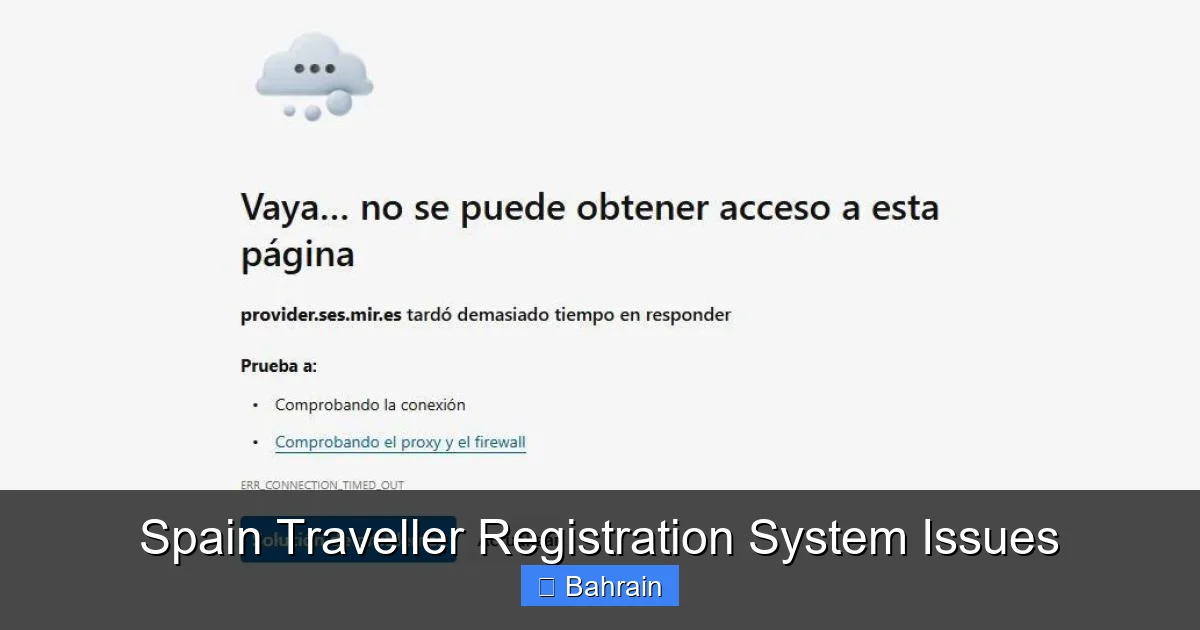
One of the most frustrating Spain Traveller Registration System issues revolves around its technical stability. Imagine you’ve just arrived after a long journey, eager to relax, and your host is wrestling with a buggy website. This isn’t an uncommon scenario.
Visual guide about Spain Traveller Registration System Issues
Image source: md.gsstatic.es
Website Downtime and Slow Performance
It’s not unusual for the online registration portals (often called “Parte de Viajero” or “Libro de Registro”) to experience server overloads, especially during peak travel seasons or at specific times of the day. This can lead to slow loading times, pages freezing, or even the website being completely unresponsive. For hosts trying to register multiple guests, this can turn into a time-consuming nightmare, directly impacting your check-in experience.
- Practical Tip: If you’re a host, try to complete registrations during off-peak hours (early morning or late at night). If you’re a guest, be patient. Sometimes, simply waiting a few minutes and refreshing the page can work wonders.
Form Submission Errors and Data Loss
Another frequent issue is encountering errors during the form submission process. You’ve painstakingly entered all the details, clicked “submit,” and then… an error message appears, or worse, the system just hangs. Sometimes, the data you entered might vanish, forcing you to start over. This particular Spain Traveller Registration System issue is incredibly annoying and can lead to significant delays.
- Practical Tip: Before hitting submit, take a screenshot of the completed form. This serves as a record of your attempt and can save you from re-entering everything if an error occurs. Also, ensure your internet connection is stable; a flaky Wi-Fi signal can often be the culprit behind submission failures.
Browser Compatibility and System Requirements
Some of these government-run portals aren’t always optimized for all web browsers or devices. They might work perfectly on Google Chrome but throw tantrums on Safari or Firefox. Outdated browsers or operating systems can also contribute to compatibility problems.
- Practical Tip: If you’re running into persistent technical issues, try switching browsers. If you’re on a mobile device, try using a desktop computer instead. Ensure your browser is updated to its latest version. Sometimes, clearing your browser’s cache and cookies can resolve minor glitches.
Confusion Over Requirements and Documentation
Beyond the technical glitches, one of the most common Spain Traveller Registration System issues stems from a lack of clarity regarding exactly what information is needed and who needs to provide it.
Ambiguous Data Fields
While the basic information (name, passport number) is clear, some fields within the registration forms can be ambiguous, especially if they’re not perfectly translated or if the host is unfamiliar with specific nuances. For instance, specific formats for dates or addresses might be expected, and an incorrect entry could trigger an error.
- Practical Tip: Always have your physical identification document (passport or national ID card) readily available, not just a photo on your phone. This ensures you can accurately provide every detail as it appears on the official document.
Who Needs to Register? The Age Question
As mentioned, everyone aged 16 and over must register. However, there can sometimes be confusion, particularly with younger travelers who might look older or if families are traveling with teenagers just on the cusp of 16. Hosts need to be vigilant and apply the rule correctly, as non-compliance can lead to fines.
- Practical Tip: If you’re traveling with teenagers, clearly communicate their ages to your host. Hosts should have a clear policy on how they verify ages for registration purposes.
Proof of Identity Challenges
For non-EU citizens, a passport is usually the standard document. For EU citizens, a national identity card is also acceptable. The challenge arises when travelers might only have a driving license or other forms of ID that are not valid for this specific registration. It’s vital to present a document that is internationally recognized for travel and identification.
- Practical Tip: When planning your trip to Spain, make sure your primary travel identification (passport or national ID card) is current and easily accessible for your accommodation provider.
Language Barriers and User Interface Challenges
Imagine trying to fill out an important online form in a language you don’t fully understand. This is a very real Spain Traveller Registration System issue for many international travelers and, occasionally, for hosts who might not be native Spanish speakers or are using third-party software that integrates with the official system.
Spanish-Only Interfaces
While Spain is a major tourist destination, many government portals, including the traveller registration systems, are primarily designed in Spanish. English translation, if available, might be incomplete, inaccurate, or simply not present for all sections. This creates a significant barrier for non-Spanish speakers trying to understand requirements or troubleshoot issues.
- Practical Tip: If you’re a host using the official portal, familiarize yourself with browser translation tools (like Google Translate built into Chrome). They aren’t perfect, but they can provide enough context to navigate the forms. As a guest, if your host is struggling, offer to use your own phone’s translation app to help decipher instructions.
Confusing Layouts and Navigation
Beyond language, the user interfaces of some government systems can feel outdated or clunky. Complex navigation, small text, or poorly designed layouts can make the process unnecessarily difficult, even for native speakers. Locating the correct fields, understanding error messages, and figuring out how to submit can all become time-consuming puzzles.
- Practical Tip: Patience is your best friend. Look for visual cues, icons, or common button labels (“Guardar” for save, “Enviar” for submit). If possible, ask for a demonstration or guidance from a more experienced host or local.
Data Privacy Concerns and Security Implications
In an age where data breaches are unfortunately common, and privacy is a growing concern, the mandatory collection of personal details by a government system naturally raises questions among travelers. This is another area contributing to Spain Traveller Registration System issues, especially for those highly conscious of their digital footprint.
What Data is Collected?
The system collects standard identification details: full name, nationality, type of ID document, ID number, date of issue, date of birth, gender, and sometimes even the place of birth. For accommodation providers, it also logs the date of arrival and departure for each guest. All this information is considered sensitive personal data under GDPR (General Data Protection Regulation).
How Secure is the Data?
Spanish authorities assert that the data collected is handled in strict compliance with GDPR and Spanish data protection laws. The information is transmitted through secure channels and stored on government servers, accessible only to authorized personnel for specific, legally defined purposes (e.g., security, crime prevention). However, the general public rarely gets detailed insight into the exact technical security measures employed, which can fuel unease.
- Practical Tip: While you can’t opt-out of the registration, knowing your rights under GDPR is important. Data collected for this purpose should only be used for its stated purpose and not for marketing or other unsolicited contact. If you have concerns, you can contact the Spanish Data Protection Agency (AEPD).
Impact on Accommodation Providers and Traveler Experience
The challenges aren’t just for the digital system itself; they ripple out to affect both the hosts and, consequently, the travelers’ overall experience.
Increased Administrative Burden for Hosts
For independent hosts or small guesthouse owners, managing the traveler registration system can be a significant administrative burden. It requires them to:
- Collect accurate information from every guest.
- Ensure data entry is correct and error-free.
- Navigate the potentially clunky online portal.
- Submit the data within a tight 24-hour window.
- Keep records of their submissions.
Failing to comply can result in hefty fines, making this a high-stakes task. This pressure can sometimes manifest as rushed check-ins or frustrated hosts, which isn’t ideal for a welcoming guest experience.
Delayed Check-ins and Guest Frustration
When the system is slow, or technical issues arise, it directly impacts the check-in process. What should be a quick formality can turn into a drawn-out wait, especially after a long journey. Travelers, tired and eager to settle in, can understandably become frustrated. This contributes to the negative perception of Spain Traveller Registration System issues.
- Practical Tip for Hosts: Consider using third-party apps or software designed to streamline this process, many of which integrate directly with the official police portals and offer better user interfaces and error checking. Collect guest details ahead of time if possible (e.g., through pre-arrival forms, securely).
- Practical Tip for Guests: Be ready with your documents. Have your passport or ID open to the relevant page. Be patient and understanding if your host is struggling; remember, they are legally obliged to do this.
Conclusion
Spain is an incredible country, and its mandatory traveler registration system is a necessary part of its regulatory framework. While Spain Traveller Registration System issues can sometimes throw a wrench in the works, they are largely manageable with proper preparation and a bit of patience. Understanding the common technical glitches, knowing what documentation is required, being aware of potential language barriers, and appreciating the host’s obligations can significantly smooth out the process.
The key takeaway here is preparation. For travelers, ensuring you have the correct identification ready and being patient with your host can make a world of difference. For hosts, investing in reliable software, understanding the requirements thoroughly, and perhaps even completing registrations during quieter hours can mitigate much of the stress. With these tips in mind, you can minimize the impact of any Spain Traveller Registration System issues and keep your focus on enjoying everything this magnificent country has to offer. Happy travels!
Frequently Asked Questions
Is the Spanish traveler registration system the same as Schengen visa requirements?
No, the Spanish traveler registration system is a separate national requirement for all guests staying in commercial accommodation, regardless of their visa status or nationality. Schengen visa requirements relate to entry into the Schengen Area as a whole.
Can I use my driving license for the registration?
Generally, no. You must use an internationally recognized travel identification document such as a passport for non-EU citizens or a national identity card for EU citizens. Driving licenses are typically not accepted for this official registration process.
What if my host asks for my details before I arrive? Is this normal?
Yes, it’s becoming increasingly common and is a good practice. Many hosts collect guest details securely before arrival to streamline the check-in process and avoid potential technical issues or delays once you’re physically there.
Are the Spain Traveller Registration System issues specific to independent accommodations like Airbnbs?
No, the registration requirement applies to all commercial accommodations, including hotels, hostels, guesthouses, and independent vacation rentals like Airbnbs. However, independent hosts might face more challenges due to less dedicated administrative support compared to larger hotel chains.
How long is my data stored in the system?
The exact retention period can vary based on local regulations but is generally kept for a legally defined period (often a few years) in compliance with data protection laws. This allows authorities to access it for security or statistical purposes if needed.
What should I do if my host is struggling with the online system?
Be patient and offer assistance if you can, especially with language barriers. Have your identification document readily available and clearly legible. Remember that the host is legally obliged to complete this process and any difficulties they face are likely due to system issues, not intentional delays.