Safest Mode of Travel
Understanding the safest mode of travel is crucial for peace of mind, whether you’re exploring the vibrant Kingdom of Bahrain or venturing across the globe. While commercial air travel consistently emerges as the statistically safest option by a significant margin, true travel safety is a comprehensive concept encompassing personal choices, diligent vehicle maintenance, and strict adherence to regulations across all modes, including everyday road trips and sea excursions. Prioritizing safety through awareness and responsible actions ensures a smoother and more secure journey for everyone.
Safest Mode of Travel
Have you ever stopped to think about what the safest way to travel really is? It’s a question many of us ponder, especially when planning a trip, whether it’s a quick drive across town in Bahrain or an international flight. We all want to reach our destination safely, but our perception of safety doesn’t always align with the actual statistics. For instance, many people fear flying, yet it’s often cited as the safest mode of travel.
Understanding the real risks and benefits of different travel methods is key to making informed decisions. This isn’t just about avoiding accidents; it’s about peace of mind and knowing you’ve done everything you can to ensure a secure journey. Let’s dive into what truly constitutes the safest mode of travel, examining the facts, dispelling myths, and offering practical advice, with a special focus on how these insights apply to life and travel within the Kingdom of Bahrain.
Key Takeaways
- Air Travel is Statistically Safest: Commercial aviation boasts the lowest fatality rates per mile traveled worldwide, including flights to and from Bahrain, due to stringent regulations and safety protocols.
- Road Travel Requires Most Caution: Despite being the most common mode, road travel carries the highest inherent risk; practicing defensive driving, ensuring vehicle maintenance, and strictly following Bahraini traffic laws are paramount for safety.
- Personal Responsibility is Fundamental: Individual choices – such as wearing seatbelts, avoiding distractions, performing vehicle safety checks, and being aware of surroundings – significantly influence your overall travel safety across all modes.
- Robust Regulations Enhance Safety: Strict governmental and international regulations for air, sea, and road transport, consistently applied in Bahrain and globally, are critical for maintaining high safety standards.
- Context and Destination Matter: The “safest mode of travel” can depend on various factors like distance, purpose of travel, and local conditions (e.g., Bahrain’s road infrastructure), necessitating a holistic and adaptive safety approach.
- Bahrain Prioritizes Road Safety: While the Kingdom of Bahrain generally enjoys high safety standards, continuous efforts are made to improve road safety through comprehensive enforcement, public awareness campaigns, and infrastructure development.
Quick Answers to Common Questions
Which mode of travel has the lowest fatality rate per mile?
Commercial air travel consistently has the lowest fatality rate per passenger mile, making it statistically the safest mode of travel.
Is driving a car in Bahrain considered safe?
Driving in Bahrain is generally safe due to well-maintained roads and traffic enforcement, but like anywhere, personal responsibility like obeying laws and avoiding distractions is crucial to minimize risks.
What makes air travel so safe despite common fears?
Air travel’s safety stems from extremely rigorous regulations, intensive pilot training, meticulous aircraft maintenance, and advanced air traffic control systems, creating multiple layers of safety.
Are public buses in Bahrain a safe travel option?
Yes, public buses in Bahrain are a safe option as they are operated by trained professional drivers, undergo regular inspections, and adhere to set safety standards, often proving safer than personal vehicle use.
How can I personally contribute to safer travel in Bahrain?
You can contribute by always wearing your seatbelt, obeying all traffic laws, avoiding distracted driving, ensuring your vehicle is well-maintained, and being aware of your surroundings.
📑 Table of Contents
- Understanding Travel Risks: A Global and Local Perspective
- Air Travel: Soaring Above the Rest in Safety
- Road Travel: Navigating the Everyday Journey
- Sea Travel and Public Transportation: Niche but Important Modes
- Your Role in Ensuring Safe Travel: Beyond Statistics
- Conclusion: A Holistic View of the Safest Mode of Travel
Understanding Travel Risks: A Global and Local Perspective
When we talk about the safest mode of travel, we’re really looking at a blend of statistics, regulations, and personal responsibility. Globally, billions of journeys are made every day by various means. While accidents are a tragic reality across all modes, their frequency and severity differ dramatically. It’s easy to be swayed by dramatic news headlines, but a deeper look at the data paints a clearer picture.
Perception vs. Reality: The Fear Factor
Most people tend to fear things they have less control over. This is why flying often feels more dangerous than driving a car, even though the statistics tell a very different story. When you’re in a car, you feel like you have control, even if you’re engaging in risky behaviors. In an airplane, you’re a passenger, entirely reliant on the pilots, ground crew, and air traffic controllers. This lack of control can heighten perceived risk. However, it’s this very system of strict controls, rigorous training, and maintenance that makes air travel incredibly safe.
Quantifying Risk: How We Measure Safety
Travel safety is typically measured by fatalities per passenger mile, or by the number of fatal accidents per journey. These metrics help us compare the inherent risks of different modes of transport on a level playing field. While no mode of travel is entirely risk-free, some are undeniably safer than others when these statistical measures are applied consistently. Understanding this is the first step in identifying the safest mode of travel.
Air Travel: Soaring Above the Rest in Safety
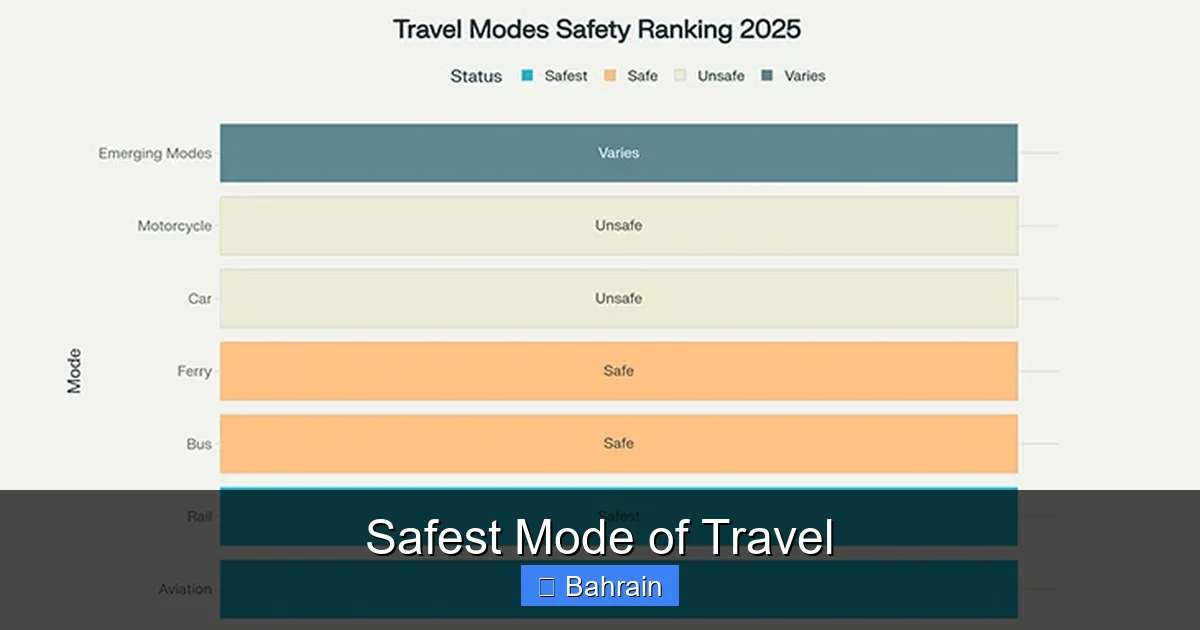
Visual guide about Safest Mode of Travel
Image source: trespot.com
When it comes to the purest statistical definition of the safest mode of travel, commercial air travel consistently tops the list. This might surprise those with a fear of flying, but the numbers don’t lie. For every passenger mile traveled, the risk of a fatal accident on a commercial flight is incredibly low, significantly lower than almost any other form of transport.
The Layers of Air Safety
What makes air travel so remarkably safe? It’s a combination of factors, meticulously engineered and rigorously enforced:
- Strict Regulations: Aviation is one of the most heavily regulated industries in the world. International bodies like the International Civil Aviation Organization (ICAO) set global standards that national authorities, like Bahrain’s Civil Aviation Affairs, adopt and enforce. These regulations cover everything from aircraft design and manufacturing to pilot training and air traffic control.
- Intensive Pilot Training: Pilots undergo years of training, continuous simulations, and recurrent evaluations. Their skills are honed to handle virtually any situation, both routine and emergency.
- Rigorous Maintenance: Aircraft undergo meticulous inspections and maintenance checks after specific flight hours, cycles (take-offs and landings), or calendar periods. Every component is tracked, and any part that shows wear or damage is replaced, often long before it fails.
- Advanced Technology: Modern aircraft are equipped with sophisticated navigation systems, weather radar, and redundant safety systems that constantly monitor performance and environmental conditions.
- Air Traffic Control: A vast network of air traffic controllers guides aircraft safely from gate to gate, preventing collisions and managing the flow of air traffic.
Air Travel in Bahrain
Bahrain International Airport (BIA) is a modern, well-managed hub that adheres to the highest international safety standards. As a vital gateway for passengers and cargo in the Arabian Gulf, BIA’s operations reflect the global commitment to aviation safety. Travelers flying into or out of Bahrain can be confident that the aircraft, crew, and airport infrastructure meet the stringent requirements that define the safest mode of travel globally. This commitment ensures that flying remains an exceptionally secure option for residents and visitors alike.
Road Travel: Navigating the Everyday Journey
While air travel might be the safest mode of travel statistically, road travel is by far the most common, and unfortunately, it’s also the riskiest. Whether you’re driving your own car, taking a taxi, or riding a bus, the likelihood of being involved in an accident is significantly higher than on an airplane. This is true globally and within Bahrain, where road safety remains a key focus for authorities.
Key Factors Contributing to Road Accidents
Understanding the root causes of road accidents helps us appreciate the personal responsibility involved in making road travel safer:
- Human Error: This is the biggest factor. Speeding, distracted driving (especially mobile phone use), driving under the influence of alcohol or drugs, aggressive driving, and driver fatigue are major contributors to accidents.
- Vehicle Condition: Poorly maintained vehicles, with worn tires, faulty brakes, or malfunctioning lights, pose a significant risk.
- Road Conditions: While Bahrain boasts an excellent road network, factors like adverse weather, poorly lit areas, or unexpected road hazards can contribute to accidents.
- Lack of Seatbelt Use: Seatbelts are proven life-savers. Failing to use them dramatically increases the risk of severe injury or fatality in a crash.
Road Safety in Bahrain
The Kingdom of Bahrain has invested heavily in its road infrastructure, featuring well-maintained highways and urban roads. However, like any other country, road safety is a continuous effort.
- Traffic Laws and Enforcement: Bahrain has strict traffic laws, including speed limits, prohibitions on mobile phone use while driving, and mandatory seatbelt use for all passengers. The General Directorate of Traffic actively enforces these laws through visible patrols and automated systems. Adhering to these regulations is not just about avoiding fines; it’s about making road travel the safest mode of travel possible on land.
- Vehicle Inspection: Regular vehicle inspections are mandatory in Bahrain to ensure that cars on the road meet safety standards. This proactive approach helps mitigate risks associated with mechanical failures.
- Public Awareness Campaigns: The government often runs campaigns to educate drivers and pedestrians about safe road practices, emphasizing responsible behavior and the dangers of distracted or reckless driving.
- Pedestrian Safety: While drivers bear significant responsibility, pedestrians also need to be vigilant, using designated crossings and being aware of traffic.
For residents and visitors in Bahrain, making road journeys safer starts with conscious choices: always wear your seatbelt, respect speed limits, avoid distractions, and never drive under the influence. These actions drastically reduce your risk and contribute to a safer environment for everyone.
Sea Travel and Public Transportation: Niche but Important Modes
Beyond air and road, sea travel and public transportation play significant roles for specific journeys. While less common for daily commutes for many, understanding their safety profiles adds to our comprehensive view of the safest mode of travel.
Sea Travel: From Ferries to Dhow Cruises
Sea travel can range from short ferry rides, like those connecting islands or ports, to recreational dhow cruises or even international shipping.
- Regulations and Equipment: Similar to aviation, maritime travel is governed by international and national regulations. Vessels are required to have safety equipment like life jackets, life rafts, fire suppression systems, and communication devices. Crew members undergo training in emergency procedures.
- Weather Dependency: Sea travel is highly dependent on weather conditions. Operators typically suspend services or alter routes during rough seas to ensure passenger safety.
- Recreational Boating: For private boat owners or those chartering smaller vessels in Bahrain’s waters, personal responsibility is paramount. Ensuring your boat is well-maintained, having sufficient safety gear, and being aware of maritime rules and weather forecasts are crucial.
For planned, commercial sea travel, such as ferry services, adhering to established safety protocols generally makes it a relatively safe option. The safest mode of travel by sea relies heavily on compliance with maritime laws and prudent decision-making by operators.
Public Transportation in Bahrain: Buses and Taxis
Bahrain has a growing public transportation network, primarily consisting of buses and a robust taxi service.
- Buses: The public bus system in Bahrain is operated by Bahrain Public Transport Company (BPTC). Buses are regularly inspected and drivers undergo training. Riding a bus can often be safer than driving your own car, as professional drivers are less likely to engage in risky behaviors, and the vehicles themselves are designed for mass transit safety.
- Taxis and Ride-Sharing: Licensed taxis and ride-sharing services (like Careem or Uber) in Bahrain are generally safe. Drivers are typically licensed, and vehicles are subject to regular inspections. When using these services, verify the driver and vehicle match the app information, and always wear your seatbelt. Choosing these services can be the safest mode of travel if you are tired or plan to consume alcohol.
Public transportation removes the individual burden of driving from passengers, distributing the risk across professional drivers and regulated systems, often making it a safer alternative to personal vehicle use, especially in congested areas.
Your Role in Ensuring Safe Travel: Beyond Statistics
While statistics can tell us which mode is inherently the safest mode of travel, personal responsibility plays an enormous role in your individual safety, regardless of how you choose to journey. From planning to execution, your actions can significantly impact your travel experience.
Preparation and Planning
Safe travel begins long before you even leave home.
- Research Your Destination: If traveling abroad, understand local laws, customs, and any specific safety concerns. For travel within Bahrain, stay updated on traffic conditions or any public advisories.
- Choose Reputable Operators: Whether it’s an airline, a bus company, or a taxi service, opt for established and well-regarded providers with strong safety records. This is particularly important when considering what constitutes the safest mode of travel for your specific journey.
- Vehicle Maintenance: If driving your own car, ensure it’s in top condition. Regular checks of brakes, tires, lights, and fluid levels are non-negotiable for road safety.
- Travel Insurance: This might not prevent an accident, but it’s a crucial safety net for medical emergencies, lost luggage, or unexpected trip cancellations.
Vigilance and Awareness
During your journey, being alert and proactive is vital.
- Buckle Up: Always wear your seatbelt, whether you’re in a car, bus, or taxi. In Bahrain, seatbelt use is mandatory for all occupants, and enforcement is strict.
- Avoid Distractions: If you’re driving, put your phone away. If you’re a passenger, be aware of your surroundings, but avoid excessive distractions that could prevent you from noticing potential issues.
- Obey Laws and Regulations: This applies to traffic laws, airline security rules, and maritime regulations. They are in place for your safety.
- Stay Sober: Driving or operating any vehicle under the influence of alcohol or drugs is extremely dangerous and illegal in Bahrain.
- Communicate: Let someone know your travel plans, especially if you’re traveling alone or venturing off-the-beaten-path.
By taking these practical steps, you actively contribute to making your chosen method the safest mode of travel for yourself and others around you. Safety is a shared responsibility, and every individual action makes a difference.
Conclusion: A Holistic View of the Safest Mode of Travel
So, what is the safest mode of travel? Statistically, commercial air travel consistently holds that title due to unparalleled regulatory oversight, stringent maintenance, and highly trained personnel. It’s an incredibly safe way to cover long distances. However, the vast majority of our daily journeys involve road travel, which, while statistically riskier, can be made significantly safer through personal responsibility and adherence to traffic laws.
For those residing in or visiting Bahrain, the same principles apply. While you can trust the high standards of Bahrain International Airport for your flights, your day-to-day safety on the roads rests heavily on your shoulders. Choosing to drive responsibly, maintaining your vehicle, and using public transport or reputable taxi services when appropriate, are all decisions that contribute to making your travel experience the safest mode of travel you can achieve.
Ultimately, safety isn’t just about choosing one mode over another; it’s about adopting a safety-first mindset for every journey. It’s a combination of robust systems, diligent operators, and conscious individual choices. By understanding the risks, respecting regulations, and taking personal responsibility, we can all contribute to safer travel, ensuring our journeys, whether short or long, across Bahrain or the world, are as secure and enjoyable as possible. Travel smart, travel safe!
Frequently Asked Questions
What is considered the safest mode of travel for long distances?
For long distances, commercial air travel is statistically the safest mode. It has the lowest accident and fatality rates per mile traveled compared to any other form of transportation, thanks to stringent international regulations and advanced safety protocols.
How do Bahrain’s traffic laws contribute to road safety?
Bahrain’s traffic laws, including mandatory seatbelt use, speed limits, and strict penalties for distracted or impaired driving, are designed to enhance road safety. Consistent enforcement by the General Directorate of Traffic plays a vital role in encouraging responsible driving behavior and reducing accidents.
Is it safer to take a taxi or drive my own car in Bahrain?
Taking a licensed taxi or a reputable ride-sharing service in Bahrain can often be safer than driving your own car, especially if you’re unfamiliar with the area or plan to consume alcohol. These services employ professional drivers and maintain their vehicles according to safety standards.
What role does vehicle maintenance play in travel safety, especially for road trips in Bahrain?
Vehicle maintenance is crucial for road safety. Regular checks of tires, brakes, lights, and fluids ensure your car is in optimal condition, significantly reducing the risk of mechanical failures that could lead to accidents during your travels within Bahrain or beyond.
Are there any specific safety considerations for sea travel around Bahrain?
For sea travel in Bahrain, key safety considerations include ensuring your vessel has proper safety equipment (life jackets, communication), being aware of weather conditions, and adhering to local maritime regulations. For commercial dhow cruises or ferries, operators are responsible for following strict safety protocols.
Beyond statistics, what is the most important factor for personal travel safety?
Beyond statistics, personal responsibility is the most important factor for individual travel safety. Your choices, such as staying alert, avoiding distractions, following rules, and preparing adequately, significantly empower you to make any chosen mode of transport the safest mode of travel for yourself.