Power Converter for India Travel
Embarking on a trip to India means understanding its unique electrical system (230V, 50Hz, Type C, D, M plugs). A power converter for India travel is crucial for single-voltage electronics, transforming India’s higher voltage to a safe level for your devices. While travel adapters handle plug shapes, a power converter manages voltage, ensuring your gadgets like hair dryers or shavers function safely. Always check your device’s input label for dual-voltage compatibility before you go, as most modern electronics might only need an adapter.
Traveling to India is an adventure for the senses – a vibrant tapestry of cultures, sounds, and sights that will leave you spellbound. From the bustling streets of Mumbai to the serene backwaters of Kerala, every moment promises a new discovery. But amidst all the excitement of planning your itinerary, packing your bags, and dreaming of spicy curries, there’s a small, yet mighty detail that often gets overlooked: how will you keep your essential gadgets charged?
Imagine arriving after a long flight, eager to snap photos of your first sunrise in Delhi, only to find your phone battery is critically low. You reach for your charger, plug it into the wall, and *poof* – a spark, a puff of smoke, and your beloved device is now just a paperweight. This isn’t a horror story; it’s a common travel mishap that can easily be avoided with the right preparation. The key? Understanding India’s unique electrical system and knowing when you need a power converter for India travel. It’s not just about fitting the plug; it’s about matching the power!
This comprehensive guide is designed to be your best friend when it comes to keeping your electronics safe and functional throughout your Indian adventure. We’ll demystify voltages, explain the difference between adapters and converters, and help you choose the perfect power converter for India travel that ensures your devices stay powered up, safe, and ready for every amazing moment. So, let’s dive in and make sure your journey is as smooth and connected as possible!
Key Takeaways
- Understand India’s Electrical System: India operates on 230V and 50Hz, primarily using Type C, D, and M plug sockets. This is significantly different from countries like the US or Canada (110-120V, 60Hz).
- Adapter vs. Converter: A travel adapter only changes the physical plug shape to fit the wall socket. A power converter for India travel actually changes the electrical voltage to protect your single-voltage devices.
- Check Device Voltage Labels: Before buying a power converter for India travel, always check your device’s “Input” label. If it says “100-240V, 50/60Hz,” it’s dual-voltage and only needs an adapter.
- Identify Single-Voltage Devices: High-heat appliances like hair dryers, curling irons, and older electric shavers are often single-voltage (e.g., 120V only) and absolutely require a power converter for India travel to function safely.
- Match Wattage: Ensure any power converter for India travel you purchase has a wattage rating equal to or higher than the device you intend to use it with to prevent damage or safety hazards.
- Safety First: Prioritize converters with safety features like surge protection and automatic shut-off. Always unplug converters when not in use and consider bringing a reliable power bank as a backup.
Quick Answers to Common Questions
What voltage and frequency does India use?
India uses a standard voltage of 230V and a frequency of 50Hz, which is different from countries like the US or Canada (110-120V, 60Hz).
Do I need an adapter or a power converter for India travel?
It depends on your device. An adapter changes the plug shape, while a power converter changes the voltage. Most modern electronics are dual-voltage and only need an adapter, but single-voltage devices (like many hair dryers) require a power converter for India travel.
How do I check if my device is dual-voltage?
Look at the “Input” label on your device or its charger. If it says “100-240V, 50/60Hz,” it’s dual-voltage and only needs a plug adapter.
Can I use my hair dryer from the US in India with just an adapter?
No, absolutely not. Most hair dryers from the US are single-voltage (110-120V). Plugging one into a 230V Indian outlet with only an adapter will almost certainly damage the dryer and could be a safety hazard. You will need a high-wattage step-down power converter for India travel.
What type of power converter should I get for a high-wattage appliance like a curling iron?
For high-wattage appliances (typically over 200W) like curling irons, you’ll need a heavy-duty, transformer-based step-down power converter. Ensure its wattage rating is equal to or higher than your appliance’s wattage.
📑 Table of Contents
- Understanding India’s Power System: The Essentials
- Differentiating Adapters from Converters: A Crucial Distinction
- Identifying Your Device’s Power Needs: Your Best Bet for Safety
- Types of Power Converters for India Travel: Choosing Your Weapon
- Choosing the Right Power Converter for India Travel: Practical Steps
- Tips for Safe and Hassle-Free Charging in India
Understanding India’s Power System: The Essentials
Before you even think about buying a power converter for India travel, it’s vital to understand the country’s electrical standards. India, like many countries in Asia, Europe, and Africa, uses a different system than what you might be accustomed to in places like the United States, Canada, or Japan. Getting this wrong can lead to damaged devices or, worse, safety hazards.
The Voltage Lowdown: 230V
The most significant difference you’ll encounter is the voltage. India operates on a standard voltage of 230 volts (V). For comparison, North America typically uses 110-120 volts. This means that if you plug a device designed for 120V directly into an Indian 230V outlet without a proper power converter for India travel, it will receive almost double the voltage it’s built for. This can lead to overheating, short-circuiting, and permanently damaging your electronics. Think of it like trying to fill a small glass with a fire hose – too much power, too fast!
Frequency Matters: 50Hz
Beyond voltage, there’s also the frequency, measured in Hertz (Hz). India’s electrical system operates at 50 Hz, whereas North America uses 60 Hz. For most modern electronic devices like laptops, phone chargers, and cameras, the frequency difference usually isn’t a major issue. These devices are often designed to handle both 50Hz and 60Hz without a problem. However, for certain older or more sensitive appliances, particularly those with motors (like some alarm clocks or specific kitchen appliances), the frequency difference could cause them to run slightly slower or less efficiently. While less critical than voltage, it’s good to be aware of this distinction.
The Indian Plug Puzzle: Types C, D, and M
Now, let’s talk about the physical plugs. India uses a few different types of wall sockets, and you’ll likely encounter a mix during your travels.
- Type C (Europlug): This is a two-round-pin plug, commonly used across Europe. It’s found in India, particularly in newer constructions or hotels. It’s ungrounded, meaning it doesn’t have an earth connection.
- Type D: This is a three-round-pin plug, historically used in India and parts of the Middle East and Africa. The pins form a triangle, with the top pin being thicker. This is arguably the most common type you’ll encounter.
- Type M: Similar to Type D but with much larger, thicker pins. It’s essentially a larger version of Type D and is typically used for larger appliances that draw more current. You might find these in some older buildings or for specific heavy-duty uses.
Given this variety, a universal travel adapter that includes Type C, D, and M compatibility is highly recommended. But remember, an adapter only solves the plug shape problem, not the voltage one! That’s where a power converter for India travel comes in.
Differentiating Adapters from Converters: A Crucial Distinction
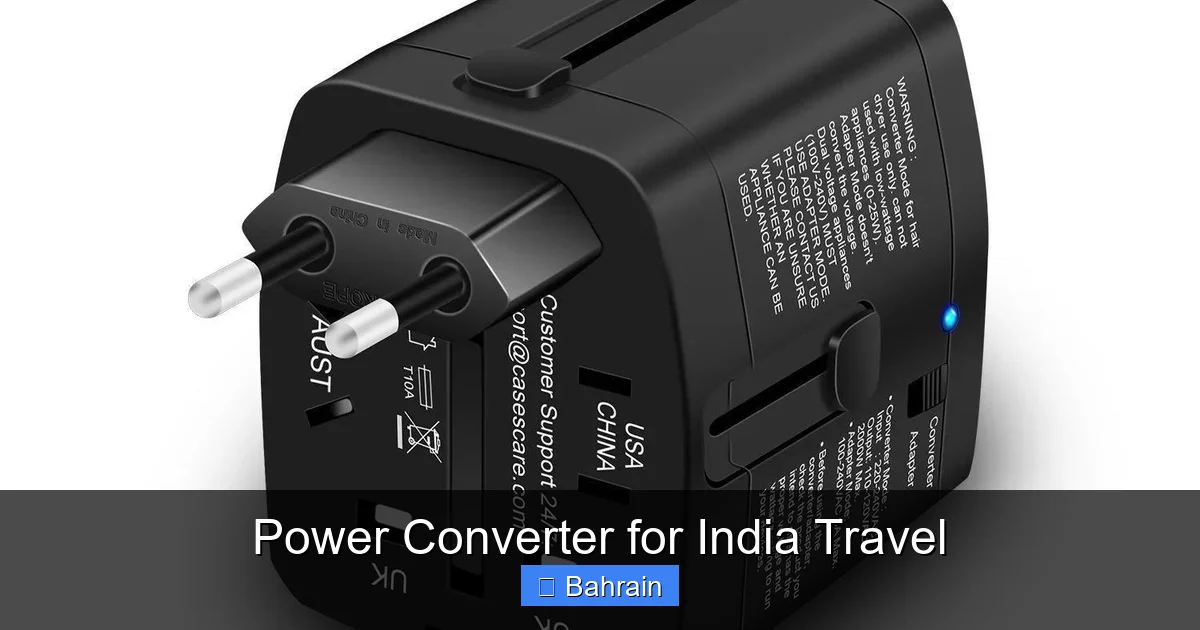
Visual guide about Power Converter for India Travel
Image source: i5.walmartimages.com
This is where many travelers get confused, and it’s arguably the most important section to understand when preparing your electronics for India. A travel adapter and a power converter for India travel are *not* the same thing, and you’ll often need both for certain devices.
What is a Travel Adapter?
Think of a travel adapter as a simple mechanical device. Its sole purpose is to change the physical shape of your plug so it can fit into a foreign wall socket. It does absolutely nothing to alter the electrical voltage or frequency coming from the outlet. If your device is designed for 120V and you plug it into a 230V Indian socket using just an adapter, you’ll still feed 230V into your 120V device, with potentially disastrous results. An adapter is like changing the key to open a door, but not changing what’s behind the door.
What is a Power Converter?
A power converter for India travel, on the other hand, is an electrical device that actually changes the voltage of the electricity. For India, you’ll need a “step-down” converter, meaning it takes the 230V from the wall socket and reduces it to 110-120V, which is safe for your single-voltage North American or Japanese devices. Converters are typically larger and heavier than simple adapters because they contain components (like transformers) to perform this voltage transformation. They are essential for devices that are *not* dual-voltage compatible.
Why You Might Need Both
It’s common to need both an adapter and a power converter for India travel. You’ll use the adapter to ensure your device’s plug fits into the wall socket. Then, if your device is single-voltage, you’ll plug it into the converter, which in turn is plugged into the adapter. This setup ensures both physical compatibility and electrical safety. Many modern travel converter kits actually combine a universal adapter with a built-in step-down converter, offering a convenient all-in-one solution for your power converter for India travel needs.
Identifying Your Device’s Power Needs: Your Best Bet for Safety
Before you buy any power converter for India travel, the very first thing you MUST do is check the input voltage requirements of *each* device you plan to bring. This simple step can save you money, hassle, and potentially your favorite gadget.
The “Input” Label: Your Best Friend
Look closely at the power adapter or the device itself (often printed near the charging port or on the power brick for laptops). You’re looking for a label that says “INPUT” or “AC INPUT.” This label will tell you the voltage range your device can handle.
- “Input: 100-240V, 50/60Hz”: Congratulations! This device is “dual-voltage” or “multi-voltage.” This is incredibly common for modern electronics like smartphones, tablets, laptops, e-readers, camera chargers, and even many electric toothbrushes. If your device has this label, it means it can safely operate on both 110-120V (like in North America) and 230V (like in India) without needing a power converter. You will *only* need a travel adapter to fit the Indian plug sockets.
- “Input: 120V, 60Hz” (or similar single voltage): Uh-oh! This device is “single-voltage” and is designed *only* for your home country’s power system. Appliances like many hair dryers, curling irons, straighteners, older electric shavers, and some specific medical devices often fall into this category. These are the devices that absolutely require a power converter for India travel to function safely. Plugging them in directly with just an adapter will damage them.
Dual Voltage Devices: The Easy Travelers
Most of your essential travel electronics, thankfully, are likely dual voltage. Your phone charger, laptop charger, tablet charger, and camera battery charger will almost certainly state “100-240V.” This makes traveling with them incredibly easy. You just need to ensure you have the correct travel adapter to fit India’s Type C, D, or M outlets. No need for a bulky power converter for India travel for these items!
Single Voltage Devices: Where Converters Shine
This is where you’ll spend your money on a power converter for India travel. High-heat appliances are the usual suspects. A 120V hair dryer trying to run on 230V is a recipe for disaster. The same goes for many older curling irons or electric shavers. If you simply *must* bring one of these single-voltage items, then a step-down power converter for India travel is non-negotiable. Often, the hassle and weight of carrying a converter for these items lead travelers to consider buying travel-specific dual-voltage versions of these appliances or leaving them at home entirely. For example, you might find a travel hair dryer that automatically adjusts to voltage, which is much more convenient than carrying a heavy converter.
Types of Power Converters for India Travel: Choosing Your Weapon
Once you’ve identified which of your devices are single-voltage and truly need a converter, it’s time to understand the different types available. Not all power converters are created equal, and choosing the right one depends on the wattage of your device.
Step-Down Converters (Transformer-based)
These are the traditional, heavier power converters. They use a transformer to physically step down the voltage.
- Pros: Very robust and reliable. Ideal for high-wattage appliances (up to 2000W) that generate heat, like hair dryers, curling irons, and electric kettles. They provide a stable voltage output.
- Cons: Heavy and bulky, which can be a significant drawback for travelers trying to pack light. They can also be more expensive. They are essentially a mini transformer, so they aren’t meant for precise electronics.
- Best for: Devices with mechanical motors or heating elements that are single-voltage. If you absolutely need to bring your home hair dryer, this is the type of power converter for India travel you’ll need.
Digital/Switching Converters (Solid State)
Also known as solid-state or electronic converters, these are much lighter and more compact than transformer-based models. They use electronic circuitry to “chop” the waveform, effectively reducing the average voltage.
- Pros: Lightweight, small, and generally more affordable. They often include multiple adapter plug types in one unit.
- Cons: These are typically designed for low-wattage devices (usually up to 50W, sometimes up to 200W). They are *not* suitable for high-heat appliances or devices with motors. Using them with high-wattage items can damage both the converter and the device. They can also produce a “modified sine wave” output, which might not be ideal for some sensitive electronics.
- Best for: Small, single-voltage electronics like battery chargers (for non-dual voltage batteries), electric shavers, or older phone chargers (though most phones are dual-voltage anyway). Always check the wattage limit carefully.
What about Surge Protectors and Power Strips?
A power strip with surge protection can be incredibly useful when traveling, as it allows you to charge multiple devices from a single wall socket. However, a standard power strip from your home country will likely only handle your domestic voltage (e.g., 120V).
If you want to use a power strip in India, you have two options:
- Dual-Voltage Travel Power Strip: These are specifically designed for international travel and can handle both 120V and 230V. They will still require a travel adapter to fit the wall socket. Some even come with built-in USB charging ports.
- Use with a Converter: If you have single-voltage devices AND a single-voltage power strip, you would plug the power strip into your heavy-duty step-down power converter for India travel. However, this adds significant bulk and complexity, and you must ensure the converter can handle the combined wattage of all devices plugged into the strip. Generally, it’s safer to stick to dual-voltage travel power strips.
Choosing the Right Power Converter for India Travel: Practical Steps
Now that you know the basics, let’s put it all together to help you pick the best power converter for India travel for your specific needs.
Wattage and Amperage Matching
This is the most critical factor. Every device has a wattage rating (W), which indicates how much power it consumes. Your power converter for India travel must have a wattage rating that is equal to or *greater than* the device you plan to plug into it.
- How to Find Wattage: Look for the label on your device. It might state wattage directly (e.g., “1500W”). If it only shows voltage (V) and amperage (A), you can calculate wattage: Watts = Volts x Amps. For instance, a 120V hair dryer drawing 10A needs 1200W.
- Converter Capacity: If your hair dryer is 1200W, you’ll need a power converter for India travel rated for at least 1200W, but it’s always safer to get one with a bit of headroom (e.g., 1500W or 2000W).
- High-Wattage Rule: Devices like hair dryers, curling irons, and travel irons typically draw very high wattage (500W-2000W). For these, you absolutely need a heavy-duty transformer-based power converter. Smaller digital converters will likely fail or get damaged.
Portability and Weight
Transformer-based converters can be surprisingly heavy. If you’re backpacking or trying to travel light, this added weight can be a real consideration. Sometimes, it’s more practical to buy a cheap, dual-voltage travel appliance (like a hair dryer) upon arrival or forego it entirely, rather than lugging a bulky power converter for India travel.
Safety Features to Look For
Good quality power converters for India travel should come with built-in safety features:
- Overload Protection: This automatically shuts off the converter if the wattage drawn by your device exceeds its capacity, preventing damage.
- Thermal Protection: Prevents the converter from overheating.
- Built-in Fuse: Offers protection against power surges and shorts.
- Grounding: For three-pin plugs, ensure the converter properly handles grounding for safety.
All-in-One Solutions
Many travel brands offer universal adapter kits that include a step-down power converter for India travel, often with multiple plug types and USB ports. These can be very convenient, but always double-check the converter’s wattage rating. Some “all-in-one” devices only include a low-wattage converter for small electronics, not for high-heat appliances. Read the product description carefully!
Tips for Safe and Hassle-Free Charging in India
Even with the perfect power converter for India travel, a few extra tips can make your charging experience completely stress-free.
Always Double-Check
Before plugging anything in, always take a moment to double-check:
- Is your device dual-voltage, only needing an adapter?
- If it’s single-voltage, is it properly connected to the correct power converter for India travel, which then goes into the adapter?
- Is the converter’s wattage rating sufficient for your device?
A quick check can prevent costly mistakes.
Unplug When Not in Use
It’s good practice to unplug your devices and especially your power converter for India travel when you’re not using them or when you leave your room. This not only saves energy but also protects your electronics from unexpected power surges or fluctuations common in some areas.
Beware of Counterfeits
When purchasing a power converter for India travel, buy from reputable brands and trusted retailers. Cheap, unbranded converters might not offer adequate protection, or their stated wattage might be inaccurate, leading to potential hazards. Safety should never be compromised for a few dollars.
Power Banks and Backup
Even with the best planning, power outages can occur in India, especially in more rural areas. A high-capacity power bank is an invaluable travel companion. It ensures your phone and other USB-chargeable devices stay powered even when the grid goes down, providing a fantastic backup for your power converter for India travel setup. Consider bringing two if you have many devices or a long itinerary.
Consider Local Purchases
For high-wattage items like hair dryers or travel irons, it might be simpler to buy a cheap, local appliance in India if you absolutely need one. These will be designed for the 230V system and will cost less than a heavy-duty power converter for India travel. Just remember you’ll likely have to leave it behind or give it away before you leave.
Traveling through India is an unforgettable adventure, and you want to focus on making memories, not worrying about fried electronics. By taking the time to understand India’s electrical system, differentiating between adapters and converters, and choosing the right power converter for India travel for your specific devices, you’ll ensure a smooth, safe, and fully charged journey. So go ahead, pack your bags with confidence, knowing your gadgets are just as ready for the adventure as you are!
Frequently Asked Questions
What are the common plug types in India?
India primarily uses Type C (two round pins), Type D (three small round pins in a triangle), and Type M (three large round pins in a triangle) plug sockets. A universal travel adapter that covers these types is highly recommended for your trip.
Can I charge my phone and laptop in India without a power converter?
Most modern phones, laptops, tablets, and their chargers are dual-voltage (rated 100-240V, 50/60Hz). This means they do not need a power converter for India travel; they only require a simple travel adapter to fit the wall socket.
What happens if I plug a 120V device into a 230V outlet without a converter?
Plugging a single-voltage 120V device into a 230V outlet without a power converter for India travel will likely cause significant damage to the device, leading to overheating, smoking, or permanent malfunction. It also poses a serious risk of electrical fire or shock.
Are all travel converters suitable for hair dryers?
No, not all travel converters are suitable for high-wattage appliances like hair dryers. Many lightweight, digital travel converters are only designed for low-wattage devices (under 200W). Hair dryers often require a heavy-duty, transformer-based power converter for India travel with a wattage rating of 1500W or more.
Is it better to buy a travel hair dryer than a power converter for India travel?
For high-heat appliances, it is often more convenient and safer to invest in a dual-voltage travel hair dryer or curling iron. These appliances are designed to automatically adjust to different voltages, eliminating the need for a bulky and heavy power converter for India travel.
Where can I find the wattage information on my device?
The wattage (W) or amperage (A) information is typically printed on a label on the device itself, its power brick, or its charging adapter. If only amperage (A) and voltage (V) are listed, you can calculate wattage by multiplying Volts by Amps (W = V x A).