New Zealand Best Time to Travel
Planning your trip to New Zealand? Knowing the best time to travel can make all the difference.
You want to enjoy stunning landscapes, avoid crowds, and find great deals on flights and accommodations. Whether you’re chasing sunny days, budget-friendly prices, or exciting seasonal activities, this guide will help you pick the perfect time for your adventure. Keep reading to discover when New Zealand shines the brightest for your visit—and how to make the most of every moment.
Best Months To Visit
Choosing the best months to visit New Zealand depends on your budget and what you want to do. The country offers great experiences all year round. Weather, prices, and crowd sizes change with the seasons. Knowing the best time to travel helps plan a better trip.
Cheapest Months
The cheapest months to visit New Zealand are during winter, from June to August. Many tourists avoid this season due to colder weather. Flights and hotels cost less. Some activities close, but skiing is excellent in places like Queenstown.
Shoulder seasons from March to May and September to November also offer good deals. The weather is mild, and fewer tourists visit. May and September often have the biggest price drops on flights and accommodation.
Peak Season Months
Summer, from December to February, is the peak travel season. This period has the best weather with warm temperatures and long days. Many tourists visit then, especially around late December and January. Prices for flights and hotels rise. Popular spots get crowded, but the lively atmosphere is enjoyable.
Shoulder Season Benefits
Shoulder seasons are March to May and September to November. These months balance good weather with lower prices. Tourist numbers are smaller, so popular sites are less busy. You can enjoy hiking and sightseeing comfortably. Many tours and accommodations offer discounts during these times.
Visiting during shoulder seasons gives a more relaxed experience. The weather is still nice enough for outdoor activities. It is the best choice for travelers wanting to save money and avoid crowds.
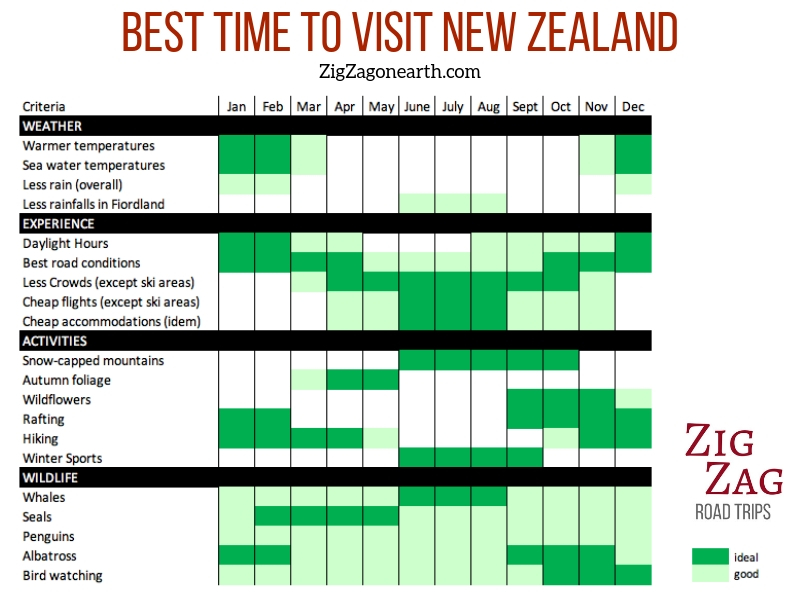
Credit: www.zigzagonearth.com
Seasonal Weather Patterns
New Zealand’s weather shifts with the seasons, creating varied travel experiences. Understanding these seasonal weather patterns helps plan the best trip. Each season offers unique conditions that suit different activities and preferences. Travelers can pick times based on weather, crowd sizes, and costs.
Summer Conditions
Summer in New Zealand lasts from December to February. The weather is warm and mostly sunny. Average temperatures range from 20°C to 30°C (68°F to 86°F). This season is perfect for beach visits and outdoor adventures. It is also the busiest time, with many tourists and higher prices. Some regions, like Auckland and Wellington, enjoy mild evenings. Summer days are long, offering plenty of daylight for exploring.
Winter Climate
Winter runs from June to August and brings colder temperatures. Snow falls in mountainous areas, making it ideal for skiing and snowboarding. Coastal areas stay cool but rarely freeze. Temperatures range from 5°C to 15°C (41°F to 59°F). This season sees fewer tourists and lower accommodation costs. Some outdoor activities may be limited due to weather. Rain is more common, especially on the South Island.
Spring And Autumn Weather
Spring (September to November) and autumn (March to May) offer mild and pleasant weather. Temperatures usually stay between 10°C and 20°C (50°F to 68°F). These seasons bring fewer crowds and better prices for travelers. Spring is known for blooming flowers and fresh greenery. Autumn displays beautiful fall colors and crisp air. Both seasons are great for hiking, sightseeing, and enjoying nature’s beauty.
Travel Costs And Deals
Traveling to New Zealand can be a wonderful experience without breaking the bank. Knowing when to travel helps save money on flights and stays. Deals appear more often in less busy times. This section highlights how to find the best prices and offers.
Flight Price Trends
Airfares to New Zealand vary through the year. The cheapest months to fly are usually May, June, and September. Airlines often lower prices during these months to attract more travelers. Booking flights early can also lock in better rates. Avoid peak summer months for higher fares.
Accommodation Discounts
Hotels and hostels offer discounts in off-peak seasons. From March to May and September to November, many places lower their prices. This period sees fewer tourists, so accommodations want to fill rooms. Booking ahead during these months can secure the best deals. Some lodges near ski areas remain expensive in winter.
Off-season Savings
The winter months, June to August, are New Zealand’s low season. Prices drop significantly for flights and lodging. Weather can be colder and some attractions close. Yet, this time suits budget travelers who want to explore without crowds. Spring and autumn also offer good savings with mild weather and fewer tourists.

Credit: www.twowanderingsoles.com
Activities By Season
New Zealand offers a variety of activities throughout the year. Each season brings unique opportunities to explore its landscapes. Choosing the right time depends on your interests and preferred activities. Enjoy winter sports, hiking, or scenic views by picking the best season for you.
Winter Sports
Winter in New Zealand runs from June to August. It is perfect for skiing and snowboarding. Popular ski resorts include Queenstown and Wanaka. These places have well-maintained slopes for all skill levels. Snowshoeing and ice skating are also popular winter activities. Winter attracts visitors who love cold-weather sports and stunning snowy landscapes.
Hiking And Outdoor Adventures
Spring and autumn offer mild weather for outdoor activities. Hiking trails like the Great Walks open in late October. These trails show New Zealand’s natural beauty with fewer crowds. Kayaking, mountain biking, and wildlife watching thrive in these seasons. The temperatures are comfortable, making outdoor adventures enjoyable and safe.
Scenic Highlights
Summer, from December to February, shines with long, sunny days. This season is ideal for exploring beaches, fjords, and national parks. Famous spots include Milford Sound and Abel Tasman. Summer also hosts many festivals and cultural events. The weather supports photography and sightseeing, capturing New Zealand’s vibrant landscapes.
Crowd Levels And Experience
Understanding crowd levels helps shape your travel experience in New Zealand. Popular spots can get busy in peak months, affecting your visit. Choosing the right time means enjoying attractions with fewer people. This section explores when to expect crowds and when to find peaceful moments.
Summer Crowds
Summer runs from December to February. This season draws the highest number of visitors. Beaches, national parks, and cities fill up quickly. Popular hiking trails and tourist spots often see long lines. Accommodation prices rise due to demand. Expect lively festivals and outdoor events. Traveling during summer means sharing the experience with many others.
Quieter Shoulder Seasons
Shoulder seasons include March to May and September to November. These months have fewer tourists than summer. Weather remains mild and pleasant for outdoor activities. Most attractions stay open with shorter wait times. Prices for flights and hotels drop noticeably. It is easier to find quiet spots in nature. Shoulder seasons offer a good balance of weather and crowds.
Best Times For Peaceful Travel
For calm and solitude, visit in late autumn or early spring. April, May, and September are ideal months. These times have low visitor numbers and peaceful landscapes. Many trails and parks feel like your own. Wildlife is easier to spot without crowds nearby. You may face cooler weather but gain a more relaxed trip. Peaceful travel lets you connect deeply with New Zealand’s beauty.
Rainy Seasons And Weather Tips
New Zealand’s rainy seasons bring unique challenges and beauty to travelers. Rain can fall softly or heavily, changing the landscape and mood. Understanding rain patterns helps plan better trips. Weather tips make your journey smoother and more enjoyable.
Rain Patterns
Rain falls mostly in winter, from June to August. The West Coast of the South Island is the wettest area. The North Island has rain spread more evenly through the year. Showers can be short or last all day. Clouds and mist often cover mountains and forests.
Packing Essentials
Pack a waterproof jacket and sturdy shoes. Bring layers for warmth and rain protection. A compact umbrella helps in light rain. Waterproof bags keep your gear dry. Quick-dry clothes are useful for sudden showers. A hat and sunscreen protect you on sunny breaks.
Weather Variability
New Zealand weather changes fast, especially in spring and autumn. You may see sun, rain, and wind in one day. Mountains create microclimates with different weather nearby. Always check local forecasts before outdoor plans. Flexibility helps you enjoy all weather conditions safely.

Credit: www.firstlighttravel.com
Frequently Asked Questions
What Is The Cheapest Time To Visit New Zealand?
The cheapest time to visit New Zealand is during winter (June-August) and shoulder seasons (March-May, September-November). These periods offer lower flight and accommodation prices with fewer crowds. May, June, and September often provide the best travel deals and mild weather.
What Is New Zealand’s Rainy Season?
New Zealand’s rainy season mainly occurs in winter, from June to August. The South Island sees more rain and snow then. Spring (September to November) also brings frequent showers, especially in the South Island.
What Is The Hottest Month In New Zealand?
The hottest month in New Zealand is January. It features warm temperatures and long daylight hours, ideal for outdoor activities.
What Is The Most Expensive Month To Travel To New Zealand?
The most expensive month to travel to New Zealand is January. It coincides with summer holidays and high tourist demand.
Conclusion
New Zealand welcomes travelers all year round. Each season offers unique sights and activities. Winter suits budget travelers who enjoy skiing and quiet spots. Spring and autumn bring mild weather and fewer crowds. Summer provides warm days and lively festivals but costs more.
Choose your travel time based on your interests and budget. Planning ahead helps you enjoy the best experiences. New Zealand’s beauty shines in every season. Start your adventure when it feels right for you.