How People Travel on Planes with Mobility Scooter
Traveling by plane with a mobility scooter is entirely possible and becoming increasingly common, offering invaluable freedom. Early planning, clear communication with airlines, and proper preparation of your mobility scooter are the pillars of a stress-free trip. Understanding battery regulations, documentation, and airport procedures will empower you to navigate the skies with confidence and independence.
Traveling is one of life’s great joys, a chance to explore new cultures, visit loved ones, or simply relax in a different setting. For individuals who rely on a mobility scooter, the thought of air travel can sometimes feel daunting. There are often concerns about how their essential equipment will be handled, what rules apply, and whether the journey will be more hassle than holiday. But here’s the good news: flying with a mobility scooter is not only possible but also a right protected by various international regulations. Airlines and airports are increasingly equipped and experienced in assisting passengers with mobility needs, making travel more accessible than ever before.
This comprehensive guide is designed to empower you with the knowledge and confidence to travel seamlessly with your mobility scooter. We’ll break down the process step by step, from the moment you start planning your trip to the exhilarating moment you retrieve your scooter at your destination. Our aim is to demystify the complexities and equip you with practical tips, ensuring your focus remains on the excitement of your adventure, not the logistics of your mobility device. So, let’s embark on this journey together and discover just how people travel on planes with mobility scooter, transforming potential worries into genuine freedom.
Key Takeaways
- Early Notification is Crucial: Always inform your airline about your mobility scooter when booking or well in advance, providing detailed specifications to ensure they can accommodate it properly.
- Understand Battery Regulations: The type of battery your scooter uses (lead-acid, gel, lithium-ion) dictates how it must be prepared and transported. Lithium-ion batteries have specific Watt-hour (Wh) limits.
- Measure and Document Everything: Have your scooter’s dimensions (length, width, height), weight, and battery specifications (type, voltage, Ah, Wh) readily available and consider carrying a copy of your scooter’s manual.
- Prepare Your Scooter for Travel: This includes disconnecting batteries (if required), protecting delicate parts like joysticks, and labeling it clearly for airport staff.
- Plan for Airport Procedures: Be prepared for check-in, security screening, and boarding processes, which may involve transferring to an aisle chair. Arriving early is always a good idea.
- Communicate Clearly and Advocate: Don’t hesitate to ask questions, confirm arrangements, and politely advocate for your needs throughout your journey with airport and airline staff.
Quick Answers to Common Questions
Can I take my mobility scooter right to the airplane door?
Yes, in most cases, you can use your mobility scooter right up to the aircraft door, where airport staff will then take it to be loaded into the cargo hold. This is often referred to as “gate checking.”
Do I need to inform the airline in advance about my mobility scooter?
Absolutely yes. It is crucial to inform your airline about your mobility scooter as early as possible, ideally when booking your ticket or at least 48-72 hours before your flight, to ensure they can make the necessary arrangements.
Are there restrictions on mobility scooter batteries for air travel?
Yes, battery types and Watt-hour (Wh) ratings are subject to strict regulations, especially for lithium-ion batteries. You must know your battery type and specifications to ensure compliance.
What if my mobility scooter gets damaged during the flight?
If you discover any damage to your mobility scooter upon arrival, you must report it immediately to the airline’s baggage services desk *before* leaving the airport. Take photos and file a formal damage report.
Will I need to transfer from my mobility scooter to an aisle chair?
Yes, typically you will transfer from your mobility scooter to an airline-provided aisle chair at the aircraft door to be taken to your seat, as scooters cannot be used within the narrow aisles of the plane.
📑 Table of Contents
Understanding Your Mobility Scooter and Airline Policies
Before you even think about booking your flight, it is absolutely essential to get intimately familiar with your mobility scooter. This isn’t just about knowing its make and model; it’s about understanding its technical specifications, especially concerning its battery. This knowledge will be your most powerful tool when communicating with airlines and navigating airport procedures.
Types of Mobility Scooters and Their Batteries
Mobility scooters come in various forms, from lightweight, foldable models to robust, heavy-duty ones. The crucial factor for air travel often lies in the battery type:
- Wet Cell (Spillable Lead-Acid) Batteries: These are less common today but still exist. They are considered “hazardous material” and often require special packaging (e.g., in a sturdy, leak-proof container) and upright transportation. Many airlines will not carry them.
- Gel Cell (Non-Spillable Lead-Acid) Batteries: These are common and generally accepted by airlines. They are sealed and do not leak.
- Absorbed Glass Mat (AGM) (Non-Spillable Lead-Acid) Batteries: Similar to gel cell batteries, AGMs are also sealed and widely accepted.
- Lithium-Ion Batteries: Increasingly popular due to their lighter weight and higher energy density. However, they come with stricter regulations regarding their Watt-hour (Wh) rating. Most airlines permit batteries under 300 Wh for a single battery or two batteries each under 160 Wh. Batteries exceeding these limits are generally forbidden in commercial aircraft.
Key Information to Gather
You’ll need to know:
- Scooter Dimensions: Length, width, and height (both assembled and, if applicable, folded).
- Scooter Weight: The total weight of the scooter, including batteries.
- Battery Type: As detailed above.
- Battery Specifications: Voltage (V), Ampere-hour (Ah), and crucially, Watt-hour (Wh). The Wh can be calculated by multiplying V by Ah (V x Ah = Wh). This is extremely important for lithium-ion batteries.
- Scooter Manual: Keep a copy, digital or physical, as it contains all these specifications and often instructions for battery disconnection.
Airline Policies and Regulations
Each airline will have specific policies, but they are all governed by international aviation regulations (like those from IATA – International Air Transport Association, and local civil aviation authorities). These regulations primarily focus on battery safety. When you contact an airline, they will ask for this information to ensure compliance and safe transport of your mobility scooter.
Booking Your Flight: Early Planning is Key
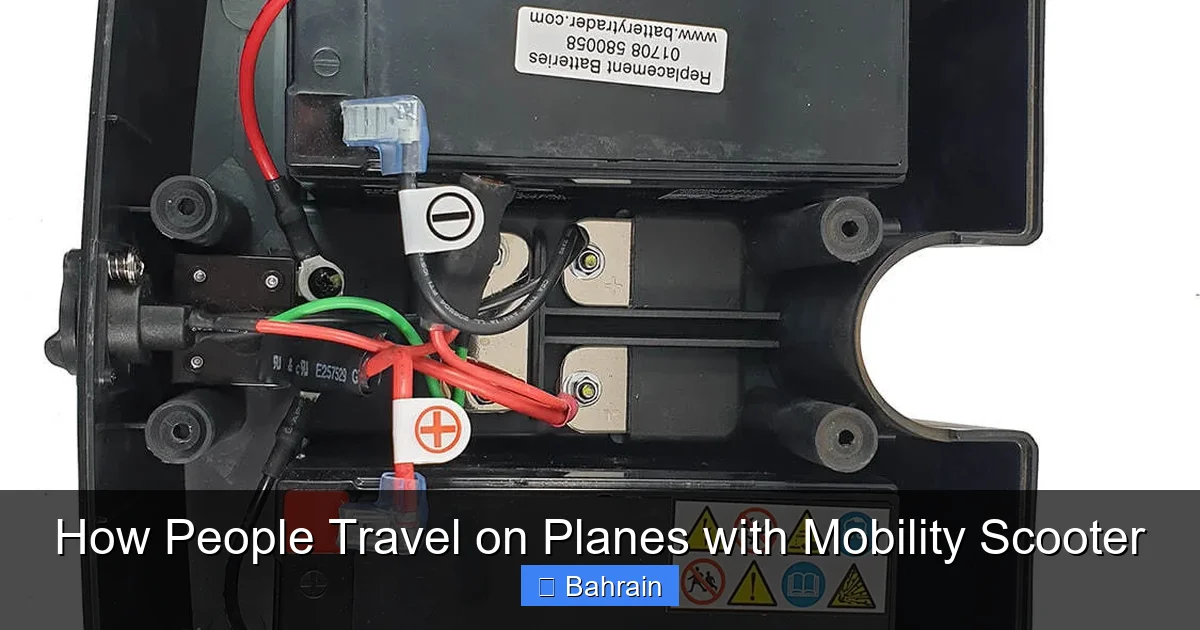
Visual guide about How People Travel on Planes with Mobility Scooter
Image source: batterytrader.com
The success of your trip largely hinges on how well you plan your booking. This isn’t just about getting a good seat; it’s about ensuring your mobility scooter can be accommodated without a hitch.
Notifying the Airline: The Golden Rule
As soon as you decide on your flight, or ideally, before you even purchase your ticket, you must contact the airline’s special assistance department. Do not rely solely on online booking systems, as they might not capture all the necessary details for a mobility scooter.
- When to Notify: Immediately after booking, or at least 48-72 hours before your flight. The earlier, the better, especially for international flights or smaller aircraft.
- What to Provide:
- That you are traveling with a mobility scooter.
- The type of scooter (e.g., electric, manual, folding).
- Battery type (wet, gel, AGM, lithium-ion).
- Battery Wh rating (for lithium-ion) or voltage/Ah (for others).
- Exact dimensions (length, width, height) and weight of the scooter.
- Whether your scooter folds or disassembles.
- If you require an aisle chair for transfer to your seat.
- Any specific requests for your seat (e.g., bulkhead, accessible lavatory proximity).
Choosing Your Seat Wisely
While your mobility scooter will travel in the cargo hold, your comfort in the cabin is paramount. Requesting a bulkhead seat can provide more legroom and easier access to an aisle chair if you need assistance getting to the lavatory. If possible, choose an aircraft type known for better accessibility.
Confirm, Confirm, Confirm!
Don’t just make the initial call. Call again a few days before your flight to re-confirm all your special assistance arrangements, including the transportation of your mobility scooter. This double-check can prevent last-minute surprises.
Preparing Your Scooter for Travel
Proper preparation of your mobility scooter is critical for its safety and compliance with airline regulations. This step ensures a smoother check-in and reduces the risk of damage.
Battery Preparation: Following the Rules
This is the most critical step.
- Non-Spillable Lead-Acid (Gel/AGM): The battery must remain attached to the scooter but must be disconnected and the battery terminals insulated to prevent accidental short-circuiting. Your scooter’s manual will have instructions for this.
- Lithium-Ion:
- If removable and under 300 Wh (or two batteries each under 160 Wh), they generally must be removed from the scooter and carried in your carry-on luggage. The terminals must be protected against short-circuiting.
- If permanently attached and under the Wh limit, the scooter must be switched off and protected from accidental activation.
- Wet Cell (Spillable): As mentioned, these are rarely accepted. If they are, they require very specific, hazardous material packaging and handling.
Protecting Your Scooter
While airlines are supposed to handle mobility aids with care, accidents can happen. Taking preventative measures can save you a lot of grief.
- Remove Loose Parts: Detachable parts like joysticks, armrests, headrests, footrests, and baskets should be removed and ideally carried in your carry-on or a clearly labeled, sturdy bag attached to the scooter. This prevents them from getting lost or damaged.
- Fold/Disassemble: If your scooter is designed to fold or disassemble, do so before check-in. This makes it more compact and easier for handlers.
- Labeling: Attach clear, durable labels to your scooter with your name, contact information, flight details, and destination. Consider adding “FRAGILE – MOBILITY AID” stickers.
- Protective Covering: While not mandatory, a simple tarp or plastic cover can protect your scooter from dust and minor scratches. Avoid anything that makes it difficult for handlers to access parts or identify the scooter.
- Documentation: Have copies of your scooter’s manual, battery specifications, and airline confirmation of special assistance readily accessible.
Airport Experience: Check-in, Security, and Boarding
Navigating the airport with a mobility scooter might seem complex, but understanding the process can make it much smoother.
Arriving at the Airport
Always aim to arrive earlier than the standard recommendation. For international flights, 3-4 hours before departure is a good buffer. This allows ample time for special assistance procedures.
Check-in Process
- Special Assistance Desk: Head directly to the airline’s special assistance or check-in desk. Do not use self-service kiosks.
- Information Verification: Be prepared to reiterate your scooter’s details (dimensions, weight, battery type/Wh). The agent will tag your scooter.
- Gate Check vs. Baggage Claim: Your mobility scooter will typically be gate-checked. This means you use it right up to the aircraft door, where staff will take it and load it into the cargo hold. Upon arrival, it should be brought back to the gate for you. Confirm this process at check-in. Very large, heavy-duty scooters might need to be checked at oversized baggage earlier.
- Transferring to an Aisle Chair: If you cannot walk to your seat, airport staff will provide an aisle chair and assistance to transfer you from your scooter to the aisle chair, and then from the aisle chair to your seat on the plane.
Security Screening
You and your mobility scooter will undergo security screening.
- Personal Screening: You will be screened, possibly using a metal detector or a full-body scanner. If you cannot stand, alternative screening methods will be used (e.g., hand-held wand, pat-down).
- Scooter Screening: Your mobility scooter will also be screened, often visually and sometimes with a swab test for explosives. Be prepared to show staff how to operate it, or if you’ve already disabled it, where the battery is.
Boarding
Passengers requiring special assistance, including those using mobility scooters, typically board first. This provides more time to get settled without the pressure of other passengers.
- Aisle Chair Transfer: At the aircraft door, you’ll transfer from your scooter to the airline’s aisle chair. The scooter will then be taken by ground staff to the cargo hold.
- Stowing Your Scooter: Ensure you see or confirm that your scooter is being handled carefully. If you have any concerns, politely voice them to the ground staff or flight attendants.
During the Flight and Arrival
Once you’re onboard, the flight itself should be relatively smooth. Deplaning and retrieving your scooter are the next key steps.
In-Flight Experience
Most commercial aircraft are not designed for mobility scooters to be used in the cabin. If you need to use the lavatory, you will likely require assistance from a flight attendant and the use of the airline’s onboard aisle chair, if available. Request this assistance well in advance if possible.
Deplaning
Just like boarding, passengers requiring special assistance usually deplane last. This again allows for a calmer transfer from your seat to the aisle chair and then to your mobility scooter (or another airport wheelchair if your scooter is not immediately available at the gate).
Retrieving Your Scooter
This is where clear communication during check-in really pays off.
- Gate Delivery: In most cases, if you gate-checked your scooter, it should be waiting for you at the aircraft door upon arrival. Airport staff will typically bring it up from the cargo hold.
- Baggage Claim: For some larger scooters or specific airport setups, you might be directed to retrieve your scooter at oversized baggage claim. Clarify this when you check in.
- Check for Damage: As soon as you retrieve your scooter, give it a thorough once-over. Check for any visible damage, missing parts, or operational issues.
- Reporting Damage: If you discover any damage, report it immediately, *before* leaving the airport. Go to the airline’s baggage services desk and file a damage report. Take photos of the damage. This is crucial for any potential claims.
Tips for a Smooth Journey and Common Challenges
Even with the best planning, travel can present unexpected situations. Here are some extra tips to help navigate them and ensure a pleasant journey.
Communication is Paramount
Never underestimate the power of clear, polite, and persistent communication. From booking agents to check-in staff, security personnel, and flight attendants, being clear about your needs and understanding their procedures will help immensely. Don’t be afraid to ask for clarification or assistance.
Advocating for Yourself
While most airport and airline staff are helpful, sometimes you might encounter someone who is less informed or trained. Politely but firmly advocate for your rights and needs. Refer to your confirmed special assistance notes if necessary. If you feel your rights are being violated, ask to speak to a supervisor.
Contingency Planning
Things can go wrong – a flight might be delayed, or your scooter might be temporarily misplaced.
- Portable Charger: Carry a portable charger for your phone or other essential devices.
- Emergency Contact Information: Have readily accessible contact information for your destination, family, or friends.
- Medication: Keep all essential medication in your carry-on bag.
- Basic Toolkit: If you’re mechanically inclined, a small basic toolkit for minor scooter adjustments might be useful.
Travel Insurance
Consider purchasing comprehensive travel insurance that covers mobility aids. This can provide peace of mind in case of damage, loss, or delay of your mobility scooter. Read the policy carefully to understand what is covered.
Resources and Support Groups
Many online forums and disability travel groups offer invaluable advice and shared experiences. Connecting with other travelers who use mobility scooters can provide practical tips and emotional support. Organizations like the Department of Transportation (DOT) in the US, or local disability rights organizations in Bahrain and other countries, can also provide information on air travel rights.
Conclusion
Traveling on planes with a mobility scooter doesn’t have to be a source of stress or anxiety. By understanding the regulations, meticulously preparing your scooter, communicating effectively with airlines, and knowing what to expect at the airport, you can ensure a smooth and enjoyable journey. The freedom that a mobility scooter offers extends far beyond your immediate surroundings; it opens up the entire world to exploration. With careful planning and a positive attitude, your next aerial adventure with your mobility scooter can be just as exciting and fulfilling as any other traveler’s. Embrace the journey, confidently navigate the skies, and enjoy the incredible experiences that await you.
🎥 Related Video: Flying with a mobility scooter #travel #accessibility
📺 Chelsea Bear – Living With Cerebral Palsy
Frequently Asked Questions
How do I calculate my lithium-ion scooter’s Watt-hour (Wh) rating?
You can calculate the Watt-hour (Wh) rating by multiplying the battery’s voltage (V) by its Ampere-hour (Ah) capacity. For example, a 24V battery with a 10Ah capacity would be 240 Wh (24V x 10Ah = 240Wh). This number is crucial for determining if your battery meets airline restrictions.
Should I remove parts from my mobility scooter before checking it in?
Yes, it’s highly recommended to remove any loose or detachable parts like joysticks, armrests, footrests, and baskets. These items are best carried with you in your carry-on luggage to prevent them from getting lost or damaged during transit.
Can I charge my mobility scooter at the airport?
While some modern airports may offer charging stations, it’s not guaranteed they will be suitable for all mobility scooters. It’s always best to ensure your scooter is fully charged before arriving at the airport to avoid any inconvenience.
What documents should I carry for my mobility scooter when traveling?
You should carry a copy of your mobility scooter’s manual, a document with its full specifications (dimensions, weight, battery type, Wh rating), and any special assistance confirmation from the airline. These documents can be invaluable if questions arise.
Will airport staff assist me with transferring to my seat on the plane?
Yes, airport and airline staff are trained to provide assistance with transfers. They will typically provide an aisle chair and assist you in moving from your mobility scooter to the aisle chair, and then into your assigned seat on the aircraft.
What if my scooter uses a wet cell battery?
Wet cell (spillable lead-acid) batteries are rarely accepted by airlines due to safety regulations, as they are considered hazardous. If an airline does accept one, it will require very specific, leak-proof packaging and upright transport, which is often difficult to arrange. It’s advisable to check with the airline directly and consider alternatives if your scooter has this type of battery.