How Far Can a Helicopter Travel
Helicopter travel distance varies significantly, primarily depending on its fuel capacity, model, payload, and environmental conditions. While smaller helicopters might have a range of 250-400 miles, larger, more advanced models equipped for long-haul flights can easily surpass 600-800 miles, sometimes reaching over 1,000 miles with extra fuel tanks. Factors like wind, altitude, and maintenance play crucial roles in how far a helicopter can travel safely and efficiently.
Have you ever looked up at a helicopter whirring overhead and wondered, “How far can a helicopter travel?” It’s a common question, and the answer isn’t as simple as a fixed number. Unlike a car that has a fairly predictable range based on its fuel tank, a helicopter’s travel distance is a fascinating interplay of engineering, physics, and real-world conditions. It’s a dynamic calculation influenced by a multitude of factors, making each flight a unique equation.
From whisking VIPs across a city like Manama to Bahrain’s oil rigs far offshore, or conducting crucial search and rescue missions, helicopters are incredibly versatile. Their ability to take off and land vertically gives them unparalleled access to places fixed-wing aircraft cannot reach. But this unique capability also comes with specific considerations, especially when it comes to how far they can travel. Let’s embark on a journey to explore the exciting world of helicopter range and uncover what truly dictates their aerial adventures.
Understanding how far a helicopter can travel is crucial for everything from mission planning to simply appreciating the marvel of these machines. Whether you’re an aviation enthusiast, a budding pilot, or just curious, knowing these details will give you a deeper insight into the incredible capabilities – and limitations – of rotary-wing flight. So, buckle up (metaphorically speaking!) as we dive into the nitty-gritty of helicopter travel distance.
Key Takeaways
- Variable Range: The distance a helicopter can travel is not fixed; it depends heavily on the specific aircraft model, its fuel capacity, and its operational payload.
- Fuel is King: Fuel capacity is the primary determinant of how far a helicopter can travel. More fuel generally means a longer range, but it also adds weight, impacting efficiency.
- Aircraft Type Matters: Light utility helicopters typically have shorter ranges (250-400 miles) compared to medium or heavy transport helicopters (600-800+ miles), which are designed for longer missions.
- Environmental Influence: Weather conditions like strong headwind, air temperature, and altitude significantly affect fuel consumption and thus the effective travel distance of a helicopter.
- Payload and Passengers: The weight a helicopter carries, including passengers, cargo, and specialized equipment, directly influences its fuel efficiency and reduces how far it can travel before needing to refuel.
- Operational Strategy: Pilot skill, flight planning, and the availability of auxiliary fuel tanks or mid-flight refueling options can dramatically extend how far a helicopter can travel for specific missions.
- Safety First: Pilots always plan flights with significant fuel reserves, ensuring there’s enough fuel for diversions or unexpected delays, which effectively shortens the “practical” travel distance.
Quick Answers to Common Questions
How far can a small, private helicopter typically travel?
A small, private helicopter, like a Robinson R44, can typically travel between 250 to 400 miles on a single tank of fuel, depending on conditions and payload.
What is the average range for a medium-sized corporate helicopter?
Medium-sized corporate or offshore transport helicopters, such as an AgustaWestland AW139, generally have a range of 400 to 700 miles.
Can a helicopter travel over 1,000 miles?
Yes, some large, specialized heavy-lift or long-range helicopters, especially when fitted with auxiliary fuel tanks, can travel over 1,000 miles.
Does passenger weight affect how far a helicopter can travel?
Absolutely. More passenger weight increases the helicopter’s total weight, requiring more fuel to maintain flight and thus reducing how far it can travel.
Is it possible for a helicopter to refuel mid-air?
Yes, some military helicopters are equipped for in-flight refueling, allowing them to extend their range almost indefinitely, though this is rare for civilian aircraft.
📑 Table of Contents
- The Fundamental Factors: What Dictates How Far a Helicopter Can Travel?
- Typical Ranges for Different Helicopter Types
- Extending the Reach: How Far Can a Helicopter Travel with Special Measures?
- Real-World Examples and Operational Considerations
- Safety Margins and Planning
- The Future of Helicopter Travel Range
- Conclusion
The Fundamental Factors: What Dictates How Far a Helicopter Can Travel?
When we talk about how far a helicopter can travel, several key elements come into play. It’s not just about how much fuel it can hold; it’s a complex equation. Think of it like a puzzle where each piece influences the final picture.
Fuel Capacity and Consumption Rate
This is arguably the most obvious factor. Just like your car, a helicopter needs fuel to fly. The size of its fuel tank directly limits how far it can travel. However, unlike a car, a helicopter’s fuel consumption rate isn’t constant. It changes based on numerous factors. For instance, hovering consumes a lot more fuel than flying forward efficiently. Think of a helicopter burning through fuel quickly while holding steady to hoist someone, versus cruising along at its optimal speed. This difference is critical when calculating how far a helicopter can travel on a single tank.
Helicopter Type and Design
Not all helicopters are created equal. A small, two-seater training helicopter, for example, is designed for short hops and local flights. It won’t have the fuel capacity or aerodynamic efficiency of a large, multi-engine transport helicopter. Larger helicopters, like those used for offshore transport in the Arabian Gulf, are built with larger fuel tanks and more efficient engines to facilitate longer distances. Their design, including rotor blade efficiency and engine power, significantly impacts how far they can travel.
Payload and Weight
Every extra pound a helicopter carries requires more power to lift and maintain flight, which in turn means more fuel consumption. This includes passengers, cargo, medical equipment, and even the pilot themselves. A helicopter flying with a full load of passengers and their luggage from Bahrain International Airport (BIA) to a drilling rig will have a shorter range than the same helicopter flying empty. This is a critical consideration for operators planning how far a helicopter can travel on a specific mission.
Weather and Environmental Conditions
Mother Nature plays a significant role. A strong headwind can drastically reduce how far a helicopter can travel by increasing the amount of power needed to maintain speed and ground track. Conversely, a tailwind can extend the range. Air density, affected by temperature and altitude, also matters. Hot, high conditions mean the air is thinner, reducing engine performance and lift, thereby requiring more power and fuel to achieve the same performance, limiting how far a helicopter can travel.
Typical Ranges for Different Helicopter Types
To give you a clearer idea, let’s break down how far a helicopter can travel based on its general classification. Remember, these are averages, and specific models within each category will vary.
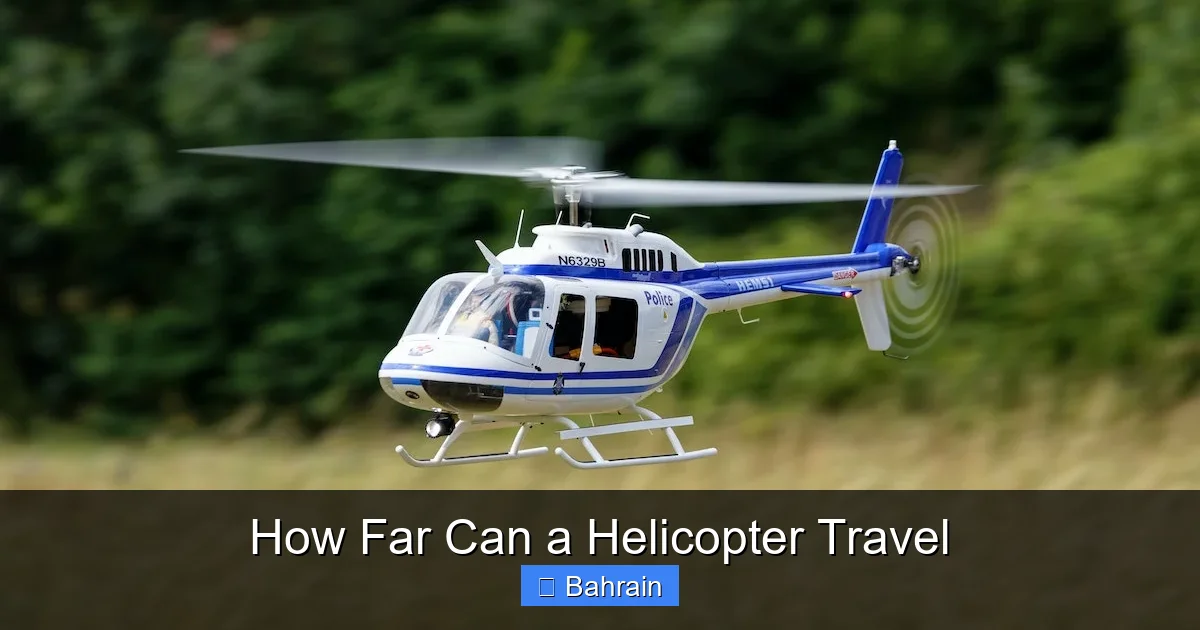
Visual guide about How Far Can a Helicopter Travel
Image source: homebuilthelicopter.com
Light Utility Helicopters (e.g., Robinson R44, Bell 206)
These are your smaller, often single-engine helicopters, popular for private use, flight training, aerial photography, and local tours. They typically have a range of about 250 to 400 miles (approximately 400-640 kilometers). For example, a flight from Manama, Bahrain, to Kuwait City, which is about 300 miles, would be well within the capabilities of many light helicopters, possibly requiring a fuel stop depending on the specific model and load. They are excellent for short-to-medium distance tasks, but not designed for transcontinental journeys.
Medium-Lift Helicopters (e.g., AgustaWestland AW139, Bell 412)
These are workhorses, often twin-engine aircraft used for corporate transport, offshore oil and gas support (common in the Gulf region), search and rescue, and emergency medical services (EMS). They boast significantly larger fuel tanks and more powerful engines. Their typical range is between 400 and 700 miles (approximately 640-1,120 kilometers). An AW139 could easily fly from Bahrain to Riyadh, Saudi Arabia (around 260 miles), and back without refueling, or conduct multiple trips to far-flung oil platforms with plenty of reserve. This is the sweet spot for many commercial operations where how far a helicopter can travel is a critical business metric.
Heavy-Lift and Long-Range Helicopters (e.g., Sikorsky S-92, Eurocopter EC225 Super Puma)
These are the giants of the rotary-wing world, designed for demanding missions requiring significant payload and extended endurance. Often twin-engine or even triple-engine, they are used for long-distance offshore transport, military operations, and VIP transport. These helicopters can often travel 600 to over 800 miles (approximately 965-1,280 kilometers) on a standard tank. With auxiliary fuel tanks, specialized long-range models can push this even further, sometimes exceeding 1,000 miles (1,600 kilometers). For instance, a flight from Bahrain to Dubai (around 300 miles) and back could be a routine operation for these powerful machines, demonstrating just how far a helicopter can travel when purpose-built for it.
Extending the Reach: How Far Can a Helicopter Travel with Special Measures?
Sometimes, standard range isn’t enough. Pilots and operators employ various strategies to extend how far a helicopter can travel for specific missions.
Auxiliary Fuel Tanks
Many helicopters can be fitted with removable auxiliary fuel tanks in their cabin or external hardpoints. These “ferry tanks” significantly boost fuel capacity, allowing for much longer flights. This is common for delivering new helicopters across continents or for very long-range missions where refueling points are scarce. However, these tanks take up valuable space and add weight, reducing the available payload for passengers or cargo. It’s a trade-off: more fuel means you can travel further, but you carry less of everything else.
Ferry Flights and Fuel Efficiency Tactics
When a helicopter needs to be moved a very long distance, it often undergoes a “ferry flight.” During these flights, the helicopter is stripped down to its essentials, carrying minimal payload and maximizing fuel. Pilots will also fly at an “economy cruise” speed – a specific airspeed that offers the best fuel efficiency, even if it means a longer flight time. This careful planning maximizes how far a helicopter can travel on its fuel.
In-Flight Refueling (Primarily Military)
While rare for civilian operations, some military helicopters are equipped for in-flight refueling. This allows them to link up with a tanker aircraft and refuel mid-air, effectively giving them an almost unlimited range. This capability drastically changes how far a helicopter can travel in a tactical scenario, allowing it to cover vast distances without landing.
Real-World Examples and Operational Considerations
Let’s look at some practical scenarios to understand how far a helicopter can travel in different contexts, particularly with a nod to our region.
Offshore Operations in the Gulf
The Arabian Gulf, with its numerous oil and gas platforms, is a prime example of where long-range helicopter capabilities are vital. Helicopters routinely fly from bases like Bahrain, Saudi Arabia, or Qatar to platforms hundreds of kilometers offshore. For these missions, reliability, safety, and the ability to travel long distances over water are paramount. Operators often use medium to heavy-lift helicopters (like the AW139 or S-92) ensuring they can reach distant rigs, potentially pick up personnel from multiple locations, and return, all with significant fuel reserves. How far a helicopter can travel here directly impacts operational efficiency and safety.
Search and Rescue (SAR)
SAR missions often demand helicopters that can travel long distances to a distress site, hover for extended periods, and then return, potentially with rescued individuals. SAR helicopters are equipped for long endurance, often carrying extra fuel and specialized equipment. The ability for a SAR helicopter to travel far can be the difference between life and death, especially in remote areas or over vast stretches of water.
VIP and Corporate Transport in Bahrain
For high-net-worth individuals or corporate executives in Bahrain, helicopters offer speed and convenience. A typical flight might be from a private helipad to Bahrain International Airport, or perhaps a quick trip to Saudi Arabia or Qatar for a business meeting. While these flights are often shorter in distance, the requirement is often for speed and comfort. How far a helicopter can travel is still important, allowing for direct point-to-point travel without multiple stops.
Medical Evacuation (MEDEVAC)
Air ambulances often need to cover significant distances quickly to transport critically ill patients to specialized hospitals. These helicopters are outfitted with medical equipment, adding weight. The balance between speed, payload, and how far a helicopter can travel on one tank of fuel is a critical operational decision for medical flight planning.
Safety Margins and Planning
When pilots plan a flight, they never operate at the absolute maximum range of the helicopter. Safety is always the number one priority. Regulations typically require helicopters to land with a certain amount of fuel remaining, known as a “reserve.” This reserve accounts for unexpected headwinds, holding patterns, diversions to alternate airports due to weather, or other unforeseen circumstances. This means the practical, safe how far a helicopter can travel is always less than its theoretical maximum range.
Route Planning and Fuel Stops
For very long journeys, pilots meticulously plan routes that include strategic fuel stops. These stops are not just about adding fuel but also about performing quick checks on the aircraft and allowing the crew to rest. This careful planning ensures that even if a helicopter cannot travel the entire distance on one tank, it can complete the mission safely and efficiently.
The Future of Helicopter Travel Range
What does the future hold for how far a helicopter can travel? Innovations are constantly pushing the boundaries:
Improved Fuel Efficiency
New engine designs and advanced aerodynamic shapes are continually improving fuel efficiency. Lighter composite materials reduce the helicopter’s empty weight, allowing more fuel or payload. These advancements will mean future helicopters can travel further on the same amount of fuel.
Hybrid and Electric Helicopters
While still in their early stages for larger aircraft, hybrid-electric and fully electric vertical takeoff and landing (eVTOL) aircraft are being developed. Currently, battery technology limits their range significantly compared to traditional helicopters, but ongoing research promises longer endurance. These might revolutionize short-to-medium distance urban air mobility (UAM), but long-range electric helicopter travel is still a distant prospect.
Autonomous Flight
Autonomous helicopters could potentially optimize flight paths and speeds with unparalleled precision, maximizing fuel efficiency and how far a helicopter can travel. Without human fatigue as a factor, operations could be extended, though regulatory and safety considerations are complex.
Conclusion
So, how far can a helicopter travel? The answer is “it depends!” It’s a complex blend of the helicopter’s design, its fuel capacity, the weight it carries, the prevailing weather conditions, and the strategic decisions made by pilots and operators. From the immediate needs of Bahrain’s offshore industry to global search and rescue missions, understanding these factors helps us appreciate the remarkable capabilities of these incredible machines.
Whether it’s a short hop across a bustling city or a lengthy journey over open seas, helicopters offer a unique blend of flexibility and speed. As technology continues to advance, we can expect to see even greater improvements in efficiency, range, and capability, further extending how far a helicopter can travel and what amazing feats it can accomplish in the skies above us.
Frequently Asked Questions
How does wind impact a helicopter’s travel distance?
Strong headwinds significantly reduce a helicopter’s effective travel distance by increasing fuel consumption to maintain ground speed. Conversely, a strong tailwind can help extend its range by reducing the power needed to cover ground.
What role does altitude play in a helicopter’s range?
Flying at optimal altitudes can improve fuel efficiency due to less air resistance, but very high altitudes with thinner air can reduce engine performance, thus impacting how far a helicopter can travel. Pilots choose altitudes that balance efficiency and mission requirements.
Are there different types of fuel that affect how far a helicopter can travel?
Most turbine-powered helicopters use Jet A or Jet A-1 fuel, which is similar to diesel. Piston-powered helicopters use aviation gasoline (Avgas). The type of fuel doesn’t directly affect range, but the helicopter’s engine efficiency with that specific fuel does.
How do pilots ensure they don’t run out of fuel on long flights?
Pilots adhere to strict regulations requiring them to carry sufficient fuel for the planned flight, plus reserves for contingencies like holding patterns, diversions, or unexpected delays. This conservative planning ensures safety but means the practical how far a helicopter can travel is always less than its absolute maximum.
Can helicopters land anywhere to refuel if needed?
While helicopters can theoretically land in many places, refueling requires specialized equipment and trained personnel. Therefore, pilots plan fuel stops at designated helipads or airports where jet fuel (or Avgas) and refueling services are readily available, rather than just any convenient spot.
Do newer helicopter models always have a longer range than older ones?
Generally, newer helicopter models often benefit from advancements in engine efficiency, lighter materials, and aerodynamic design, which can contribute to a longer range. However, a small new helicopter might still have a shorter range than an older, larger helicopter specifically designed for long-distance transport.