Best Time to Travel to Korea
Choosing the best time to travel to Korea largely depends on your personal preferences, as each season offers unique charm and activities. Spring (March-May) boasts cherry blossoms and mild weather, while autumn (September-November) showcases stunning fall foliage and comfortable temperatures. Summer (June-August) is vibrant with festivals but can be hot and humid, and winter (December-February) transforms the landscape into a snowy wonderland ideal for skiing.
Dreaming of a trip to South Korea? Whether you’re picturing vibrant cherry blossoms, fiery autumn leaves, bustling cityscapes, or serene temple stays, choosing the best time to travel to Korea is key to unlocking your perfect adventure. This enchanting country, a captivating blend of ancient traditions and futuristic innovation, truly transforms with each passing season, offering a different spectacle for every traveler.
Deciding on the ideal travel period isn’t just about avoiding rain or finding the warmest temperatures. It’s about aligning Korea’s seasonal magic with your personal interests, whether you’re a nature lover, a festival-goer, a history buff, or a foodie. From the mountainous beauty of Seoraksan to the coastal charm of Busan and the urban buzz of Seoul, Korea invites exploration year-round. Let’s embark on a journey through its distinct seasons to help you pinpoint exactly when to pack your bags for an unforgettable Korean experience.
This comprehensive guide will walk you through the nuances of each season, highlighting the weather, popular activities, and crucial pros and cons. We’ll also delve into considerations beyond just the climate, like crowds, budget, and specific events. By the end, you’ll have all the information you need to confidently determine the best time to travel to Korea for *you*.
Key Takeaways
- Spring (March-May) is ideal for cherry blossoms: Experience mild weather, vibrant festivals, and beautiful floral displays, but expect larger crowds, especially during peak blossom season.
- Autumn (September-November) offers stunning fall foliage: Enjoy crisp, comfortable weather perfect for hiking and sightseeing amidst breathtaking colorful landscapes. This is often considered one of the best times to travel to Korea.
- Summer (June-August) is best for coastal activities and festivals: While hot and humid with a monsoon season, summer is packed with lively events, beach trips, and water sports across Korea.
- Winter (December-February) is perfect for snow enthusiasts: Embrace colder temperatures for skiing, snowboarding, and enjoying festive holiday decorations and warm street food.
- Consider your priorities beyond weather: Factors like avoiding crowds, specific events (e.g., K-pop concerts, traditional festivals), and budget can significantly influence your best time to travel to Korea.
- Shoulder seasons offer a balance: Late spring or early autumn can provide pleasant weather with fewer crowds and potentially better deals on flights and accommodation.
- Research local holidays and events: Major public holidays like Chuseok and Seollal can lead to increased travel costs and limited availability for certain services.
Quick Answers to Common Questions
When is the absolute best time for cherry blossoms in Korea?
The absolute best time for cherry blossoms in Korea is typically from late March to mid-April, moving from south to north. Peak bloom usually occurs around early April in central regions like Seoul.
Is it safe to travel to Korea during the monsoon season?
Yes, it is generally safe to travel to Korea during the monsoon season (late June to late July). While heavy rainfall can occur, it’s not constant, and infrastructure is well-equipped to handle it. Just be prepared for rain and potential disruptions to outdoor plans.
What is the cheapest month to fly to Korea?
Generally, the cheapest months to fly to Korea tend to be during the shoulder seasons or early winter, specifically late November, late February, or early March, outside of major holidays. This is when demand is typically lower.
How many days are enough to visit Korea?
For a good introduction to South Korea, including Seoul and perhaps one other major city or region, 7 to 10 days is often recommended. If you want to explore more extensively, 2 weeks or more would be ideal.
What should I pack for a winter trip to Korea?
For a winter trip to Korea, pack warm layers, including a heavy winter coat, thermal underwear, sweaters, hats, gloves, and waterproof boots. Many indoor places are well-heated, so layering helps you adjust.
📑 Table of Contents
Understanding Korea’s Four Distinct Seasons
South Korea experiences four very distinct seasons, each bringing its own unique atmosphere and range of activities. Knowing what to expect from spring, summer, autumn, and winter is the first step in planning your trip and deciding the best time to travel to Korea based on what you hope to see and do.
Spring (March – May): The Season of Cherry Blossoms and New Beginnings
Spring in Korea is often hailed as one of the most beautiful times to visit, drawing visitors from around the globe. It’s a period of renewal, where the country sheds its winter coat and bursts into a kaleidoscope of colors.
Weather in Spring
The weather during spring is generally mild and pleasant, making it incredibly comfortable for sightseeing. March can still be a bit chilly, especially early in the month, with average temperatures ranging from 5°C to 12°C (41°F to 54°F). By April, temperatures become wonderfully temperate, often sitting between 10°C and 17°C (50°F to 63°F). May sees even warmer days, averaging 15°C to 22°C (59°F to 72°F), feeling almost like early summer. Rainfall is moderate and generally not disruptive, offering clear skies perfect for photography.
Activities and Festivals in Spring
The undisputed highlight of spring is the blossoming of cherry trees, which usually peaks in late March to mid-April, moving from the southern regions northward. Famous spots like Jinhae, Gyeongju, and Seoul’s Yeouido Park become breathtaking spectacles. Beyond cherry blossoms, you’ll also see magnolias, azaleas, and forsythias painting the landscape.
- Cherry Blossom Festivals: Don’t miss the Jinhae Gunhangje Festival or the Yeouido Spring Flower Festival.
- Hiking: The mild weather is perfect for exploring Korea’s numerous national parks and mountains.
- Outdoor Activities: Enjoy picnics by the Han River, explore traditional villages, or visit theme parks.
- Strawberries: It’s prime strawberry season, so indulge in fresh strawberry desserts and drinks.
Pros of Spring Travel
- Beautiful Scenery: Unmatched floral beauty, especially cherry blossoms.
- Pleasant Weather: Mild temperatures make outdoor activities very enjoyable.
- Vibrant Atmosphere: Many festivals and outdoor events kick off in spring.
Cons of Spring Travel
- Crowds: Peak cherry blossom season attracts significant crowds, especially in popular viewing areas.
- Higher Prices: Flights and accommodation can be more expensive due to high demand.
- Pollen and Fine Dust: Some days, particularly in late spring, can experience higher levels of fine dust (yellow dust from China) and pollen, which might affect those with allergies.
If cherry blossoms are your priority, then spring is unequivocally the best time to travel to Korea.
Summer (June – August): Vibrant Festivals and Coastal Escapes
Korean summers are hot and humid, characterized by a lively atmosphere, outdoor activities, and a definite rainy season. If you love beaches, water parks, and vibrant nightlife, summer might be your ideal season.
Weather in Summer
Summer officially starts in June, bringing with it increasing temperatures and humidity. June can be quite pleasant before the full swing of summer. July and August are the hottest months, with average temperatures ranging from 23°C to 30°C (73°F to 86°F), often feeling much warmer due to high humidity. This period also coincides with the monsoon season (jangma), typically from late June to late July. During jangma, you can expect heavy, sometimes prolonged, rainfall. However, it doesn’t rain constantly, and sunny days often punctuate the wet periods.
Activities and Festivals in Summer
Despite the heat and rain, summer in Korea is packed with excitement. It’s a fantastic time for exploring Korea’s extensive coastline, heading to amusement parks, or enjoying evening strolls.
- Beach Escapes: Head to Haeundae Beach in Busan or enjoy the many beaches along the East Coast.
- Water Parks: Beat the heat at popular water parks like Caribbean Bay.
- Music Festivals: Many K-pop and international music festivals take place.
- Mud Festival: Experience the world-famous Boryeong Mud Festival in July.
- Night Markets: Enjoy delicious street food and shopping at vibrant night markets.
Pros of Summer Travel
- Lively Atmosphere: Abundance of outdoor festivals, concerts, and events.
- Beach and Water Activities: Perfect for swimming, sunbathing, and water sports.
- Longer Daylight Hours: More time to explore during the day.
Cons of Summer Travel
- Hot and Humid: Can be uncomfortable for those not used to tropical climates.
- Monsoon Season: Heavy rainfall can disrupt outdoor plans.
- Higher Prices: Especially for coastal resorts and popular tourist spots.
- Crowds: Beaches and popular attractions can be very crowded, especially during school holidays.
For travelers who thrive in warmth and want to experience Korea’s energetic festival scene and beautiful coastline, summer can be the best time to travel to Korea. Just remember to pack light clothing, an umbrella, and plenty of sunscreen!
Autumn (September – November): A Kaleidoscope of Fall Foliage
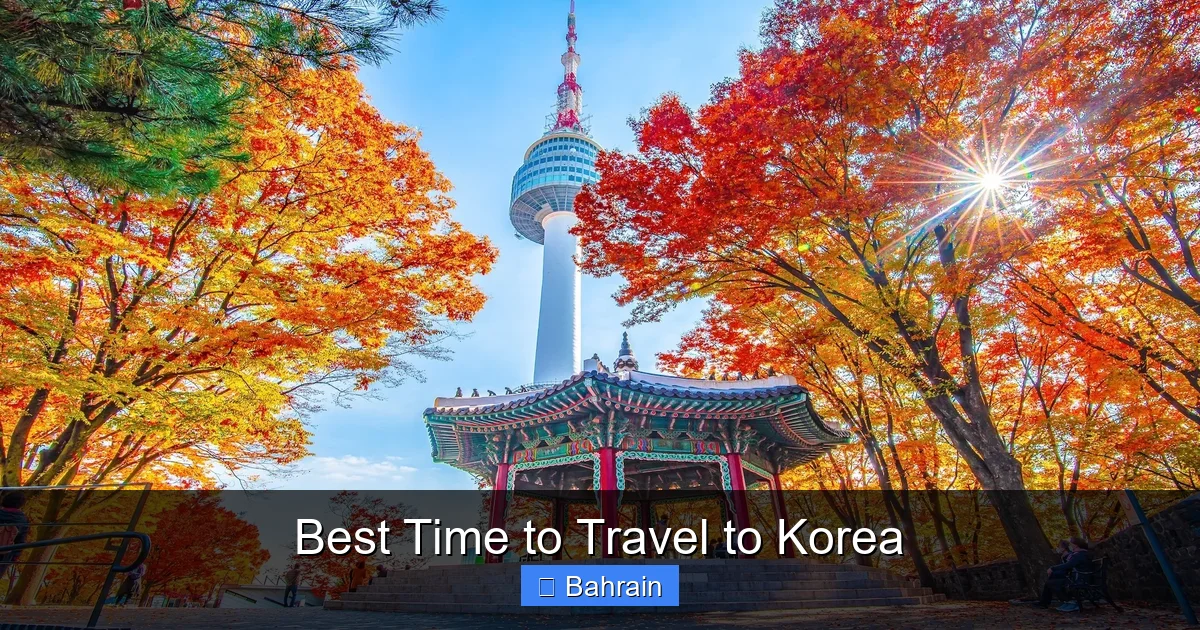
Many consider autumn the undisputed best time to travel to Korea. The summer heat gives way to crisp, clear skies, and the mountains erupt in a breathtaking display of fall colors, making it an incredibly popular season for tourists.
Weather in Autumn
Autumn weather is generally idyllic. September transitions from summer, with pleasant temperatures ranging from 18°C to 25°C (64°F to 77°F). October is arguably the most beautiful month, with average temperatures of 12°C to 19°C (54°F to 66°F), clear blue skies, and low humidity. November sees temperatures begin to drop, from 5°C to 12°C (41°F to 54°F), signaling the approach of winter. Rainfall is minimal, and the air is fresh and invigorating.
Activities and Festivals in Autumn
The star of autumn is undoubtedly the vibrant fall foliage. The leaves start to change color in the north (like Seoraksan National Park) in late September and make their way south, peaking in central Korea (around Seoul) in mid-October, and southern Korea (like Jeonju or Busan) in late October to early November.
- Hiking and Mountain Climbing: Explore Korea’s national parks like Seoraksan, Jirisan, and Bukhansan for spectacular views.
- Cultural Festivals: Enjoy various traditional festivals, including the Andong Mask Dance Festival and Jinju Namgang Yudeung (Lantern) Festival.
- Temple Visits: Temples nestled in the mountains become even more serene and picturesque.
- Enjoy Harvest Foods: Autumn is harvest season, so savor fresh seasonal produce and traditional Korean dishes.
Pros of Autumn Travel
- Stunning Scenery: Unparalleled fall foliage displays across the country.
- Perfect Weather: Mild temperatures, low humidity, and clear skies.
- Outdoor Activities: Ideal for hiking, exploring, and photography.
Cons of Autumn Travel
- Crowds: As the most popular season, major attractions and national parks can be very busy.
- Higher Prices: Similar to spring, flights and accommodation during peak autumn can be more expensive and book out quickly.
- Booking Ahead: Essential to book popular accommodations and tours well in advance.
If you dream of vibrant landscapes, comfortable weather, and outdoor exploration, then autumn is hands down the best time to travel to Korea.
Winter (December – February): Snowy Landscapes and Winter Sports
Winter in Korea transforms the country into a snow-dusted wonderland, offering a different kind of charm. It’s the ideal season for winter sports enthusiasts and those who enjoy a festive, cozy atmosphere.
Weather in Winter
Korean winters are cold and dry, especially from December to February. Temperatures often drop below freezing, with averages ranging from -5°C to 5°C (23°F to 41°F). January is typically the coldest month. While it’s cold, the air is usually clear and crisp, and there’s less humidity compared to summer. Snowfall is common, particularly in mountainous regions and the northeastern parts of the country.
Activities and Festivals in Winter
Winter brings with it a unique set of activities, from hitting the slopes to enjoying festive lights and warm street food.
- Skiing and Snowboarding: Head to popular ski resorts like Yongpyong, Alpensia (home of the 2018 Winter Olympics), or Vivaldi Park.
- Ice Fishing: Participate in unique festivals like the Hwacheon Sancheoneo Ice Festival.
- Christmas and New Year: Enjoy festive decorations and events in major cities.
- Hot Springs and Spas: Relax in warm baths to escape the cold.
- Street Food: Indulge in warm and hearty Korean street food like *tteokbokki*, *odeng*, and *hotteok*.
Pros of Winter Travel
- Winter Sports: Excellent opportunities for skiing, snowboarding, and ice skating.
- Fewer Crowds (excluding ski resorts): Major cities might be less crowded than in peak spring/autumn.
- Festive Atmosphere: Enjoy Christmas lights and New Year celebrations.
- Unique Cultural Experiences: Ice fishing festivals offer a truly distinct Korean experience.
Cons of Winter Travel
- Very Cold: Temperatures can be uncomfortably low for some, requiring heavy layering.
- Limited Outdoor Sightseeing: Some natural attractions might be less accessible or less appealing due to snow and cold.
- Shorter Daylight Hours: Less time for daytime exploration.
If you’re a fan of snow, winter sports, or enjoy a cozy, festive vibe, then winter could be the best time to travel to Korea for a truly unique experience.
Beyond the Seasons: Considering Your Travel Style and Interests
Visual guide about Best Time to Travel to Korea
Image source: agoda.com
While understanding the seasonal weather patterns is crucial, the ultimate best time to travel to Korea also heavily depends on your personal preferences, budget, and specific travel goals.
Budget-Friendly Travel
If you’re looking to save some money, consider the shoulder seasons or even the colder parts of winter (excluding ski resorts). Late November to early December, and late February to early March, can offer lower prices on flights and accommodation compared to the peak cherry blossom or fall foliage seasons. During these times, the weather can still be quite pleasant, or at least manageable with appropriate clothing, and crowds are generally thinner. Summer, outside of the monsoon peak, can also be a more affordable option if you book strategically.
Avoiding Crowds
To avoid the largest crowds, steer clear of major public holidays and the absolute peaks of spring and autumn.
- Chuseok (Korean Thanksgiving) and Seollal (Lunar New Year): These major holidays involve significant domestic travel, with many businesses closing, and transport becoming very difficult to book and expensive. Avoid traveling during these times if possible, or plan *very* far in advance.
- Late Spring/Early Summer (late May to early June): This period can offer a sweet spot with pleasant weather before the summer heat fully kicks in and after the cherry blossom crowds dissipate.
- Late Autumn/Early Winter (late November to early December): Enjoy the tail end of fall foliage in the south and the start of festive winter decorations with fewer tourists.
Specific Event Interests
Your reason for visiting Korea might dictate your travel time.
- K-Pop Concerts & Fan Meets: These are scheduled throughout the year, so check artist schedules. Often, major tours or events happen in warmer months.
- Film Festivals: The Busan International Film Festival (BIFF) usually takes place in October.
- Mud Festival: Boryeong Mud Festival is a summer event in July.
- Ice Fishing Festivals: These are exclusively winter activities in January.
- Traditional Festivals: Many traditional festivals, such as lantern festivals, occur in spring or autumn.
Researching specific events that align with your interests is a smart way to pinpoint the best time to travel to Korea for a tailor-made experience.
Conclusion: What’s Your Best Time to Travel to Korea?
As you can see, there’s no single “best” time to travel to Korea that fits everyone. Each season offers a unique charm and a distinct set of experiences.
- For blooming beauty and mild weather: Choose spring (late March to May).
- For vibrant festivals and coastal fun: Opt for summer (June to August).
- For stunning fall foliage and comfortable hiking: Autumn (September to November) is your ideal pick.
- For winter sports and festive coziness: Plan your trip for winter (December to February).
Ultimately, the best time to travel to Korea is when its seasonal offerings align perfectly with your personal travel aspirations. Whether you’re chasing cherry blossoms, hiking through fiery red mountains, or hitting the ski slopes, Korea promises an unforgettable adventure. Plan ahead, pack appropriately, and get ready to immerse yourself in the incredible beauty and culture of this dynamic nation!
🎥 Related Video: When is the best time to visit South Korea? 🇰🇷
📺 HelloTalk_Korean
Frequently Asked Questions
What is the weather like in Seoul during October?
October in Seoul offers delightful weather, often considered one of the most pleasant times of the year. Temperatures average between 12°C to 19°C (54°F to 66°F) with clear skies, low humidity, and vibrant fall foliage, making it perfect for sightseeing.
Are there any major holidays to avoid when planning a trip to Korea?
Yes, it’s generally advisable to avoid traveling to Korea during Chuseok (Korean Thanksgiving, usually in September or October) and Seollal (Lunar New Year, usually in January or February). These holidays involve significant domestic travel, leading to crowded transportation, closed businesses, and higher prices.
Can I go skiing in Korea? If so, when?
Absolutely! South Korea is famous for its excellent ski resorts. The ski season typically runs from early December to late February or early March, depending on snowfall. Resorts like Yongpyong and Alpensia offer world-class facilities.
Is Korea very crowded during the cherry blossom season?
Yes, Korea can be quite crowded during the cherry blossom season, especially in popular viewing areas like Jinhae, Yeouido Park in Seoul, and Gyeongju. If you plan to visit during this time, it’s highly recommended to book accommodations and transportation well in advance.
What are some popular activities during summer in Korea?
During summer, popular activities in Korea include visiting beaches (like Haeundae in Busan), enjoying water parks, attending vibrant music festivals (such as the Boryeong Mud Festival), exploring night markets, and seeking out air-conditioned shopping malls and cafes.
When is the best time to visit Jeju Island?
Jeju Island is beautiful year-round, but many consider late spring (April-May) for blooming canola fields and mild weather, or early autumn (September-October) for pleasant temperatures and clear skies, as the best times. Summer is popular for beaches but can be hot and humid, while winter offers a unique, tranquil experience.