Best Suitcase for European Travel
Choosing the best suitcase for European travel means balancing durability, weight, and size to suit diverse needs. Consider hardside or softside based on protection and flexibility, prioritize lightweight designs for airline limits, and ensure sturdy wheels and handles for easy navigation across various terrains. A well-chosen bag simplifies your journey significantly.
Planning a European adventure is thrilling! You dream of charming cafes, ancient ruins, and breathtaking landscapes. But there’s one practical decision that can make or break your trip: choosing the right luggage. Navigating bustling train stations, charming cobblestone streets, and small hotel rooms requires a suitcase that’s up to the task.
Picking the best suitcase for European travel isn’t just about aesthetics; it’s about functionality, durability, and fitting seamlessly into your journey. Europe’s diverse terrain and varied transportation systems demand a bag that can handle it all. Forget struggling with oversized, clunky luggage. Let’s find the perfect travel companion for your unforgettable European escapade!
Key Takeaways
- Hardside vs. Softside: Hardside offers superior protection for fragile items and can be more water-resistant, while softside provides more flexibility, external pockets, and often lighter empty weight. Your choice depends on what you pack and your travel style.
- Size and Airline Restrictions: European airlines, especially budget carriers, have strict carry-on and checked baggage dimensions and weight limits. Always check these rules before you fly to avoid unexpected fees.
- Durability is Key: European travel often involves navigating cobblestone streets, multiple train stations, and varied transport. Invest in luggage with robust spinner or two-wheel rollers, high-quality zippers (like YKK), and a sturdy, non-wobbly telescoping handle.
- Prioritize Lightweight Materials: Every kilogram counts when dealing with airline weight limits. Look for suitcases made from lightweight yet durable materials like polycarbonate for hardsides or durable nylon for softsides to maximize your packing capacity.
- Smart Features Enhance Convenience: Internal compression straps, thoughtful organizational pockets, and even built-in USB charging ports can make packing and navigating much easier. TSA-approved locks offer an added layer of security.
- Consider Your Travel Style: A backpack might be best for constant movement and hostels, a carry-on for short city breaks, and a checked bag for longer trips with more gear. Tailor your luggage to the specifics of your itinerary.
Quick Answers to Common Questions
What is the best type of suitcase for European travel with cobblestones?
For cobblestones, two-wheel roller suitcases are often preferred over spinner wheels. Their recessed design makes them more robust and less prone to breaking when dragged over rough, uneven surfaces.
Should I bring a hardside or softside suitcase to Europe?
It depends on your priorities. Hardside offers better protection for fragile items and weather resistance, while softside provides more flexibility, external pockets, and often a lighter empty weight. Consider what you’ll be packing.
Are European airlines strict about carry-on luggage size?
Yes, especially budget airlines like Ryanair and EasyJet. They often have very strict dimensions and weight limits for carry-on bags, and checking a bag at the gate can be expensive. Always check your specific airline’s policy.
What features are essential for a durable suitcase for European travel?
Look for high-quality components like YKK zippers, a sturdy telescoping handle with minimal wobble, and robust wheels (either durable two-wheel rollers or well-protected spinner wheels). Strong, lightweight materials like polycarbonate or ballistic nylon are also key.
Can I get by with just a carry-on for a two-week trip to Europe?
Yes, it’s definitely possible with smart packing, especially if you plan to do laundry. Packing cubes, versatile clothing, and a minimalist mindset can help you fit everything into a carry-on, making for a much smoother European travel experience.
📑 Table of Contents
Hardside vs. Softside: Deciding Your Shell
The first big decision when looking for the best suitcase for European travel often comes down to the outer shell. Do you go for a rigid hardside or a flexible softside? Both have their pros and cons. Understanding these differences helps you pick what’s right for your style.
Hardside Advantages & Disadvantages
Hardside suitcases are popular for their sleek looks and protective qualities. They are typically made from materials like polycarbonate, ABS plastic, or aluminum.
Advantages:
- Superior Protection: If you’re carrying fragile items like souvenirs, wine bottles, or electronics, a hardside case offers better impact protection. It acts like a sturdy shell.
- Weather Resistance: Most hardside cases are more resistant to rain and spills. This keeps your belongings dry if caught in an unexpected shower.
- Security: The rigid structure can make them harder to break into compared to softside bags with easily cut fabric.
Disadvantages:
- Less Flexibility: Hardside cases don’t offer much give. This means you can’t easily squeeze in “just one more thing” like you might with a softside bag.
- External Pockets: They typically lack external pockets. This means less convenient access to items you might need quickly, like a passport or book.
- Scratches: Hardshells can show scratches and scuffs more easily, especially on lighter colors.
- Weight: While advancements have made them lighter, some hardside cases can still be heavier than their softside counterparts.
Softside Advantages & Disadvantages
Softside luggage is often made from durable nylon or polyester fabric. It’s a traditional choice that many travelers still prefer.
Advantages:
- Flexibility: Softside bags can expand or compress slightly. This is great if you buy a few extra souvenirs. You can often fit them into tighter spaces.
- External Pockets: Most softside bags feature multiple external pockets. These are perfect for quick access to travel documents, snacks, or a paperback book.
- Lighter Weight: Often, softside luggage boasts a lighter empty weight. This is a huge bonus when dealing with strict airline weight limits.
- Durability of Fabric: High-denier nylon (like ballistic nylon) is incredibly tear-resistant and can withstand a lot of abuse.
Disadvantages:
- Less Protection: The fabric offers less protection against hard impacts. Fragile items are at a higher risk of breaking.
- Water Resistance: While some fabrics are treated, softside bags are generally less water-resistant than hardside ones.
- Security: Fabric can be more easily cut or slashed, potentially making them less secure.
Tip: Consider your packing style and what you plan to carry. If you’re a careful packer with fragile items, hardside might be your best suitcase for European travel. If you value flexibility and quick access, softside could be better.
Size Matters: Navigating Carry-on vs. Checked Baggage
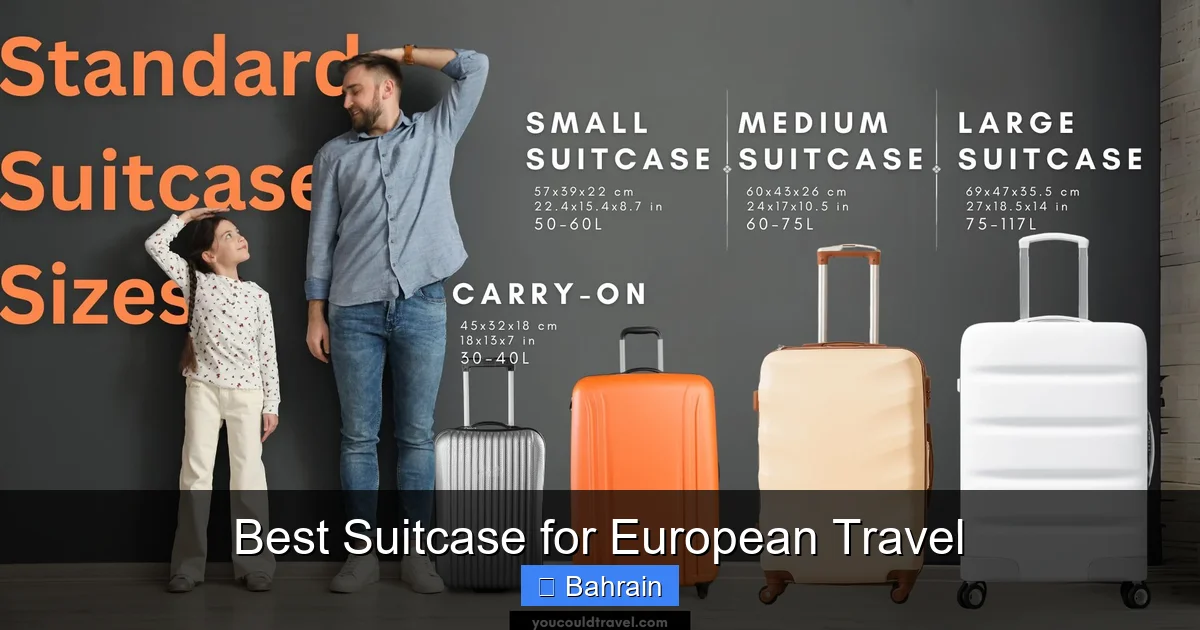
One of the most crucial aspects of choosing the best suitcase for European travel is its size. Europe has a fantastic network of trains and budget airlines. However, this also means strict luggage rules. You need to decide if you’re going carry-on only or if you’ll check a bag.
The Carry-On Advantage
Traveling with only a carry-on bag offers numerous benefits, especially in Europe.
- Save Money: Many European budget airlines charge hefty fees for checked bags. Going carry-on only can save you a significant amount.
- Save Time: No waiting at the baggage claim. You can breeze through the airport and start your adventure faster.
- Less Risk of Loss: Your bag is always with you. There’s no risk of it getting lost or delayed by the airline.
- Maneuverability: Smaller bags are easier to carry onto trains, buses, and squeeze into overhead compartments or small hotel lifts.
When Checked Baggage is Necessary
Sometimes, a carry-on just isn’t enough.
- Longer Trips: For extended European tours (2+ weeks), you might need more clothes and items than a carry-on can hold.
- Special Gear: If you’re bringing specific gear for hiking, skiing, or other activities, you’ll likely need a larger checked bag.
- Souvenir Shopping: Planning to bring back lots of goodies? A checked bag provides extra space for your treasures.
European Airline Specifics
This is where it gets tricky. European airlines, particularly budget carriers like Ryanair, EasyJet, and Vueling, are notorious for strict size and weight limits for both carry-on and checked bags.
- Check Before You Fly: ALWAYS check the specific baggage allowances for every airline you’re flying with. Dimensions can vary by just a few centimeters.
- Personal Item: Many airlines allow a “personal item” in addition to a carry-on. This could be a small backpack or a purse. Maximize this space wisely.
- Weight Limits: Be mindful of weight. Even carry-ons have weight limits (often 7-10 kg).
Tip: Measure your suitcase at home, empty and packed. Use a luggage scale. It’s better to be safe than sorry at the airport. For the best suitcase for European travel, a versatile carry-on is often the most practical choice.
Visual guide about Best Suitcase for European Travel
Image source: youcouldtravel.com
Wheels, Zippers, and Handles: The Anatomy of Durability
These often-overlooked components are vital for the longevity and ease of use of your luggage. European travel often means dragging your suitcase over uneven surfaces. Poor quality components can quickly lead to frustration.
Spinner vs. Two-Wheel Rollers
The type of wheels your suitcase has significantly impacts how easy it is to maneuver.
- Spinner Wheels (4 or 8 wheels): These wheels rotate 360 degrees. They allow you to push your suitcase effortlessly beside you, turn on a dime, and navigate tight spaces with ease. They are excellent for smooth airport floors and train stations. However, they can sometimes struggle on very uneven surfaces like cobblestones, as they protrude more and can be more prone to breaking if hit hard.
- Two-Wheel Rollers (Inline Skates): These are recessed wheels, much like those on inline skates. You tilt the bag and pull it behind you. They are often more durable on rough terrain, as they are less exposed. They handle cobblestones and curbs better. The downside is they require more effort to pull and can put strain on your arm.
Tip: For general European travel, especially through airports and train stations, spinner wheels offer superior convenience. If your itinerary involves a lot of rough terrain, two-wheel rollers might be a more robust choice for your best suitcase for European travel.
Zipper Quality
Zippers are a common point of failure for luggage. Cheap zippers can break easily, leaving your belongings exposed.
- YKK Zippers: Look for brands that specifically mention YKK zippers. YKK is a Japanese company renowned for producing high-quality, durable zippers that are less likely to snag, break, or come apart.
- Self-Repairing Zippers: Some high-end zippers are designed to “self-repair” if they split by running the puller back and forth.
- Large Teeth: Larger, chunkier zipper teeth tend to be more robust than tiny ones.
Handle Strength
A flimsy handle is a nightmare. You need a handle that can withstand the stress of lifting a packed bag and navigating various obstacles.
- Telescoping Handle: Ensure it extends and retracts smoothly.
- Minimal Wobble: A good handle should have minimal side-to-side wobble when extended. Too much wobble indicates a weak mechanism.
- Multiple Lock Points: Handles with multiple locking positions are useful for travelers of different heights.
- Sturdy Material: Look for handles made from aluminum or other strong, lightweight metals.
Tip: When trying out a suitcase, extend the handle fully and give it a gentle shake. It should feel solid. This small test can save you a lot of trouble on your trip to Europe. The best suitcase for European travel will have strong, reliable components.
Weight and Materials: Lightening Your Load
Every gram counts when flying, especially with European airline weight limits. A heavy empty suitcase means less room for your actual belongings. Choosing lightweight materials for your best suitcase for European travel is a smart move.
Material Impact on Weight
The material your luggage is made from directly affects its empty weight and durability.
- Polycarbonate: A popular choice for hardside luggage. It’s lightweight, flexible, and very impact-resistant, making it a great balance of durability and low weight.
- ABS Plastic: Often found in more affordable hardside options. It’s rigid and durable but can be heavier and more brittle than polycarbonate.
- Aluminum: The strongest and most durable hardside material, but also the heaviest and most expensive. It resists dents better than cracks.
- Nylon (Ballistic/Cordura): High-quality nylons are excellent for softside luggage. They are incredibly tear-resistant, abrasion-resistant, and relatively lightweight. “Denier” indicates the thickness of the fiber; higher denier means more durable.
- Polyester: A common and affordable fabric for softside bags. It’s lighter than nylon but generally less durable.
Empty Weight Matters
Imagine a 22 kg airline limit. If your empty suitcase weighs 5 kg, you only have 17 kg for your clothes and souvenirs. If your suitcase weighs 3 kg, you have 19 kg. Those 2 kilograms can make a difference!
Prioritizing Lightweight Design
When comparing options, always check the empty weight specifications. Brands often highlight this feature if their bags are particularly light. A lighter bag means you can pack more without exceeding airline limits or straining yourself. This is a critical factor for the best suitcase for European travel.
Tip: Don’t sacrifice all durability for lightness. There’s a sweet spot. A lightweight bag that falls apart isn’t helpful. Look for reputable brands known for engineering durable yet light luggage.
Smart Features and Organization: Making Travel Easier
Beyond the basics, certain features can significantly enhance your travel experience. These thoughtful additions can turn a good suitcase into the best suitcase for European travel.
Compression Straps & Dividers
- Internal Compression Straps: These straps help cinch down your packed items, making the bag more compact and preventing clothes from shifting during transit. This is invaluable for maximizing space.
- Dividers/Panels: Many suitcases have zippered dividers or panels to separate the two halves of the suitcase. This helps organize your belongings and keeps clean clothes separate from dirty ones. Some also have wet pockets for toiletries.
External Pockets
(Mostly found on softside luggage)
- Quick Access: Perfect for items you need frequently, like your passport, boarding pass, a small travel guide, or a water bottle.
- Organizational: Helps keep smaller items sorted rather than rummaging through the main compartment.
USB Charging Ports
Some modern suitcases come with a built-in USB port connected to an internal pocket for a power bank (power bank itself usually not included). This lets you charge your phone or tablet on the go without rummaging for your power bank. This is a luxury, but a convenient one.
TSA-Approved Locks
Many suitcases have integrated TSA-approved locks. This means Transportation Security Administration (TSA) agents can open your luggage for inspection using a master key without damaging your lock or suitcase. It adds a layer of security without hassle.
RFID Protection
Some luggage pieces include a small pocket with RFID-blocking material. This protects your credit cards and passport from electronic skimming, a growing concern for travelers.
Tip: Think about how you pack and what you need access to. Do you value organization? Do you travel with a lot of tech? These features can significantly improve your experience. The best suitcase for European travel often has a blend of these smart additions.
Top Recommendations (General Types)
Instead of specific brands, which can go out of style or change features, let’s look at types of suitcases that excel for European travel.
The Agile Carry-On for Short Trips
For weekend getaways or short city breaks (3-5 days), a high-quality carry-on is the champion. Look for a lightweight hardside polycarbonate spinner with robust wheels and a strong handle. This combination offers protection, easy maneuverability, and helps you avoid checked bag fees. A softside carry-on with good external pockets is also a strong contender if you prefer quick access. This is often the best suitcase for European travel when efficiency is key.
The Durable Checked Bag for Longer Adventures
If your trip extends beyond a week or if you need to carry more, a checked bag becomes necessary. Here, durability is paramount. Opt for a hardside case (polycarbonate or aluminum) with strong, recessed wheels (two-wheel rollers might be better here for heavy loads and varied terrain) and a solid handle. For softside, choose high-denier ballistic nylon. Prioritize bags with good internal compression straps to manage your load.
The Versatile Duffle/Hybrid for Flexibility
For backpackers, those on a budget, or travelers who combine different modes of transport, a convertible duffle bag (which can be carried as a backpack) or a hybrid wheeled duffle can be fantastic. These offer great flexibility, are often lighter, and can be easier to stash in tight spaces like overhead train racks. Look for durable materials and comfortable straps. While not a traditional “suitcase,” it can be the best luggage for European travel for certain styles.
Tip: Always read reviews focusing on durability and real-world performance. A good warranty also indicates a manufacturer’s confidence in their product.
Conclusion
Choosing the best suitcase for European travel is a personal decision, but by focusing on key aspects, you can make an informed choice. Consider the balance between hardside and softside, the importance of size and airline restrictions, and the crucial role of durable components like wheels, zippers, and handles. Don’t forget how much empty weight matters and how smart organizational features can streamline your journey.
Whether you opt for a sleek carry-on for a whirlwind city tour or a robust checked bag for a month-long adventure, your luggage should be a helper, not a hindrance. Invest wisely, and you’ll be well on your way to creating unforgettable memories across Europe. Happy travels!
Frequently Asked Questions
What size suitcase is best for European travel?
For most European trips, especially those involving multiple cities and budget airlines, a carry-on sized suitcase (typically around 55x40x20 cm or 22x14x9 inches, including wheels and handles) is highly recommended. For longer trips or specific needs, a medium-sized checked bag (65-75 cm or 25-29 inches) might be necessary, but always prioritize lightweight design.
Is it better to have 2 wheels or 4 wheels for European travel?
Four-wheel spinner suitcases are excellent for smooth surfaces like airports and train stations, offering easy 360-degree maneuverability. However, two-wheel roller bags are generally more durable and stable on rough terrain such as cobblestone streets, as their wheels are recessed and less exposed to damage.
How important is the weight of the suitcase itself?
The empty weight of your suitcase is very important for European travel, especially due to strict airline weight limits (often 20-23 kg for checked bags and 7-10 kg for carry-ons). A lighter suitcase means you can pack more of your actual belongings without incurring overweight baggage fees, making for a more efficient trip.
Should I get a suitcase with external pockets for European travel?
External pockets are a fantastic feature, typically found on softside suitcases. They provide quick and easy access to essentials like passports, tickets, snacks, or a water bottle, eliminating the need to open your main compartment and rummage through your packed items in public spaces. This can be a huge convenience during your journey.
Are built-in locks sufficient for European travel security?
Built-in TSA-approved locks offer a good basic layer of security and convenience, as they prevent casual pilfering and allow security personnel to inspect your bag without damage. However, for maximum security, always keep valuable items in your personal carry-on, and consider additional security measures like cable ties or robust external locks for checked luggage.
What materials are best for a durable suitcase for European travel?
For hardside luggage, polycarbonate is highly recommended due to its excellent balance of lightness, flexibility, and impact resistance. For softside luggage, high-denier ballistic nylon (e.g., 1050D) or Cordura fabric are top choices for their exceptional tear and abrasion resistance, ensuring your suitcase withstands the rigors of European adventures.