Places You Can Travel Without a Passport
Traveling without a passport is more possible than you might think, opening up a world of adventure even if your passport is missing or expired. While requirements vary greatly by nationality, many destinations, including U.S. territories and specific international regions like the GCC countries for their citizens, offer entry with alternative valid identification. This guide explores these exciting possibilities, providing tips for a smooth, passport-free journey.
Places You Can Travel Without a Passport
Imagine this: you’ve got a sudden craving for adventure, a burning desire to escape the daily grind, but your passport is expired, buried deep in a drawer, or simply not something you want to fuss with. Does that mean your travel dreams are put on hold? Not necessarily! The idea of traveling without a passport might sound like a pipe dream to many, a relic of a bygone era. But believe it or not, there are some truly incredible places you can travel without a passport, offering freedom and convenience for those looking for a quick getaway or a less complicated journey.
The key to unlocking these destinations lies in understanding what “passport-free” truly means. It doesn’t usually mean you can just waltz across borders with no identification at all. Instead, it signifies that a traditional passport book isn’t the *only* accepted form of identification. Depending on your nationality and the destination, other documents like enhanced driver’s licenses, national ID cards, or specific travel cards can open doors to exciting locales. This guide will take you on a journey through these fascinating possibilities, ensuring your next adventure is just a valid ID away.
So, whether you’re dreaming of sun-kissed beaches, vibrant cultural experiences, or exploring neighboring countries with ease, get ready to discover a surprising array of places you can travel without a passport. We’ll break down the options, provide practical tips, and even highlight some lesser-known opportunities, including specific regional agreements that make simplified travel a reality for many.
Key Takeaways
- Varied Requirements: “Passport-free” travel doesn’t mean no ID; it means specific alternative forms of identification (like enhanced driver’s licenses or national ID cards) are accepted instead of a traditional passport book.
- U.S. Territories are Prime Destinations: For U.S. citizens, tropical destinations like Puerto Rico, the U.S. Virgin Islands, Guam, and American Samoa are accessible with just a government-issued photo ID.
- North American Border Crossings: U.S. and Canadian citizens can often cross land and sea borders between the two countries and into Mexico (for U.S. citizens) using an Enhanced Driver’s License (EDL) or other approved WHTI-compliant documents.
- Regional Agreements Facilitate Travel: Within blocs like the Schengen Area for EU citizens, or the Gulf Cooperation Council (GCC) for its citizens, national ID cards often suffice for travel between member states.
- Bahrain for GCC Nationals: A standout example is Bahrain, where GCC citizens can enter using their national ID card, offering a seamless travel experience without needing a passport.
- Always Verify Requirements: Travel rules are dynamic. Always check the latest entry requirements for your specific nationality and destination before planning any passport-free trip.
- Preparation is Key: Even without a passport, having valid alternative IDs, copies of documents, and understanding local customs will ensure a smoother and more enjoyable journey.
Quick Answers to Common Questions
Can U.S. citizens travel to Mexico or Canada by air without a passport?
No, U.S. citizens generally need a valid U.S. passport book for air travel to Mexico or Canada. The exceptions for passport-free travel apply only to land and sea crossings.
Do I need a passport to visit U.S. territories like Puerto Rico or the U.S. Virgin Islands?
No, U.S. citizens do not need a passport to visit U.S. territories. A valid government-issued photo ID, such as a driver’s license, is sufficient.
What is an Enhanced Driver’s License (EDL)?
An Enhanced Driver’s License (EDL) is a WHTI-compliant document issued by some U.S. states and Canadian provinces that serves as proof of identity and citizenship, allowing for land and sea travel to certain North American destinations without a passport book.
Can EU citizens travel within the Schengen Area without a passport?
Yes, citizens of Schengen member states can typically travel within the Schengen Area using only their national ID card, without needing a passport.
Can GCC citizens travel to Bahrain without a passport?
Yes, citizens of the Gulf Cooperation Council (GCC) member states can enter Bahrain using their national ID card instead of a passport.
📑 Table of Contents
- Understanding “Passport-Free” Travel: What Does It Really Mean?
- Tropical Escapes for U.S. Citizens: The U.S. Territories
- North American Neighbors: Canada and Mexico (with caveats)
- Beyond the Americas: Specific Regional Agreements and ID Travel
- Planning Your Trip: Essential Tips for Passport-Free Adventures
- Embrace the Journey: The Freedom of Simplified Travel
Understanding “Passport-Free” Travel: What Does It Really Mean?
Before we dive into the destinations, let’s clear up a common misconception: “traveling without a passport” rarely means traveling without *any* identification. For most international travel, a passport remains the gold standard. However, specific agreements, geographic proximity, or national laws create unique scenarios where alternative, government-issued IDs are perfectly acceptable. The specific requirements depend heavily on your citizenship and the destination.
Variations by Nationality and Destination
For citizens of the United States, “passport-free” often refers to travel within U.S. territories or to certain neighboring countries via specific modes of transport. For Europeans, it typically means leveraging the freedom of movement within the Schengen Area using a national ID card. For citizens of the Gulf Cooperation Council (GCC), it means streamlined travel between member states. It’s vital to research the rules applicable to *your* nationality for any specific destination you’re considering for travel without a passport.
Types of Accepted Alternative IDs
- Enhanced Driver’s Licenses (EDLs): Available in some U.S. states and Canadian provinces, EDLs are WHTI-compliant (Western Hemisphere Travel Initiative) and serve as proof of identity and citizenship for land and sea travel to certain North American destinations.
- National ID Cards: Common in many countries outside North America, these cards can be used for international travel within specific economic or political blocs (like the EU or GCC).
- Trusted Traveler Programs: Cards like NEXUS (for U.S./Canada travel) or SENTRI (for U.S./Mexico travel) can expedite border crossings and sometimes serve as alternatives to passports for specific travel methods.
- Military ID Cards: Active duty U.S. military personnel may have special provisions for travel, though usually still requiring a passport for international air travel.
Keep in mind that while you might not need a passport book, you will always need a valid, government-issued photo ID. Always check the expiration dates!
Tropical Escapes for U.S. Citizens: The U.S. Territories
For U.S. citizens dreaming of turquoise waters and palm-fringed beaches, some of the most accessible places you can travel without a passport are right under the American flag. Traveling to U.S. territories is considered domestic travel, meaning you only need a valid government-issued photo ID, such as a driver’s license, just like flying from New York to California.
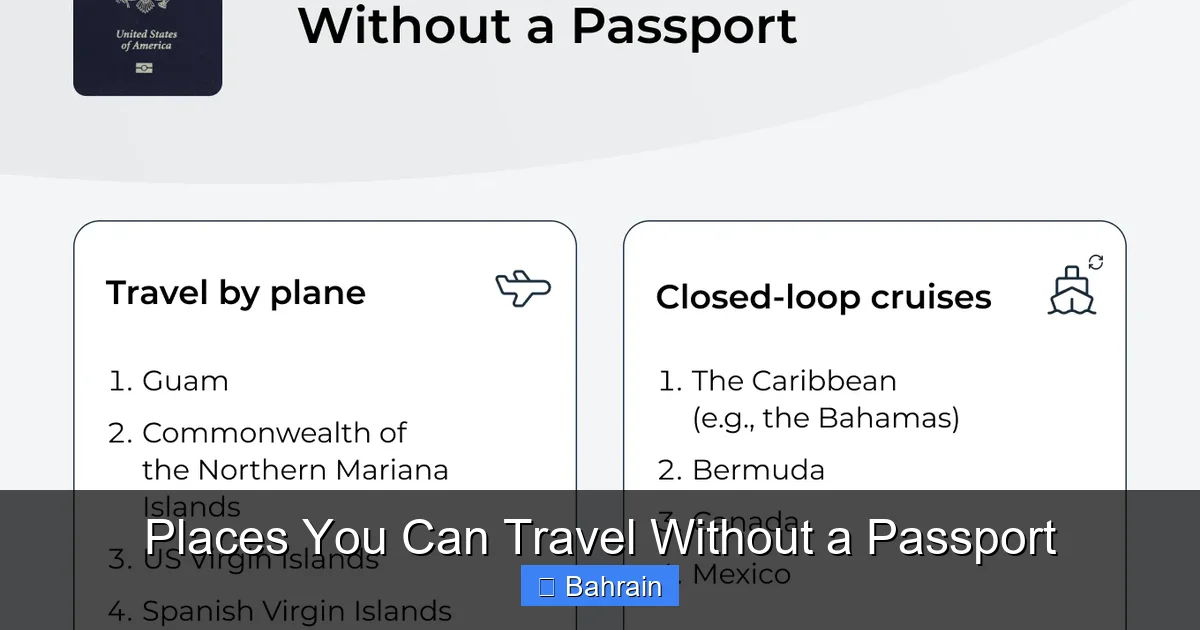
Visual guide about Places You Can Travel Without a Passport
Image source: photoaid.com
Puerto Rico: A Caribbean Gem
This vibrant island offers a rich blend of Spanish, African, and Taino cultures. From the cobblestone streets of Old San Juan to the lush El Yunque rainforest, Puerto Rico delivers a full international experience without the need for a passport. Enjoy salsa dancing, savor mofongo, and relax on stunning beaches like Luquillo or Flamenco (on Culebra island). It’s a fantastic option for a hassle-free tropical getaway.
U.S. Virgin Islands: St. Thomas, St. John, and St. Croix
Comprising St. Thomas, St. John, and St. Croix, these islands are postcard-perfect. St. Thomas is famous for its duty-free shopping and Magens Bay, while St. John boasts pristine national parks covering two-thirds of the island. St. Croix offers a more laid-back vibe with historic towns and beautiful dive sites. All are easily accessible for U.S. citizens, making them prime places you can travel without a passport for a taste of paradise.
Guam & The Northern Mariana Islands: Pacific Adventures
In the Western Pacific, Guam and the Northern Mariana Islands (including Saipan, Tinian, and Rota) offer unique island cultures, World War II history, and spectacular diving. While a longer flight for most, these territories provide a distinct cultural experience and stunning natural beauty, again requiring only a government-issued ID for U.S. citizens.
American Samoa: Untouched Paradise
Further south in the Pacific, American Samoa is known for its rugged volcanic landscapes, pristine coral reefs, and traditional Polynesian culture. It’s a truly off-the-beaten-path destination for those seeking untouched natural beauty and a deep dive into island traditions, all without needing a passport from the mainland U.S.
North American Neighbors: Canada and Mexico (with caveats)
Crossing land and sea borders to Canada and Mexico offers another set of opportunities for U.S. citizens to travel without a passport book, provided they have specific WHTI-compliant documents. Air travel, however, nearly always requires a passport book.
Canada: The Great White North
For U.S. citizens, driving or sailing into Canada is possible with an Enhanced Driver’s License (EDL) from participating states (Michigan, Minnesota, New York, Vermont, and Washington) or a NEXUS card. These documents prove both identity and citizenship. Explore the vibrant cities of Vancouver, Toronto, or Montreal, or immerse yourself in the natural splendor of the Canadian Rockies, all without pulling out your passport book. Remember, an ordinary driver’s license is *not* sufficient for border crossings.
Mexico: South of the Border
Similarly, U.S. citizens can enter Mexico via land or sea using an EDL or other WHTI-compliant documents like a passport card (a smaller, cheaper alternative to a passport book, valid only for land/sea travel). This makes short trips to border towns or cruises to Mexican ports incredibly convenient. From Tijuana to Cancun, Mexico offers a kaleidoscope of experiences, from ancient ruins to bustling markets. Just be sure to always carry your valid ID and any necessary permits (like a FMM tourist card, which you’ll typically get at the border).
Beyond the Americas: Specific Regional Agreements and ID Travel
While U.S. territories and North American borders are the most common examples for Americans, many other parts of the world offer passport-free travel to their citizens through regional agreements. These arrangements underscore that simplified travel is a global phenomenon.
The Schengen Area for EU Citizens
One of the most well-known examples is the Schengen Area in Europe. Citizens of the 27 Schengen member states can travel freely between these countries using only their national ID card, effectively making all these nations places you can travel without a passport for their citizens. This allows for seamless exploration of diverse cultures, from the historical streets of Rome to the canals of Amsterdam, without ever showing a passport at border control.
The Common Travel Area (CTA) for UK & Irish Citizens
The UK and Ireland share a Common Travel Area (CTA), allowing British and Irish citizens to travel between the two islands with minimal identity checks. While a passport is often recommended, official guidance states that citizens of either country do not strictly need a passport to travel to the other, provided they can prove their nationality. Other forms of photo ID are often sufficient, though specific airlines or ferry operators may have their own requirements.
Bahrain for GCC Citizens: A Case in Point
Here’s where the specific category for this article comes into play in a unique way. For citizens of the Gulf Cooperation Council (GCC) member states—which include Saudi Arabia, Kuwait, the United Arab Emirates, Qatar, Oman, and of course, Bahrain—travel within the GCC bloc is significantly streamlined. GCC citizens can enter Bahrain, and other GCC countries, using only their national ID card, making Bahrain a prime example of places you can travel without a passport for this specific demographic. This facilitates easy cross-border trips for business, tourism, or family visits.
Exploring the Kingdom of Bahrain
Bahrain, an archipelago in the Arabian Gulf, offers a rich history, modern attractions, and a welcoming culture. When GCC citizens travel to Bahrain with just their national ID, they open themselves up to exploring:
- Manama’s Skylines and Souks: The capital city boasts impressive modern architecture alongside traditional markets like Bab Al Bahrain Souk, where you can find spices, textiles, and local crafts.
- Ancient Dilmun History: Visit the UNESCO World Heritage Site of Qal’at al-Bahrain (Bahrain Fort), an archaeological site that dates back thousands of years to the Dilmun civilization.
- The Tree of Life: A mysterious, solitary tree in the middle of the desert, defying its arid surroundings for centuries, remains a popular natural wonder.
- Bahrain International Circuit: Home to the Formula 1 Bahrain Grand Prix, this state-of-the-art facility is a must-visit for motorsport enthusiasts.
- Culinary Delights: Sample authentic Bahraini cuisine, a blend of Arabic, Persian, Indian, and even some British influences, with delicious seafood and traditional sweets.
This ease of entry for GCC nationals highlights how regional agreements can transform travel, making short trips spontaneous and convenient. It’s a fantastic example of a place you can travel without a passport, depending on your citizenship.
Planning Your Trip: Essential Tips for Passport-Free Adventures
Even when you’re exploring places you can travel without a passport, a little planning goes a long way to ensure a smooth and enjoyable experience. Don’t let the lack of a passport book lull you into complacency!
Always Verify Current Requirements
Travel regulations are dynamic and can change without much notice. Before you book anything, double-check the latest entry requirements with the official government websites of your destination and your home country. This is especially crucial for any passport-free travel, as these specific rules can be more nuanced.
Protect Your Alternative ID
Just like a passport, an Enhanced Driver’s License or National ID card is a crucial document. Keep it safe, make digital and physical copies, and store them separately. Losing your only valid ID in a foreign (even if “passport-free”) territory can cause significant headaches.
Understand Rules for Minors
If you’re traveling with children, be aware that rules for minors can differ. Many countries require children to have their own ID, and if they’re traveling with only one parent or with non-parents, notarized consent forms might be necessary. Always confirm these details beforehand.
Consider Travel Insurance
Even for domestic or “passport-free” international trips, travel insurance is a wise investment. It can cover unexpected medical emergencies, trip cancellations, or lost luggage, providing peace of mind no matter where you’re headed.
Embrace Local Customs and Currency
Just because you didn’t need a passport doesn’t mean you’re not in a different place! Research local customs, language basics, and currency exchange rates. Being prepared culturally will enrich your experience and show respect for your host destination.
Embrace the Journey: The Freedom of Simplified Travel
The allure of travel is universal, and the thought of being able to explore new horizons without the often-tedious process of passport applications or renewals is incredibly appealing. As we’ve seen, there are indeed many places you can travel without a passport, whether you’re a U.S. citizen exploring the vibrant territories of Puerto Rico or the serene beaches of the U.S. Virgin Islands, or a GCC national enjoying the cultural richness of Bahrain.
These unique travel opportunities remind us that adventure doesn’t always require layers of bureaucracy. With the right alternative identification and a bit of research, a world of accessible destinations awaits. So, the next time wanderlust strikes, and your passport isn’t readily available, don’t despair! Look into the exciting possibilities for travel without a passport and embark on a spontaneous, unforgettable journey. Happy travels!
🎥 Related Video: 5 Countries that you can Travel without passport🖐✈️ #country #famous #popular
📺 Life of Rahul
Frequently Asked Questions
What does “travel without a passport” generally mean?
It typically means traveling to a destination where a traditional passport book is not the only accepted form of identification. Instead, other valid government-issued documents like enhanced driver’s licenses, national ID cards, or specific travel cards might be sufficient for entry.
Is “passport-free” travel safe?
Yes, “passport-free” travel is safe, provided you adhere to the entry requirements of your destination and protect your alternative identification. These routes are established through specific government agreements and are just as secure as traditional passport travel.
What types of IDs are usually accepted for passport-free travel?
Commonly accepted alternative IDs include Enhanced Driver’s Licenses (for specific land/sea travel in North America), national ID cards (for travel within certain regional blocs like the EU or GCC), and trusted traveler program cards like NEXUS.
Can I travel internationally by air without a passport?
Generally, no. For most international air travel, a valid passport book is a universal requirement. Exceptions are extremely rare and typically apply only to specific circumstances or regional agreements, like domestic flights to U.S. territories.
How do I verify if I can travel without a passport to a specific destination?
Always check the official government travel advisory websites for both your home country and your intended destination. Look for specific information regarding entry requirements for your nationality and the type of identification you plan to use.
Are there any hidden costs or complications with passport-free travel?
While often more convenient, there are no inherent “hidden costs.” Complications can arise if you don’t thoroughly research specific ID requirements, especially for minors, or if your alternative ID is lost or stolen. Always be prepared and have backup documentation.