Best Time of Year to Visit Australia
Planning a trip to Australia? Choosing the right time to visit can make all the difference in your experience.
Whether you want to explore vibrant cities, relax on stunning beaches, or discover unique wildlife, knowing when to go helps you avoid crowds, save money, and enjoy the best weather. In this guide, you’ll find the perfect times to visit Australia, including budget-friendly seasons and peak periods to avoid.
Keep reading to uncover insider tips that will help you plan your dream Australian adventure without breaking the bank or missing out on unforgettable moments.
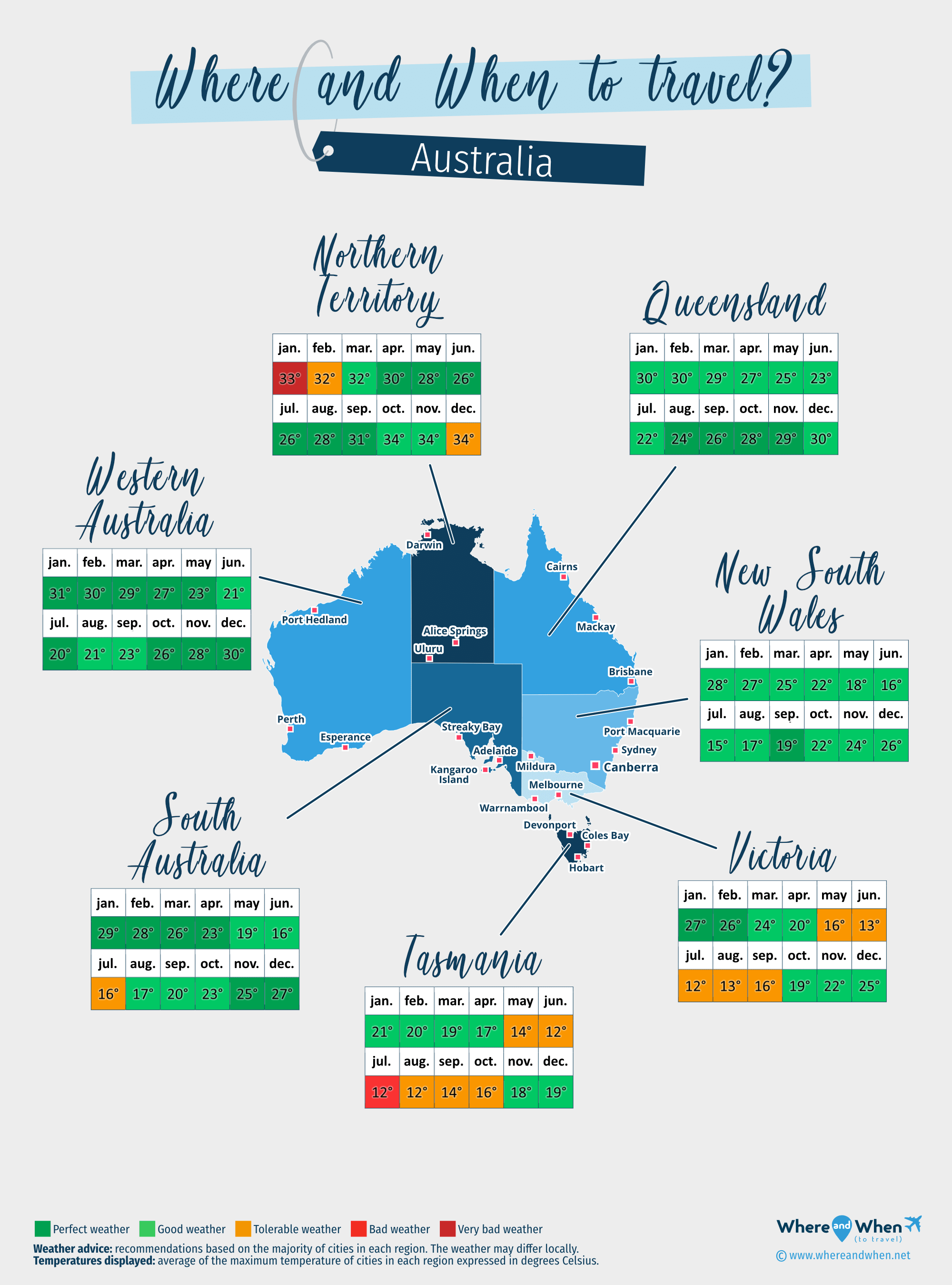
Credit: www.whereandwhen.net
Cheapest Times
The cheapest times to visit Australia fall during the low season, mainly from June to August. During these months, you can find lower prices on flights and accommodations. Tourist crowds are smaller, making it easier to explore popular destinations without the usual hustle. This period is perfect for travelers on a budget who want to enjoy Australia comfortably and affordably.
June To August
June to August marks the Australian winter. This season offers the best deals on travel and stays, especially in southern cities like Melbourne and Sydney. Flight tickets are often cheaper, and hotels lower their rates. You can enjoy a quieter experience at famous landmarks and attractions. Though the weather is cooler, it remains mild in many areas, suitable for sightseeing and city tours.
Winter Travel Benefits
Winter travel in Australia means fewer tourists. You avoid long lines and crowded places. Many attractions offer special winter promotions and discounts. The cooler climate is ideal for exploring urban areas and cultural sites without the summer heat. Wildlife viewing can also be rewarding during this time. Overall, winter provides a calm and budget-friendly way to see Australia.
Great Value Times
Australia offers great value travel times that balance cost and comfort. These shoulder seasons bring pleasant weather and fewer crowds. Visitors can enjoy beautiful landscapes without peak season prices. Planning a trip during these periods means saving money and experiencing more.
March To May
Autumn in Australia runs from March to May. The weather cools down and becomes more comfortable. Flight and hotel prices drop from summer highs. Northern regions stay dry, perfect for outdoor adventures. Southern areas bloom with colorful wildflowers. This period suits travelers seeking calm and savings.
September To November
Spring arrives from September to November. Temperatures warm, but stay mild and pleasant. Deals on flights and accommodations continue. Wildlife becomes active, with baby animals seen in many parks. Wildflowers bloom across landscapes, creating stunning views. This season offers nature lovers a peaceful escape.
Seasonal Highlights
Both shoulder seasons avoid Australia’s hot summer and cold winter extremes. March to May provides crisp air and fall colors in southern states. September to November brings renewal and vibrant life after winter. These times help travelers experience Australia’s natural beauty. Visitors enjoy fewer tourists and better prices.
Times To Avoid
Australia offers amazing experiences year-round. Yet, some times bring challenges for travelers. Knowing when to avoid helps plan a better trip. High prices and crowds can spoil the fun. Some months bring extreme weather or busy holidays. Here are key periods to watch out for.
December To February
This period marks the Australian summer. It is the hottest time, especially in the north. Temperatures often rise above 35°C (95°F). Humidity is very high in tropical regions. Heavy rains and storms occur often, causing travel disruptions.
Beaches and tourist spots get very crowded. Many locals take holidays, increasing travel demand. Prices for flights and hotels reach their peak. Booking months in advance is necessary but costly. Expect long lines and busy attractions everywhere.
Peak Season Challenges
Peak season means high costs and crowded places. Popular cities like Sydney and Melbourne fill with visitors. National parks and famous landmarks see heavy traffic. Some tours and activities sell out quickly. It can be hard to find quiet moments or good deals.
Weather can also be a challenge. In summer, heatwaves and humidity affect comfort. In tropical areas, monsoon rains may limit outdoor plans. Travelers should prepare for sudden weather changes. Planning indoor activities as backups is wise during this time.
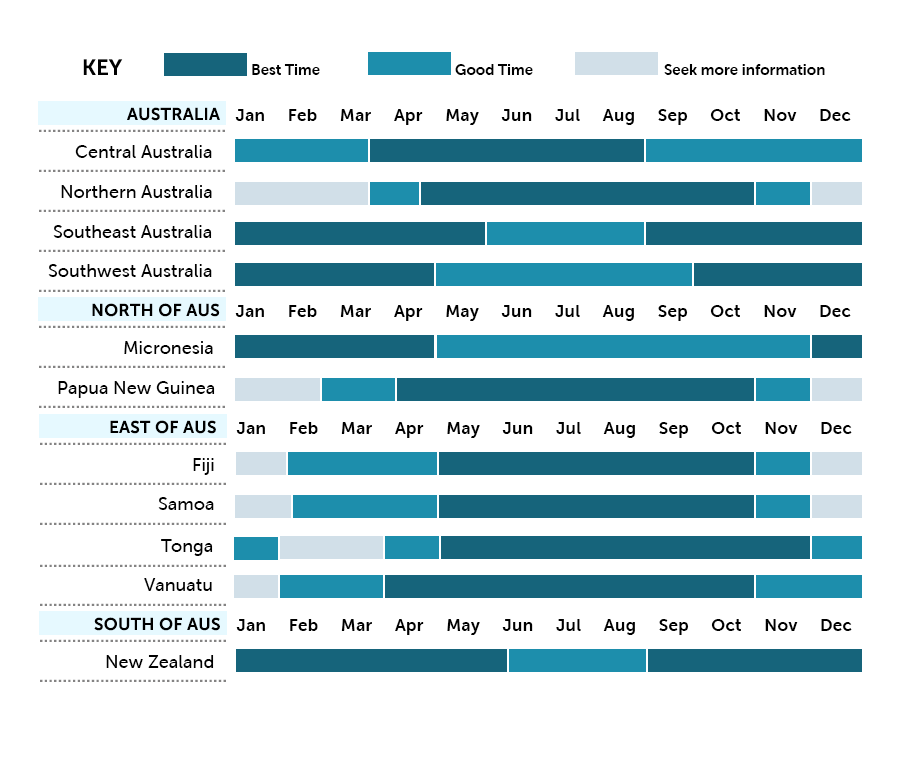
Credit: www.responsibletravel.com
Budget Travel Tips
Traveling to Australia on a budget is possible with the right planning. Small changes in your travel dates and destinations can save you a lot. Budget travel tips help you enjoy more without spending too much. These simple ideas make your trip affordable and fun.
Fly Mid-week
Flights are cheaper on Tuesdays, Wednesdays, and Saturdays. Airlines lower prices mid-week because fewer people travel then. Booking flights on these days can cut your travel costs. Avoid weekends and holidays for the best deals.
Book In Advance
Booking flights and hotels early often means lower prices. Prices rise as the travel date gets closer. Plan your trip and reserve your tickets weeks or months ahead. This helps you avoid last-minute high costs and limited options.
Explore Northern Regions
The northern parts of Australia offer good weather during the southern winter. These areas are less crowded and often cheaper at this time. Places like Queensland and the Great Barrier Reef have affordable stays and outdoor fun. Exploring north saves money and gives you a warm escape.
Seasonal Weather Patterns
Australia’s vast landscape creates diverse seasonal weather patterns. These patterns shape the best time to visit each region. Understanding the climate helps plan a comfortable and enjoyable trip. The country mainly experiences tropical and temperate zones. Each zone has distinct weather throughout the year.
Tropical Wet And Dry Seasons
The northern part of Australia features a tropical climate. It has two main seasons: wet and dry. The wet season runs from November to April. Expect heavy rains, high humidity, and occasional storms. Travel can be difficult due to flooding and heat. The dry season is from May to October. It brings mild temperatures and clear skies. This is the ideal time to visit northern areas like Queensland and the Great Barrier Reef. Outdoor activities thrive during the dry months.
Southern City Climates
Southern cities such as Sydney, Melbourne, and Adelaide have four distinct seasons. Summers (December to February) are warm to hot, perfect for beaches and festivals. Winters (June to August) are cool and sometimes rainy, but still pleasant for city tours. Spring and autumn offer mild weather and fewer tourists. These shoulder seasons provide a great balance of comfort and lower prices. Visitors should prepare for variable weather with layers. The southern climate suits travelers who enjoy seasonal changes and city life.
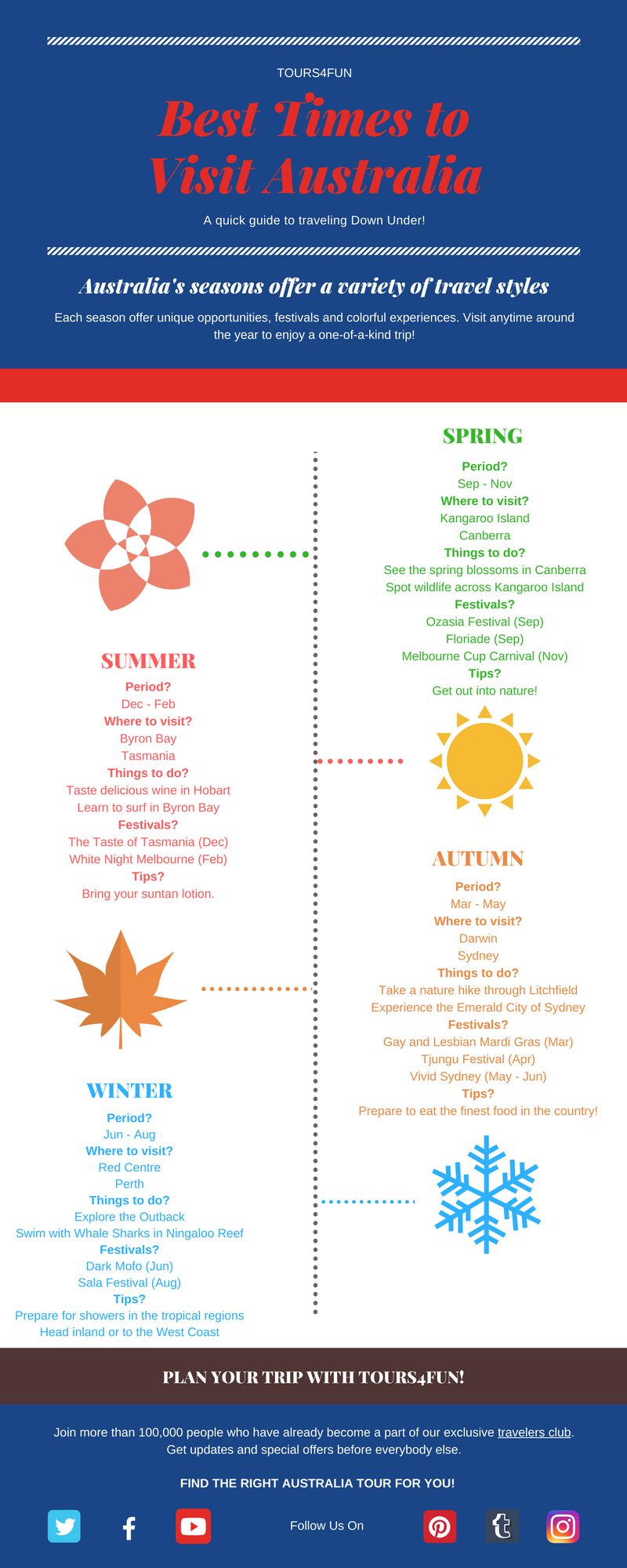
Credit: blog.tours4fun.com
Best Months For Wildlife
Australia offers rich wildlife experiences almost year-round. Certain months highlight unique animal behaviors and natural events. These periods allow travelers to see native animals in their active seasons.
Choosing the right months enhances wildlife spotting chances. Spring and autumn stand out for diverse animal activity and comfortable weather. These seasons showcase the best of Australia’s natural beauty and wildlife.
Spring Wildlife Viewing
Spring runs from September to November in Australia. It is a prime time for spotting young animals. Many species give birth during this season, making it ideal for baby animal sightings.
Wildflowers bloom, attracting insects and birds. Kangaroos and wallabies are often seen with their joeys. Whale watching along the coast peaks as whales migrate north.
National parks bustle with activity. Reptiles become more visible as they warm in the sun. Birdwatchers enjoy seeing colorful species returning from migration.
Autumn Nature Highlights
Autumn lasts from March to May. It offers cooler temperatures and fewer crowds. Animals prepare for winter, changing their behavior noticeably.
Marine life remains active, with dolphins and seals often spotted near shores. Forests turn golden, providing stunning backdrops for wildlife photos.
Many animals gather near water sources as rivers dry up. This concentrates wildlife, making sightings easier. Autumn also brings the chance to see nocturnal animals emerging earlier.
Frequently Asked Questions
What Is The Cheapest Time Of The Year To Go To Australia?
The cheapest time to visit Australia is during its low season, from June to August. Shoulder seasons, March to May and September to November, also offer great deals with pleasant weather. Avoid peak summer, December to February, when prices and crowds increase significantly.
What Month Is The Hottest In Australia?
The hottest month in Australia is January. Temperatures peak during this summer month, especially in inland and northern regions.
Which Month Is The Rainy Season In Australia?
The rainy season in northern Australia occurs from November to April. Southern regions experience rain mostly in winter, June to August.
How Many Days In Australia Is Enough?
A 7 to 10-day trip covers major highlights like Sydney, Melbourne, and the Great Barrier Reef. For deeper exploration, plan 2-3 weeks.
Conclusion
Choosing the best time to visit Australia depends on your budget and interests. Winter months offer lower prices and fewer tourists. Shoulder seasons bring pleasant weather and good deals. Avoid summer for high costs and crowded spots. Plan your trip around these times to enjoy Australia fully.
Remember, each season shows a different side of this diverse country. Whether you want beaches, wildlife, or city life, timing matters. Happy travels!