Good Travel Fishing Rod
Embarking on a fishing adventure shouldn’t mean leaving your favorite hobby behind. A good travel fishing rod is engineered for convenience, allowing anglers to pursue their passion anywhere, from remote rivers to international coastlines. This guide will help you understand the essential features, types, and considerations for selecting a durable, versatile, and highly portable fishing rod that fits your travel style and fishing ambitions.
Good Travel Fishing Rod
There’s a special kind of freedom that comes with travel. Exploring new places, experiencing different cultures, and chasing new horizons. For many of us, this wanderlust extends to our hobbies, and few hobbies merge with travel as seamlessly as fishing. Imagine casting a line in the pristine waters of a secluded mountain lake, battling a spirited fish off a tropical beach, or even trying your luck in an urban canal in a foreign city. These dreams are entirely within reach, but they all hinge on one crucial piece of gear: a good travel fishing rod.
Gone are the days when a fishing trip meant a cumbersome, full-sized rod strapped precariously to the roof of your car or carefully stowed in specialized, oversized luggage. Today’s advancements in fishing tackle technology have made it possible to carry a high-performance fishing rod almost anywhere your adventures take you. But with so many options available, how do you choose a good travel fishing rod that truly meets your needs? This comprehensive guide is designed to walk you through everything you need to know, ensuring your next fishing adventure, near or far, is a resounding success.
Key Takeaways
- Portability is Paramount: A good travel fishing rod breaks down into multiple pieces or telescopes, fitting easily into luggage or backpacks without compromising performance.
- Durability and Material Matter: Look for rods made from strong, lightweight materials like graphite or high-modulus carbon fiber, ensuring they withstand travel rigors and diverse fishing conditions.
- Versatility is a Plus: The best travel rods often handle a range of lure weights and line types, making them suitable for various species and fishing environments you might encounter.
- Choose Between Telescopic and Multi-Piece: Telescopic rods offer ultimate compactness, while multi-piece rods (3-6 pieces) often provide a feel closer to a traditional one-piece rod with enhanced durability.
- Consider Rod Action and Power: Matching the rod’s action (how much it bends) and power (its lifting strength) to your target species and fishing style is crucial for an enjoyable and effective experience.
- Protect Your Investment: Always use a sturdy travel case or tube to prevent damage during transit, ensuring your good travel fishing rod arrives safely at your destination.
- Pair with a Good Travel Reel: A balanced setup requires a compact, reliable reel that complements your travel rod, making the entire kit easy to carry and assemble.
Quick Answers to Common Questions
What is the main advantage of a good travel fishing rod?
The main advantage is superior portability, allowing anglers to easily transport their rod in luggage or backpacks, making fishing accessible during any trip without compromising performance.
Are telescopic or multi-piece travel rods better for serious anglers?
Multi-piece travel rods are generally preferred by serious anglers because they offer better sensitivity, action, and durability, closely mimicking the feel of a one-piece rod compared to telescopic designs.
What rod power is most versatile for a good travel fishing rod?
A medium-light to medium power rod is often considered the most versatile, as it can handle a wide range of lure weights and fish sizes across various freshwater and light saltwater scenarios.
How do I protect my travel fishing rod during air travel?
Always use a hard, sturdy rod tube or case when traveling, especially for checked luggage. This protects the rod from impacts and crushing that can occur during handling.
Can a good travel fishing rod be used for both freshwater and saltwater?
Yes, many versatile travel rods can be used for both. However, for saltwater use, it’s crucial that all rod components (guides, reel seat) are corrosion-resistant, and the rod should be thoroughly rinsed with fresh water after each use.
📑 Table of Contents
- The Essence of a Good Travel Fishing Rod: Portability Meets Performance
- Telescopic vs. Multi-Piece: Deciding Your Travel Companion
- Key Features to Look for in a Good Travel Fishing Rod
- Matching Your Rod to Your Adventure: Destination and Species
- Essential Accessories and Maintenance for Your Travel Setup
- Conclusion
The Essence of a Good Travel Fishing Rod: Portability Meets Performance
What exactly defines a good travel fishing rod? At its core, it’s a rod designed with portability in mind, without sacrificing the feel, strength, or sensitivity of a traditional full-sized rod. This is a delicate balance, and manufacturers have made incredible strides in achieving it. When you’re looking for a good travel fishing rod, you’re essentially seeking a tool that can break down or collapse into a compact form, making it easy to transport, yet assemble into a reliable, high-performing instrument capable of landing fish.
Why Portability is Key for Anglers on the Move
- Ease of Transport: The most obvious benefit. A compact rod fits into suitcases, backpacks, overhead compartments on planes, or even discreetly behind your car seat. This eliminates oversized luggage fees, awkward handling, and the risk of damage that comes with less protected transport.
- Spontaneity: A good travel fishing rod allows for impromptu fishing opportunities. See a promising stretch of water on a road trip? Pull out your compact rod and make a few casts. This spontaneity adds an exciting dimension to any journey.
- Versatility in Destinations: Whether you’re flying to an island paradise, hiking into a remote wilderness, or cruising on a boat, a travel rod makes it feasible to bring your passion along, regardless of the mode of transport or the destination’s accessibility.
The Performance Factor: Not Just a Gimmick
Early travel rods often had a reputation for being flimsy or lacking sensitivity. Thankfully, that’s largely a thing of the past. Modern materials and engineering mean that a good travel fishing rod can offer:
- Strength: Capable of handling significant fighting power from various fish species.
- Sensitivity: Allowing you to feel subtle bites and understand what’s happening beneath the water’s surface.
- Casting Accuracy: Enabling precise lure placement, crucial for successful fishing.
- Durability: Built to withstand the rigors of travel and diverse fishing environments.
Finding a good travel fishing rod means not having to compromise on your fishing experience, no matter where you are.
Telescopic vs. Multi-Piece: Deciding Your Travel Companion
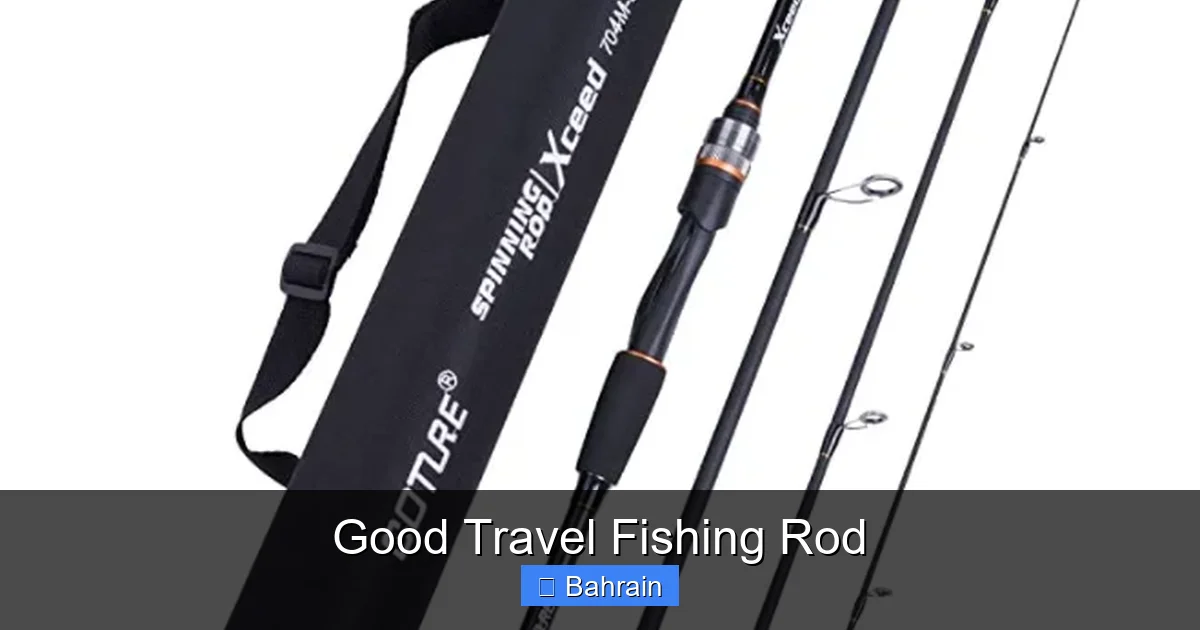
When searching for a good travel fishing rod, you’ll encounter two primary designs: telescopic and multi-piece rods. Each has its unique advantages and disadvantages, and the best choice for you will depend on your specific travel style and fishing preferences.
Visual guide about Good Travel Fishing Rod
Image source: fishmasters.com
Telescopic Travel Rods: The Ultimate in Compactness
Telescopic rods, much like a telescope, slide into themselves, collapsing down into a very short package. They are often incredibly convenient and can be deployed rapidly. This type of good travel fishing rod is a favorite for those who prioritize extreme compactness.
- Pros:
- Maximum Portability: Collapses into the shortest length, often fitting into smaller bags or even car glove compartments.
- Quick Setup: Extend and you’re ready to fish in seconds.
- Generally Affordable: Often a more budget-friendly option.
- Cons:
- Reduced Sensitivity: The multiple overlapping sections and guides can sometimes dampen feel.
- Potential for Guide Alignment Issues: Guides can occasionally twist out of alignment, requiring readjustment.
- Durability Concerns: Joints can sometimes stick, and grit can get trapped between sections if not cared for properly.
A good travel fishing rod of the telescopic variety is ideal for spontaneous fishing, backpacking, or situations where space is extremely limited.
Multi-Piece Travel Rods: Performance with Portability
Multi-piece rods break down into several distinct sections, typically 3 to 6 pieces, which then fit into a compact rod tube. These rods generally offer a feel much closer to a one-piece rod and are often preferred by serious anglers who still want portability. If you’re looking for a good travel fishing rod that performs like your home rod, this is often the way to go.
- Pros:
- Superior Performance: Fewer joints and more consistent material construction mean better sensitivity, casting action, and power.
- Enhanced Durability: Less prone to sticking or breakage at connection points compared to some telescopic designs.
- Easier to Repair: If one section breaks, it might be possible to replace just that section.
- Cons:
- Less Compact Than Telescopic: While still very portable, the shortest broken-down length is usually longer than a telescopic rod.
- Slightly Longer Setup Time: Requires assembling multiple pieces.
- Can Be More Expensive: Higher-quality materials and construction often lead to a higher price point.
A good travel fishing rod in a multi-piece configuration is an excellent choice for anglers who prioritize performance and durability for extended trips or challenging fishing conditions.
Key Features to Look for in a Good Travel Fishing Rod
Beyond the basic telescopic or multi-piece design, several other characteristics contribute to making a good travel fishing rod. Paying attention to these details will ensure you pick a rod that’s not just portable, but also effective and enjoyable to use.
Rod Material and Construction
- Graphite (Carbon Fiber): The most common material for a good travel fishing rod due to its excellent strength-to-weight ratio and sensitivity. High-modulus graphite offers even greater sensitivity and lightness but can be more brittle.
- Fiberglass: More durable and flexible than graphite, making it ideal for heavier applications or for anglers who are rough on their gear. Less sensitive and heavier, but very forgiving.
- Composites: A blend of graphite and fiberglass, aiming to offer a balance of sensitivity, strength, and durability. Often a good all-around choice for a versatile travel rod.
Rod Action and Power
These terms describe how and where the rod bends (action) and how much force it can withstand (power).
- Action:
- Fast Action: Bends mostly near the tip. Great for sensitivity and quick hook sets, good for single hooks.
- Moderate Action: Bends in the top half. Offers a good balance of casting distance and fish-fighting power, suitable for various lures.
- Slow Action: Bends throughout the entire blank. Excellent for casting light lures and providing a natural bait presentation, ideal for small fish or fly fishing.
- Power (or Weight):
- Ultra-Light to Light: For small fish and light lines.
- Medium-Light to Medium: Versatile for a range of freshwater and light saltwater species.
- Medium-Heavy to Heavy: For larger fish, heavier lures, and challenging conditions.
A good travel fishing rod often falls into the medium-light to medium power range with a moderate-fast action, offering broad versatility for varied conditions.
Rod Length and Number of Pieces
Consider the total assembled length. Shorter rods (5-6 feet) are great for tight quarters, while longer rods (7-9 feet) offer better casting distance and leverage. The number of pieces dictates the packed length, with 4-piece rods being a popular compromise for a good travel fishing rod.
Reel Seat and Guides
- Reel Seat: Look for a sturdy, corrosion-resistant reel seat (often made of aluminum or reinforced nylon) that securely holds your chosen reel.
- Guides: Guides should be smooth, durable, and corrosion-resistant, especially if you plan on saltwater fishing. Ceramic inserts (like Alconite or SiC) are excellent for reducing line friction and preventing wear.
Handle Material and Design
Cork and EVA foam are common. Cork offers a traditional feel and good grip, while EVA foam is more durable and easier to clean. Choose a handle that feels comfortable in your hand and provides a good grip, even when wet. A good travel fishing rod will have a comfortable handle for extended use.
Matching Your Rod to Your Adventure: Destination and Species
The “best” good travel fishing rod isn’t a one-size-fits-all solution. Your ideal rod will largely depend on where you’re going and what you plan to catch. Thinking about your typical fishing scenarios will help narrow down your choices.
Freshwater Travel Fishing
For freshwater pursuits like trout in mountain streams, bass in local ponds, or panfish, a lighter setup is often preferred. A 6-7 foot medium-light to medium power rod with a fast or moderate-fast action would be a good travel fishing rod choice. A 3 or 4-piece graphite rod is usually perfect, offering sensitivity for lighter bites and enough backbone for decent-sized fish. Paired with a 1000-2500 size spinning reel, you’re set for most freshwater challenges.
Saltwater Travel Fishing (Inshore)
If your travels take you to coastal areas for species like snapper, permit, or smaller barracuda, you’ll need something more robust. A good travel fishing rod for inshore saltwater would typically be 7-8 feet, medium to medium-heavy power, with a moderate-fast action. Corrosion resistance in all components (guides, reel seat) is absolutely critical. Multi-piece rods are favored here for their added strength. A 3000-4000 size spinning reel with a good drag system is a must.
Heavy-Duty or Offshore Travel Fishing
Planning to target larger game fish like tuna or mahi-mahi on an offshore charter? While most travel rods aren’t designed for extreme big game, some heavy-duty 3 or 4-piece casting or spinning rods exist. These would be in the heavy power range, 6-7.5 feet long, with robust guides and reel seats. This niche requires a very specialized and often more expensive good travel fishing rod. Always check with your charter operator if bringing your own heavy tackle is feasible and what specifications they recommend.
Specialized Travel Rods (Fly Fishing, Ultra-Light)
Don’t forget specialized options! Many excellent multi-piece travel fly rods are available, breaking down into 4-7 pieces for ultimate portability. Ultra-light travel spinning rods are fantastic for panfish, smaller trout, and even micro-fishing, offering immense fun with tiny lures and light lines. Identifying your primary target will greatly influence your choice of a good travel fishing rod.
Essential Accessories and Maintenance for Your Travel Setup
Having a good travel fishing rod is only part of the equation. To ensure longevity and peak performance, proper accessories and diligent maintenance are crucial, especially when traveling.
Protecting Your Investment: Rod Tubes and Cases
This is non-negotiable. A sturdy rod tube or case is essential for protecting your good travel fishing rod from impacts, crushing, and bending during transit. Hard cases made of PVC or aluminum offer the best protection, especially for checked luggage. Soft cases are suitable for carrying by hand or in a backpack where the rod is less likely to be directly impacted. Ensure the tube is long enough for the longest piece of your rod and padded internally.
The Perfect Partner: Travel Reels
A good travel fishing rod needs a compatible reel. Choose a compact, durable spinning or baitcasting reel that balances well with your rod. Look for models known for their smooth drag systems and corrosion resistance, especially for saltwater use. Ensure the reel size is appropriate for the line weight your rod is designed for.
Other Handy Travel Fishing Accessories
- Compact Tackle Box/Bag: A small, organized tackle box or bag with essential lures, hooks, weights, and tools.
- Fishing Multi-Tool: Pliers, line cutters, and other basic tools in one compact unit.
- Line: Spool your reel with fresh line before each trip, and carry a spare spool if possible.
- Fishing License: Always check local regulations and acquire the necessary licenses for your destination.
Maintenance on the Go and Post-Trip
Travel rods, by their nature, are exposed to diverse environments. Regular cleaning is vital.
- Rinse After Every Trip: Especially for saltwater fishing. Rinse your rod and reel with fresh water to remove salt and grit.
- Wipe Down Sections: For telescopic rods, carefully extend and wipe down each section to remove dirt and sand, which can cause sticking.
- Inspect Joints: Regularly check ferrules on multi-piece rods for wear or damage.
- Lubricate: A small amount of ferrule wax can help multi-piece rods seat securely and prevent sticking.
- Store Properly: When not in use, store your good travel fishing rod in its case, in a cool, dry place.
Conclusion
The world is full of fishing opportunities, and a good travel fishing rod is your ticket to exploring them all. No longer do you need to compromise on performance for portability. With the right knowledge and careful consideration, you can find a rod that fits perfectly into your luggage and delivers an exceptional fishing experience, whether you’re chasing trout in the mountains or battling snappers off the coast of Bahrain.
Remember to consider the type of rod (telescopic or multi-piece), its material, action, power, and the specific needs of your destination and target species. Invest in a quality rod tube and pair it with a suitable travel reel. With proper care and preparation, your good travel fishing rod will open up a world of angling adventures, creating unforgettable memories wherever your travels may lead you. So, pack your bags, grab your compact rod, and get ready to cast into the unknown!
Frequently Asked Questions
What materials are best for a durable yet lightweight travel fishing rod?
High-modulus graphite (carbon fiber) is widely considered the best material for a good travel fishing rod, offering an excellent balance of strength, sensitivity, and lightness. Composite blends of graphite and fiberglass also provide a good mix of durability and performance.
How many pieces should a good travel fishing rod break down into for optimal portability?
For optimal portability combined with good performance, a good travel fishing rod typically breaks down into 3 to 6 pieces. This allows it to fit into standard luggage while maintaining a feel close to that of a traditional one-piece rod.
Is there a specific length range that is ideal for a good travel fishing rod?
While lengths vary by target species, a good travel fishing rod often falls within the 6 to 8-foot range when assembled. Shorter lengths are good for tight spaces, while longer rods offer better casting distance and leverage, making 7 feet a popular versatile choice.
What type of reel should I pair with a good travel fishing rod?
A compact and durable spinning reel is the most common and versatile choice for a good travel fishing rod, especially for multi-purpose use. Ensure the reel size balances well with the rod’s power and is suitable for the line weight you plan to use.
How important is the rod’s action for a travel fishing rod?
The rod’s action (how much it bends) is very important as it affects casting distance, sensitivity, and hook-setting ability. A moderate-fast to fast action is often recommended for a good travel fishing rod as it provides a versatile balance for various lures and fishing techniques.
Can I really find a good travel fishing rod that performs as well as a one-piece rod?
While a one-piece rod will always have a slight edge in pure sensitivity and uninterrupted action, modern multi-piece travel rods have closed the gap significantly. Many high-quality travel rods offer performance that is virtually indistinguishable from their one-piece counterparts for most anglers and fishing situations.