Travel Trailer Receiver Hitch
Embarking on a travel trailer adventure requires understanding your hitch. The travel trailer receiver hitch is the crucial connection between your tow vehicle and trailer, ensuring safety and stability on the road. This guide covers its types, components, vital weight ratings, and essential maintenance, helping you choose and use the right setup for a secure and enjoyable journey.
Dreaming of open roads, stunning landscapes, and the freedom to explore? For many in Bahrain and around the world, a travel trailer offers just that – a home on wheels, ready for adventure. But before you hit the highway, there’s one incredibly important piece of equipment that often goes unnoticed until you need it: the travel trailer receiver hitch. This unassuming component is the literal link between your vehicle and your dreams, and understanding it is paramount for a safe and enjoyable journey.
Think of your travel trailer receiver hitch as the handshake between your tow vehicle and your trailer. A strong, secure, and properly chosen handshake means a smooth, controlled ride. A weak or incorrect one, however, can lead to dangerous situations and unwanted stress. This article is your friendly guide to everything you need to know about these vital pieces of equipment, ensuring you tow with confidence and peace of mind.
The Foundation of Your Adventure: What Exactly Is a Travel Trailer Receiver Hitch?
At its core, a travel trailer receiver hitch is a robust steel assembly bolted to the frame of your tow vehicle. It features a square opening, known as the receiver tube, designed to accept various hitch accessories like a ball mount. This setup allows you to connect your travel trailer securely, transferring the trailer’s weight and forces safely to your tow vehicle.
It’s much more than just a piece of metal; it’s an engineered component designed to withstand significant forces, vibrations, and stresses that come with towing. Every aspect, from its construction material to its mounting points, is critical for maintaining control of your travel trailer on diverse terrains and at varying speeds.
Key Takeaways
- Crucial Connection: The travel trailer receiver hitch is the primary link between your tow vehicle and travel trailer, paramount for safe towing.
- Understand Weight Ratings: Always know your Gross Trailer Weight (GTW), Tongue Weight (TW), and the weight capacities of both your hitch and tow vehicle. Exceeding these limits is extremely dangerous.
- Receiver Hitch Classes: Hitches are classified (Class I-V) based on their weight capacity, which must match or exceed your trailer’s requirements.
- Weight Distribution Systems (WDS): Essential for most travel trailers, a WDS helps distribute tongue weight more evenly, improving stability, handling, and braking performance.
- Regular Inspections are Vital: Before every trip, inspect your hitch components, hitch ball, safety chains, and wiring for wear, damage, or proper connection.
- Proper Installation and Maintenance: Ensure your travel trailer receiver hitch is installed correctly, either by a professional or with careful DIY, and maintain it with regular cleaning and lubrication.
- Safety First: Always double-check all connections, use safety chains, and consider a breakaway system for added security.
Quick Answers to Common Questions
What is the most common size for a travel trailer receiver hitch?
Most travel trailers, especially mid-sized to larger ones, utilize a 2-inch receiver tube for their travel trailer receiver hitch, as it offers a good balance of strength and versatility.
Can I use any hitch ball with my travel trailer receiver hitch?
No, the hitch ball diameter must exactly match the size of your travel trailer’s coupler. Using an incorrect size can lead to dangerous disconnections or damage.
Is a weight distribution system always necessary for a travel trailer?
While not always legally required for smaller trailers, a weight distribution system (WDS) is highly recommended for most travel trailers, especially those over 5,000 lbs, to improve stability, handling, and safety.
How often should I inspect my travel trailer receiver hitch?
You should perform a thorough visual inspection of your travel trailer receiver hitch, hitch ball, and all connections before every single trip, no matter how short.
What is tongue weight, and why is it important for a travel trailer?
Tongue weight is the downward force the travel trailer exerts on the tow vehicle’s hitch ball. It’s crucial for stability; too little can cause sway, and too much can overload the tow vehicle, ideally it should be 10-15% of the trailer’s total weight.
📑 Table of Contents
- Understanding the Core Components of Your Travel Trailer Receiver Hitch System
- Weight Ratings and Capacities: The Golden Rule of Towing Safety
- Choosing the Right Travel Trailer Receiver Hitch for Your Adventure
- Maintenance and Safety Tips for Your Travel Trailer Receiver Hitch
- Conclusion: Safe Travels Await!
Understanding the Core Components of Your Travel Trailer Receiver Hitch System
While the term “travel trailer receiver hitch” often refers to the entire setup, it’s actually comprised of several critical components that work together. Knowing what these are and their functions is essential for safe operation.
The Receiver Tube and Ball Mount
- Receiver Tube: This is the square opening on your hitch, typically 1.25, 2, or 2.5 inches. The size dictates which ball mounts and accessories you can use. Most travel trailers require a 2-inch or 2.5-inch receiver for adequate strength.
- Ball Mount (Drawbar): This accessory slides into the receiver tube and is secured by a hitch pin and clip. It provides the platform for the hitch ball. Ball mounts come in various lengths, rises, and drops to ensure your travel trailer rides level. Achieving a level trailer is crucial for stable towing and proper weight distribution.
The Hitch Ball and Coupler
- Hitch Ball: Mounted onto the ball mount, the hitch ball is the direct connection point for your travel trailer. Hitch balls come in different diameters (e.g., 1-7/8″, 2″, 2-5/16″). It is absolutely critical that the hitch ball diameter matches the size of your travel trailer’s coupler.
- Coupler: This is the mechanism located on the front of your travel trailer’s A-frame. It latches onto the hitch ball, forming a secure connection. A properly seated and locked coupler is non-negotiable for safety.
Safety Chains and Breakaway System
- Safety Chains: These are a legal requirement and a critical backup. They connect your travel trailer’s frame to your tow vehicle’s hitch or frame. In the unlikely event of a primary hitch failure, safety chains prevent your trailer from detaching completely. They should always be crisscrossed underneath the coupler.
- Breakaway Cable and Switch: For travel trailers equipped with electric brakes, a breakaway system is another vital safety feature. If the trailer somehow separates from the tow vehicle, the breakaway cable pulls a pin from a switch, activating the trailer’s electric brakes to bring it to a safe stop. Always connect this cable!
Wiring Harness and Lights
Modern travel trailers rely on a wiring harness to connect their tail lights, brake lights, turn signals, and sometimes electric brakes and battery charging to the tow vehicle’s electrical system. Common connectors include 4-pin, 7-pin, or even 12-pin. Ensure your tow vehicle and travel trailer have compatible connectors and that all lights are functioning before every trip.
Weight Ratings and Capacities: The Golden Rule of Towing Safety
Understanding and respecting weight ratings is perhaps the single most important aspect of safe travel trailer towing. Overlooking these limits can lead to catastrophic failure, loss of control, and serious accidents. Never guess; always check your labels and manuals!
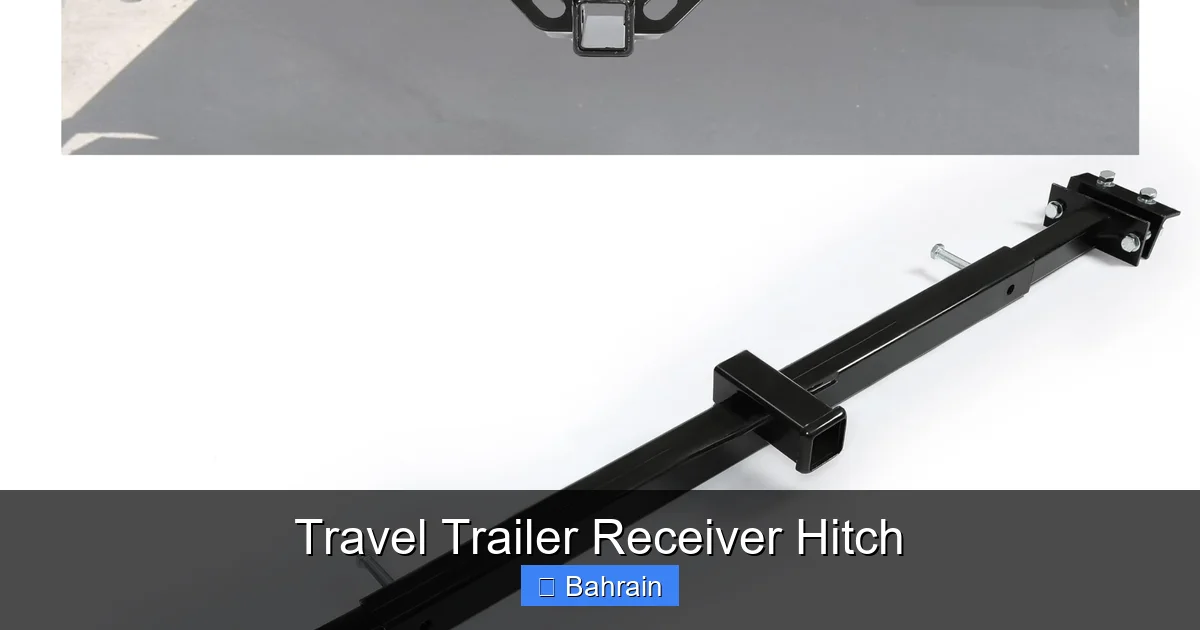
Visual guide about Travel Trailer Receiver Hitch
Image source: m.media-amazon.com
Gross Trailer Weight (GTW) and Tongue Weight (TW)
- Gross Trailer Weight (GTW): This is the total weight of your fully loaded travel trailer, including all cargo, water, and propane. Your travel trailer receiver hitch, ball mount, and tow vehicle all have maximum GTW ratings that must not be exceeded.
- Tongue Weight (TW): This is the downward force exerted by the travel trailer’s coupler onto the hitch ball of the tow vehicle. It’s typically 10-15% of the GTW for travel trailers. Too little tongue weight can cause sway, while too much can overload the tow vehicle’s rear axle and affect steering.
Tow Vehicle’s Towing Capacity
Your tow vehicle also has a maximum towing capacity specified by the manufacturer. This isn’t just about how much it can pull; it includes ratings for GTW, TW, Gross Combined Weight Rating (GCWR – the total weight of the loaded tow vehicle and trailer), and Gross Axle Weight Ratings (GAWR). Always consult your vehicle’s owner’s manual and the sticker on the driver’s side door jamb.
The Role of Weight Distribution Systems (WDS)
For most travel trailers, especially those weighing over 5,000 pounds or having significant tongue weight, a Weight Distribution System (WDS) is highly recommended, often required. A WDS uses spring bars and specialized hitches to distribute a portion of the travel trailer’s tongue weight from the rear axle of the tow vehicle to its front axle and the axles of the trailer. This helps:
- Level the tow vehicle and trailer.
- Reduce rear squat of the tow vehicle.
- Improve steering and braking effectiveness.
- Minimize trailer sway.
When selecting a travel trailer receiver hitch, especially for larger trailers, be sure to choose one that is compatible with a WDS, and then select a WDS with an appropriate weight rating for your setup. Always set up and adjust your WDS carefully according to the manufacturer’s instructions.
Choosing the Right Travel Trailer Receiver Hitch for Your Adventure
Selecting the correct travel trailer receiver hitch is a critical decision. It’s not a one-size-fits-all product. Here’s what you need to consider:
Match the Hitch to Your Trailer and Tow Vehicle
The primary rule is that your travel trailer receiver hitch’s capacity must always meet or exceed the heaviest weight you plan to tow. This means considering your trailer’s GTW and TW when fully loaded. Simultaneously, the hitch must be compatible with your tow vehicle’s frame and its maximum towing capabilities.
Understanding Hitch Class Ratings
Receiver hitches are categorized into classes based on their Gross Trailer Weight (GTW) and Tongue Weight (TW) capacities:
- Class I (Light Duty): Up to 2,000 lbs GTW / 200 lbs TW. Typically 1.25″ receiver. Suitable for small utility trailers or bike racks, rarely for travel trailers.
- Class II (Medium Duty): Up to 3,500 lbs GTW / 350 lbs TW. Typically 1.25″ receiver. Some very small, lightweight travel trailers might use this, but it’s less common.
- Class III (Heavy Duty): Up to 8,000 lbs GTW / 800 lbs TW. Most common for travel trailers, often with a 2″ receiver. Many travel trailers fall into this category.
- Class IV (Super Heavy Duty): Up to 10,000 lbs GTW / 1,000 lbs TW. Often 2″ receiver. For larger travel trailers and heavier loads.
- Class V (Commercial Duty): Up to 17,000 lbs GTW / 1,700 lbs TW. Typically 2.5″ receiver, sometimes 2″. Used for very large travel trailers, toy haulers, or commercial applications.
Always choose a class that comfortably exceeds your trailer’s maximum loaded weight to provide a safety margin.
Factory-Installed vs. Aftermarket Travel Trailer Receiver Hitch
Many trucks and SUVs come with a factory-installed travel trailer receiver hitch. These are generally well-integrated and rated for the vehicle’s capacity. However, if your vehicle doesn’t have one, or if you need a higher-capacity hitch, an aftermarket option is necessary. Aftermarket hitches are available from various reputable brands and are designed to bolt directly onto specific vehicle frames. Ensure any aftermarket hitch meets SAE J684 standards.
Professional Installation vs. DIY
Installing a travel trailer receiver hitch typically involves bolting it to existing holes in your vehicle’s frame. While some mechanically inclined individuals might tackle this as a DIY project, professional installation is often recommended, especially for wiring harnesses and heavier-duty hitches. A professional ensures proper torque specs, correct wiring, and peace of mind that it’s installed safely and securely.
Maintenance and Safety Tips for Your Travel Trailer Receiver Hitch
Once you have the right travel trailer receiver hitch, maintaining it and using it safely is paramount. A little care goes a long way in preventing problems on the road.
Pre-Trip Inspections: Don’t Skip Them!
Before every single trip, take a few minutes to perform a thorough inspection:
- Hitch Connection: Ensure the coupler is fully seated over the hitch ball and the latch is securely locked. Check that the safety pin or clip is in place.
- Hitch Ball and Mount: Inspect the hitch ball for wear, pitting, or rust. Ensure the ball is tightly torqued onto the ball mount. Check the hitch pin and clip securing the ball mount to the receiver.
- Receiver Hitch Body: Look for cracks, bent metal, or excessive rust on the hitch structure itself. Check that all mounting bolts are tight.
- Safety Chains and Breakaway Cable: Ensure they are properly connected (crisscrossed chains, breakaway cable attached to the tow vehicle frame, not the hitch itself).
- Wiring: Confirm the wiring harness is securely plugged in and all trailer lights (tail, brake, turn signals, markers) are working correctly.
Lubrication and Cleaning
Keep your travel trailer receiver hitch and related components clean and lightly lubricated. A light coat of grease on the hitch ball will reduce friction and wear between the ball and coupler. For weight distribution hitches, grease the trunnions or pivot points as per the manufacturer’s instructions. Periodically clean rust and debris from the receiver tube opening.
Proper Hook-up Procedures
Always follow a consistent hook-up checklist. Here’s a typical sequence:
- Back tow vehicle to the trailer, aligning the hitch ball under the coupler.
- Lower the trailer onto the hitch ball, ensuring it’s fully seated.
- Engage the coupler latch and insert the safety pin/clip.
- Connect safety chains, crisscrossing them.
- Connect the breakaway cable.
- Connect the wiring harness.
- Retract the travel trailer’s jack completely.
- Set up your weight distribution system (if applicable).
- Do a final walk-around: check lights, confirm hitch is secure, ensure nothing is dragging.
Driving with a Travel Trailer
Remember that towing changes your vehicle’s dynamics. Drive slower, allow for more stopping distance, make wider turns, and be mindful of crosswinds. Practice in a safe, open area before heading out on busy roads. Always monitor your mirrors for trailer sway, and if it occurs, reduce speed and avoid sudden braking.
Conclusion: Safe Travels Await!
The world of travel trailers offers unparalleled freedom and adventure. By understanding the critical role of your travel trailer receiver hitch and diligently adhering to safety guidelines, you equip yourself for countless memorable journeys. From selecting the right class and capacity to performing regular maintenance and meticulous pre-trip inspections, every step ensures that the connection between your tow vehicle and your cherished travel trailer is as secure as your desire for exploration. So, hitch up safely, hit the road, and let your adventures begin!
Frequently Asked Questions
What is the difference between a weight-carrying hitch and a weight-distributing hitch?
A weight-carrying hitch simply supports the trailer’s tongue weight, while a weight-distributing hitch (used with a WDS) uses spring bars to leverage and distribute that tongue weight more evenly across the axles of both the tow vehicle and the trailer, improving stability and leveling the setup.
How do I know what class of travel trailer receiver hitch I need?
You determine the hitch class needed by knowing your travel trailer’s fully loaded Gross Trailer Weight (GTW) and Tongue Weight (TW). Choose a hitch class (e.g., Class III, Class IV) where the maximum weight capacity comfortably exceeds your trailer’s loaded weights.
Can I install a travel trailer receiver hitch myself?
While some basic travel trailer receiver hitch installations can be done by a DIYer with appropriate tools and mechanical skill, professional installation is recommended, especially for wiring harnesses and heavier-duty hitches, to ensure safety and proper functionality.
What should I do if my trailer starts to sway while towing?
If your travel trailer starts to sway, ease off the accelerator, avoid sudden braking or steering inputs, and gently apply the trailer’s brakes (if you have a manual override on your brake controller) to help stabilize the unit. Once stable, pull over safely to inspect your setup and adjust as needed.
What are the critical safety checks before departing with my travel trailer?
Before every departure, ensure your travel trailer receiver hitch is securely latched and pinned, safety chains are crisscrossed and attached, the breakaway cable is connected, all trailer lights work, and your weight distribution system (if applicable) is correctly set. Also, confirm tire pressures and load security.
How often should I replace my hitch ball?
You should replace your hitch ball if you notice any significant wear, pitting, corrosion, or deformation. Inspect it regularly for cracks or signs of metal fatigue, and replace it if there’s any doubt about its integrity, especially after an accident or hard impact.