Greater Cincinnati Snow Travel Advisories
Navigating winter weather in Greater Cincinnati requires vigilance, and understanding snow travel advisories is crucial for safety. These advisories, issued by local authorities, range from basic cautions to complete road closures, guiding residents on travel decisions. Always check official sources for the latest updates and prioritize preparedness to ensure safe journeys or know when to stay home.
Winter in Greater Cincinnati brings a unique blend of charm and challenge. The crisp air, the potential for picturesque snowfalls, and the cozy feeling of being indoors are all part of the season’s allure. However, with snow comes the critical need for awareness, especially when it comes to travel. Navigating snowy and icy roads can be treacherous, and that’s precisely why Greater Cincinnati snow travel advisories are so important. They are our region’s vital communication system, designed to keep residents safe and informed.
Understanding these advisories isn’t just about knowing if school is canceled or if you can make it to work; it’s about making informed decisions that protect yourself, your loved ones, and everyone else on the road. From a light dusting to a full-blown blizzard, each winter weather event demands a careful approach. This comprehensive guide will walk you through everything you need to know about Greater Cincinnati snow travel advisories, empowering you to stay safe and prepared no matter what winter throws our way.
Key Takeaways
- Understanding Advisory Levels: Greater Cincinnati snow travel advisories typically follow a tiered system (Level 1, 2, 3) indicating varying degrees of hazardous road conditions and recommended actions, from caution to staying off roads entirely.
- Accessing Real-Time Information: Stay updated by checking official sources like county sheriff’s office websites, local news channels (TV, radio, online), Ohio DOT (OHGO.com), and trusted weather apps for the latest Greater Cincinnati snow travel advisories.
- Prioritizing Vehicle Preparedness: Before winter hits, ensure your vehicle is ready for snow with proper tire pressure, good tread, a full tank of gas, functional wipers, and an emergency kit including blankets, jumper cables, and a shovel.
- Practicing Safe Driving Techniques: When advisories are in effect, drive slowly, increase following distance, avoid sudden braking or steering, clear all snow from your vehicle, and use headlights for visibility, even during the day.
- Knowing When to Stay Home: A Level 3 advisory means all non-emergency travel is prohibited. Even lower levels warrant serious consideration for staying home, especially if you lack experience driving in snow or have a vehicle not suited for it.
- Preparing an Emergency Kit: Always have a well-stocked emergency kit in your car with essentials like food, water, first-aid, a flashlight, spare phone charger, and warm clothing to handle unexpected delays or breakdowns.
- Planning Your Routes: Check road conditions before you leave, consider alternative routes that might be less impacted, and inform someone of your travel plans and estimated arrival time, especially during severe weather.
Quick Answers to Common Questions
What are the three levels of Greater Cincinnati snow travel advisories?
The three levels are Level 1 (roads hazardous, drive cautiously), Level 2 (essential travel only, roads very slippery), and Level 3 (all non-emergency travel prohibited, roads extremely dangerous).
Who issues snow travel advisories in Greater Cincinnati?
Greater Cincinnati snow travel advisories are primarily issued by individual county sheriff’s offices, such as Hamilton, Butler, Warren, and Clermont counties in Ohio, and Kenton, Campbell, and Boone counties in Kentucky.
Where can I check for real-time road conditions for major highways?
For major highways in Ohio, including those in Greater Cincinnati, you can check OHGO.com, the official website of the Ohio Department of Transportation. For Northern Kentucky roads, refer to the Kentucky Transportation Cabinet’s traffic information.
What should I do if a Level 3 snow travel advisory is issued?
If a Level 3 advisory is issued, you must stay off the roads completely. All non-emergency travel is prohibited, and you could face legal consequences for non-compliance. Focus on staying safe at home.
What is one essential item to always have in my car during winter in Greater Cincinnati?
Beyond a full tank of gas, a well-stocked emergency kit is essential. This should include blankets, a shovel, jumper cables, non-perishable food, water, and a fully charged cell phone or power bank.
📑 Table of Contents
- Understanding Greater Cincinnati Snow Travel Advisories: What Do the Levels Mean?
- Where to Find Real-Time Greater Cincinnati Snow Travel Advisories and Updates
- Preparing Your Vehicle and Yourself for Winter Travel
- Mastering Safe Driving Techniques in Snow and Ice
- Making the Call: When to Stay Home Despite Greater Cincinnati Snow Travel Advisories
- Post-Storm Recovery and Resources in Greater Cincinnati
Understanding Greater Cincinnati Snow Travel Advisories: What Do the Levels Mean?
When winter weather strikes, local authorities, primarily county sheriff’s departments, issue Greater Cincinnati snow travel advisories to inform the public about road conditions. These advisories typically follow a three-level system, each with specific recommendations and implications for travelers. It’s crucial to understand what each level signifies to make the best decisions for your safety.
Level 1 Snow Travel Advisory: Be Cautious
A Level 1 advisory is the mildest of the three, but it’s still a call to action. It means that roads are hazardous with blowing snow, ice, or limited visibility. While roads might still be passable, conditions could change quickly. The official recommendation is to drive cautiously. This means reducing your speed, increasing your following distance, and being extra vigilant for black ice, especially on bridges and overpasses.
- Practical Tip: If you see a Level 1 advisory, take an extra 10-15 minutes to clear all snow and ice from your vehicle, including the roof, hood, and all windows and lights. Turn on your headlights, even in daylight, to improve visibility for yourself and others.
Level 2 Snow Travel Advisory: Essential Travel Only
When a Level 2 advisory is issued, conditions have deteriorated significantly. Roads are likely very slippery, and only those with a clear necessity should be out. Emergency personnel may be stretched thin, and you risk not only your safety but also impeding first responders if you get into an accident. The public is advised to avoid all non-essential travel. If you must travel, extreme caution is necessary. This often means only traveling if it’s for work, medical appointments, or other critical needs.
- Practical Tip: Before heading out during a Level 2 advisory, consider if your trip can be postponed. If not, check your vehicle’s tires and ensure they have adequate tread. Inform someone of your route and estimated arrival time. Remember that even experienced drivers can struggle in Level 2 conditions.
Level 3 Snow Travel Advisory: All Travel Prohibited
A Level 3 advisory is the most severe and should be taken very seriously. It means that all roads are closed to non-emergency personnel. Conditions are extremely hazardous with widespread blowing and drifting snow and extremely poor visibility. People are urged to stay off the roads completely. Anyone traveling on the roads for non-emergency reasons during a Level 3 advisory could be subject to arrest. This is not a suggestion; it is a directive for public safety. Emergency crews need clear roads to respond to urgent situations, and your presence on the road could hinder their efforts.
- Practical Tip: When a Level 3 advisory is in effect, prioritize staying home. Ensure you have enough supplies for a few days, including food, water, medications, and warmth. This is the time to hunker down and enjoy the safety of your home, knowing that Greater Cincinnati snow travel advisories are designed to protect you.
Where to Find Real-Time Greater Cincinnati Snow Travel Advisories and Updates
Staying informed is your first line of defense against winter’s perils. Knowing where to get the most accurate and up-to-date Greater Cincinnati snow travel advisories is essential. There are several reliable sources you should bookmark and check regularly during winter weather events.
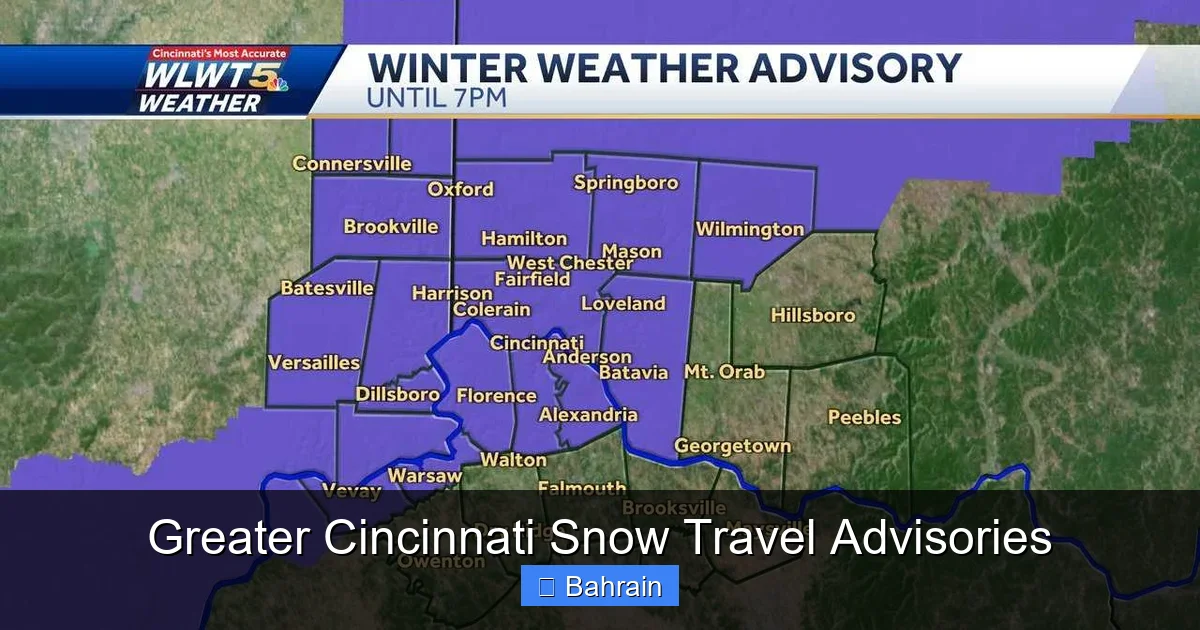
Visual guide about Greater Cincinnati Snow Travel Advisories
Image source: kubrick.htvapps.com
Official County Sheriff’s Offices
The primary issuers of snow travel advisories in Greater Cincinnati are the county sheriff’s offices. For example, the Hamilton County Sheriff’s Office, Butler County Sheriff’s Office, Warren County Sheriff’s Office, and Clermont County Sheriff’s Office (and their counterparts in Northern Kentucky like Kenton, Campbell, and Boone Counties) will post updates directly on their websites and often on their social media channels (Facebook, X/Twitter).
- Actionable Advice: Follow your specific county’s sheriff’s office on social media or bookmark their website. Check these directly for the most authoritative information on Greater Cincinnati snow travel advisories.
Local News Outlets
Greater Cincinnati’s local TV stations (e.g., WLWT, WCPO, FOX19, Local12), radio stations, and their respective websites are excellent sources for consolidated weather and travel information. They typically provide continuous coverage during significant snow events, aggregating advisories from multiple counties and offering detailed weather forecasts.
- Actionable Advice: Tune into a local news channel or visit their websites. Many offer push notifications for severe weather and travel advisories, including specific Greater Cincinnati snow travel advisories.
Ohio Department of Transportation (ODOT) and Kentucky Transportation Cabinet (KYTC)
For state-wide road conditions, including major interstates and state routes within Greater Cincinnati, the Ohio Department of Transportation (ODOT) website, OHGO.com, is an invaluable resource. It offers real-time traffic maps, live camera feeds, and information on road closures and snow plow activity. Similarly, KYTC provides comparable information for Northern Kentucky roads.
- Actionable Advice: Before embarking on any longer journey or using major highways, check OHGO.com or the KYTC traffic site. These resources complement local Greater Cincinnati snow travel advisories by giving a broader picture of road conditions.
Weather Apps and Websites
Reliable weather apps like the National Weather Service (NWS), AccuWeather, or The Weather Channel can provide localized forecasts, radar, and weather alerts. While they might not directly issue travel advisories, they give you the meteorological context for why such Greater Cincinnati snow travel advisories are in place.
- Actionable Advice: Set up weather alerts for your specific location within Greater Cincinnati. This proactive step helps you anticipate when snow travel advisories might be issued.
Preparing Your Vehicle and Yourself for Winter Travel
Being prepared is half the battle when it comes to safe winter travel. Even before the first snowflake falls, you should take steps to ensure your vehicle is ready for the challenges of ice and snow. Proactive preparation can significantly reduce your risk of accidents or getting stranded when Greater Cincinnati snow travel advisories are active.
Vehicle Maintenance Essentials
- Tires: Check your tire pressure regularly, as cold weather can cause it to drop. Ensure your tires have sufficient tread depth for traction on snowy and icy surfaces. Consider winter tires if you frequently drive in challenging conditions.
- Wipers and Fluid: Replace old wiper blades and keep your washer fluid reservoir topped off with a winter-specific fluid that won’t freeze. Clear visibility is paramount.
- Battery: Cold weather can strain car batteries. Get your battery tested to ensure it’s in good condition.
- Antifreeze: Check your coolant levels and ensure your antifreeze is rated for extreme cold.
- Lights: Verify all your headlights, taillights, brake lights, and turn signals are working.
- Fuel: Always try to keep your gas tank at least half full. This prevents fuel lines from freezing and ensures you have enough fuel to run the heater if you get stuck.
Emergency Car Kit
Every vehicle should have an emergency kit, especially during winter. When Greater Cincinnati snow travel advisories go into effect, you’ll be glad you have these essentials:
- Jumper cables
- Flashlight with extra batteries
- First-aid kit
- Warm blankets or sleeping bag
- Bag of sand, salt, or cat litter (for traction)
- Small shovel
- Tow rope
- Non-perishable food and water
- Phone charger/portable power bank
- Basic tools (wrench, pliers)
- Brightly colored cloth or flares for signaling
- Hand warmers
Personal Preparedness
It’s not just your car that needs to be ready. You do too! When venturing out in winter weather:
- Dress in layers, even for short trips.
- Wear waterproof boots with good grip.
- Carry a fully charged cell phone.
- Let someone know your travel plans, route, and estimated arrival time.
Mastering Safe Driving Techniques in Snow and Ice
Even with all the warnings from Greater Cincinnati snow travel advisories, sometimes travel is unavoidable. When you find yourself on snowy or icy roads, adopting specific safe driving techniques can significantly reduce your risk of an accident. Remember, the rules of the road change dramatically in winter conditions.
Slow and Steady Wins the Race
The most important rule is to slow down. Speed limits are for ideal conditions, not for snow and ice. Reduce your speed significantly, especially on curves, ramps, and hills. Accelerate and decelerate gently to avoid skidding.
- Practical Example: If the speed limit is 45 mph, aim for 25-30 mph, or even slower if visibility is poor or roads are very slick.
Increase Following Distance
It takes much longer to stop on slippery surfaces. Increase your following distance to at least 8-10 seconds behind the car in front of you. This gives you more time to react and brake slowly if necessary.
- Practical Example: Find a fixed point on the road ahead. When the vehicle in front of you passes that point, start counting how long it takes for your vehicle to reach the same point. If it’s less than 8 seconds, you’re too close.
Gentle Braking and Steering
Avoid sudden movements. Brake gently and early. If your car has anti-lock brakes (ABS), press firmly and consistently; the system will pulse the brakes for you. If you don’t have ABS, pump the brakes gently. Steer smoothly and avoid sharp turns.
- Practical Example: When approaching a stop sign or red light, begin braking much earlier than you normally would, applying light, consistent pressure.
Look Far Ahead and Anticipate
Scan the road far ahead for potential hazards like stopped vehicles, icy patches, or snowdrifts. The more time you have to anticipate and react, the safer you’ll be. Pay extra attention to bridges, overpasses, and shaded areas, which tend to freeze first and stay icy longer.
- Practical Example: If you see brake lights far ahead, gently ease off the accelerator and be prepared to brake, rather than waiting until you’re closer.
Visibility is Key
Ensure all your windows, mirrors, and lights are completely clear of snow and ice before you start driving. Use your low-beam headlights during snowfalls, even during the day, to make your vehicle more visible to others. High beams can reflect off snow and reduce visibility.
Making the Call: When to Stay Home Despite Greater Cincinnati Snow Travel Advisories
Sometimes, the safest decision isn’t to drive cautiously but to not drive at all. Greater Cincinnati snow travel advisories are there to help you make this critical judgment. While Level 3 advisories explicitly prohibit non-emergency travel, lower levels also warrant serious consideration about staying home.
Assessing Your Own Capabilities
Be honest with yourself about your driving experience in snow. If you’re a new driver, or if you’ve never driven in significant snow before, it’s always best to err on the side of caution. Even a Level 1 advisory can pose a serious challenge for inexperienced drivers. Your safety and the safety of others on the road depend on your judgment.
- Consider this: A Level 1 advisory might be manageable for someone with years of winter driving experience in a four-wheel-drive vehicle. It might be extremely dangerous for a new driver in a compact car with worn tires.
Evaluating Your Vehicle’s Readiness
Does your vehicle have good tires? Is it front-wheel drive, rear-wheel drive, or all-wheel drive? While all-wheel drive offers better traction for accelerating, it doesn’t help you stop any faster on ice. A vehicle with worn tires or one that’s not well-maintained is a hazard in any snow advisory level.
- Practical Example: If you know your tires are nearing the end of their life, even a Level 1 advisory should make you think twice about driving.
Is Your Trip Truly Essential?
This is the core question for Level 2 and Level 3 Greater Cincinnati snow travel advisories. “Essential” means work, medical appointments, or necessary errands like getting food or medication that cannot wait. It does not mean going to the mall, visiting friends, or getting fast food. Every non-essential trip increases the risk for you and for emergency responders who might have to come to your aid.
- Think Ahead: During winter months, try to keep a supply of basic groceries at home so you’re not forced to make a dangerous trip during a snow advisory.
The Economic and Social Impact
Staying home isn’t just about personal safety; it’s also about civic responsibility. When fewer cars are on the road during Greater Cincinnati snow travel advisories, snow plows can clear roads more efficiently, and emergency services can respond faster. Reducing traffic helps the entire community recover from winter storms more quickly.
- Remember: A Level 3 advisory means that if you get stuck, help might be severely delayed, and you could face legal consequences.
Post-Storm Recovery and Resources in Greater Cincinnati
Once the snow stops falling and Greater Cincinnati snow travel advisories begin to be lifted, the work isn’t over. Recovery from a winter storm involves cleanup, dealing with lingering hazards, and knowing where to turn for assistance if needed. The region has resources in place to help residents get back to normal.
Road Clearing and Lingering Hazards
Even after advisories are lifted, roads may still be slick, especially in shaded areas or on less-traveled side streets. Snowplows work tirelessly, but it takes time to clear every road. Keep an eye out for refreezing, particularly overnight, as melted snow can turn to black ice. Watch for snowdrifts that might obscure driveways or crosswalks. Plows may also create new hazards, like snow piles at the end of driveways, which require careful removal.
- Safety First: Give snowplows plenty of space. Do not attempt to pass them, as visibility can be very poor for the operators.
Power Outages and Utility Issues
Heavy snow and ice can lead to power outages. If your power goes out, contact your utility provider (Duke Energy for most of Greater Cincinnati) to report the outage. Have alternative heat sources if possible (safely used) and warm clothing ready. Keep your cell phone charged when power is available, and consider a battery-powered radio for updates.
- Important: Never use a generator indoors or in an attached garage, as carbon monoxide poisoning is a serious risk.
Non-Emergency Assistance
For non-emergency issues during or after a snowstorm (e.g., downed trees not blocking major roads, non-injury accidents), avoid calling 911. Instead, use non-emergency police lines or your local city/county services phone numbers. These numbers can usually be found on the respective government websites.
- Community Support: Keep an eye on your neighbors, especially the elderly or those with medical conditions, to ensure they are safe and have what they need.
Staying Connected for Updates
Even as conditions improve, continue to monitor local news and official county channels for updates on road conditions, school delays/closings, and any ongoing recovery efforts. This ensures you’re aware of any remaining hazards or changes to public services.
Ultimately, Greater Cincinnati snow travel advisories are more than just announcements; they are a community-wide effort to ensure safety and resilience during winter weather. By understanding the levels, knowing where to find information, preparing diligently, driving safely, and making smart decisions about when to stay home, we can all contribute to a safer, smoother winter season in the Queen City and its surrounding areas. Stay warm, stay informed, and stay safe!
Frequently Asked Questions
What is the main purpose of Greater Cincinnati snow travel advisories?
The primary purpose of Greater Cincinnati snow travel advisories is to inform the public about current road conditions and potential hazards during winter weather events. They help residents make informed decisions about whether it is safe to travel, thereby enhancing public safety and reducing accidents.
Are snow travel advisories the same for all counties in Greater Cincinnati?
While the three-level system is generally consistent across the region, each county’s sheriff’s office issues its own Greater Cincinnati snow travel advisories based on conditions specific to that county. Therefore, one county might be at Level 1 while a neighboring one is at Level 2, so always check your specific county.
Can I be fined for driving during a Level 3 snow travel advisory?
Yes, during a Level 3 Greater Cincinnati snow travel advisory, all non-emergency travel is prohibited. Law enforcement can, and often will, issue citations or even make arrests for non-compliance, as your presence on the roads can impede emergency services and put others at risk.
What should I do if I get stranded in my car during a snow advisory?
If you get stranded, stay with your vehicle, which provides shelter. Call for help if you can, turn on your hazard lights, and use your emergency kit to stay warm and visible. Run the engine for short bursts to stay warm, but ensure the exhaust pipe is clear of snow to prevent carbon monoxide buildup.
How often are Greater Cincinnati snow travel advisories updated?
Greater Cincinnati snow travel advisories are updated as frequently as conditions change. During an active snow event, sheriff’s offices and local news outlets provide continuous updates. It’s crucial to check regularly, as advisories can be issued, elevated, or downgraded quickly.
Does my employer have to let me off work if a snow travel advisory is issued?
The decision to close businesses or excuse employees from work during a snow travel advisory is ultimately up to individual employers. While Level 3 advisories strongly suggest staying home, lower levels do not legally mandate it. Always check your company’s specific winter weather policy.