Travel Trailer Leveling Jacks
Properly leveling your travel trailer is not just about comfort; it’s essential for the safety and longevity of your RV and appliances. Travel trailer leveling jacks play a crucial role in achieving this perfect balance, preventing issues from uneven sleeping to refrigerator malfunctions. Understanding the different types and how to use them effectively will significantly enhance your camping experience, making every stop a perfectly stable home away from home.
Hey there, fellow adventurer! Ever pulled into a beautiful campsite, only to realize your travel trailer feels a bit… off-kilter? Perhaps your coffee mug keeps sliding off the table, or you’re rolling out of bed every morning. That’s where the magic of travel trailer leveling jacks comes in! These unsung heroes of the RV world are absolutely vital for a comfortable, safe, and fully functional camping experience.
Imagine spending your hard-earned vacation constantly battling an uneven floor. It’s not just annoying; it can actually impact how your appliances work and even the long-term health of your RV’s structure. Understanding your travel trailer leveling jacks, how they work, and how to use them correctly is a fundamental skill every RV owner should master. So, let’s dive in and demystify these essential components, turning you into a leveling pro in no time!
Key Takeaways
- Essential for Comfort and Safety: Proper leveling with travel trailer leveling jacks prevents discomfort, allows appliances (like refrigerators) to function correctly, and maintains the structural integrity of your RV.
- Distinction Between Leveling and Stabilizing: Leveling jacks lift and bring the trailer to a horizontal plane, while stabilizer jacks primarily reduce rocking and swaying once level, not designed for lifting heavy loads.
- Variety of Types: There are various types of travel trailer leveling jacks, including manual scissor jacks, electric/hydraulic systems, and landing gear, each with its own advantages for different RV types and user preferences.
- Step-by-Step Process is Key: Effective leveling typically involves addressing side-to-side first (often with blocks), then front-to-back (using the tongue jack), and finally deploying stabilizer jacks.
- Regular Maintenance Extends Lifespan: Like any critical RV component, travel trailer leveling jacks require routine cleaning, lubrication, and inspection to ensure reliable operation and prevent costly repairs.
- Accessories Enhance the Experience: Tools like bubble levels, leveling apps, wheel chocks, and leveling blocks are indispensable for an accurate and safe leveling process.
Quick Answers to Common Questions
What’s the main difference between leveling jacks and stabilizer jacks?
Leveling jacks are designed to lift and adjust the trailer to a level position, while stabilizer jacks are intended only to reduce rocking and swaying once the trailer is already level.
Can I use my stabilizer jacks to lift my travel trailer?
No, stabilizer jacks are not designed for lifting heavy loads and using them to level your trailer can cause damage to the jacks or your RV’s frame.
Do I level side-to-side first or front-to-back?
Always level side-to-side first, typically using blocks under the wheels, while your travel trailer is still hitched to the tow vehicle.
Why is my RV refrigerator not working properly when unlevel?
Absorption refrigerators, common in RVs, rely on gravity for their cooling process. If the RV is significantly unlevel, the internal fluids can’t circulate properly, leading to inefficient cooling or damage.
How often should I lubricate my manual scissor jacks?
It’s a good practice to clean and lubricate your manual scissor jacks every few trips, or at least annually, especially after exposure to dirt, dust, or moisture, to ensure smooth operation.
📑 Table of Contents
Why Proper Leveling is Crucial for Your RV Experience
You might think being a little off-level isn’t a big deal, but trust me, it makes a world of difference. Proper leveling goes far beyond just your comfort; it’s about the longevity and functionality of your entire travel trailer. Let’s break down why this seemingly simple task is so important.
Comfort and Well-being
First and foremost, a level RV means a comfortable RV. Nobody wants to sleep on a slope, feel like they’re walking uphill in their own kitchen, or have water pool in one corner of the shower. A properly leveled travel trailer ensures that your bed is flat, your floors are even, and everything just feels right. It makes cooking, sleeping, and simply relaxing so much more enjoyable. Think of it as creating a true home-away-from-home, no matter where you park.
Appliance Functionality
This is a big one! Many RV appliances, especially absorption refrigerators, need to be level to work efficiently and prevent damage. Absorption refrigerators rely on gravity to circulate cooling liquids. If your travel trailer isn’t level, these liquids can pool, preventing proper circulation and potentially causing the refrigerator to overheat or even fail. Similarly, some water heaters and holding tank sensors can also be affected by a significant tilt. Ensuring your travel trailer leveling jacks are used correctly protects these expensive components.
Structural Integrity and Safety
An unlevel trailer puts undue stress on its frame, chassis, and suspension components. Over time, this can lead to twisting, bending, or misalignment, causing doors to stick, windows to leak, or even structural damage. Furthermore, an unstable trailer can be a safety hazard, especially when people are moving around inside. Travel trailer leveling jacks create a stable base, reducing rocking and swaying, making your RV a safer environment for everyone.
Understanding Travel Trailer Leveling Jacks: Types and Functions
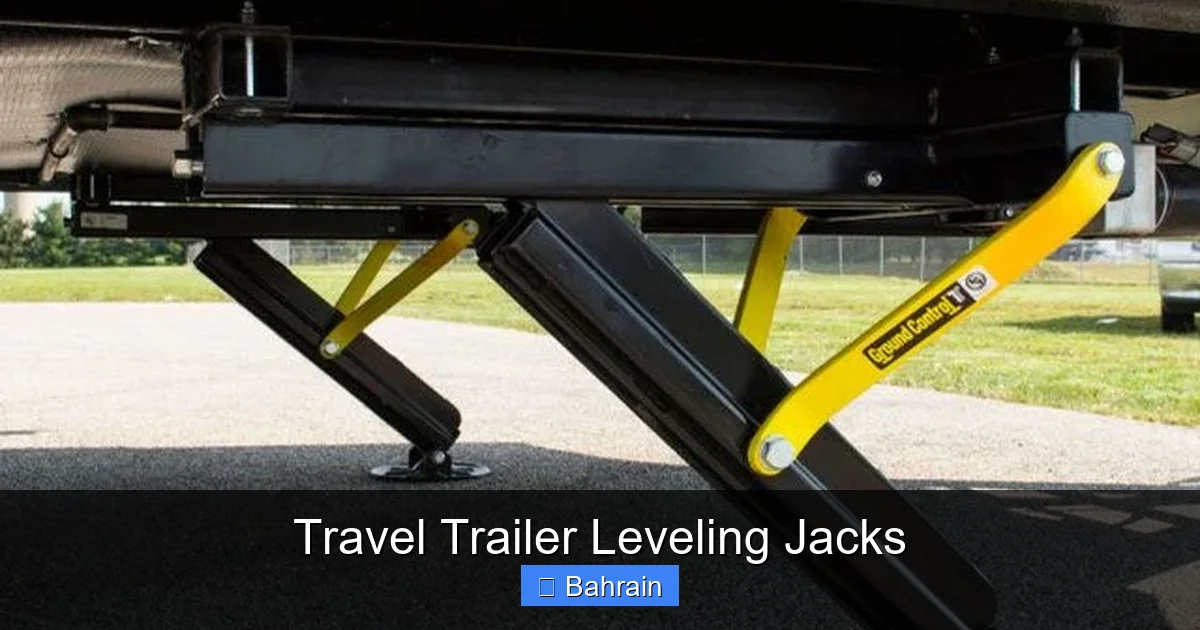
Visual guide about Travel Trailer Leveling Jacks
Image source: i.pinimg.com
When we talk about travel trailer leveling jacks, it’s important to clarify that there are a few different types, and they often serve slightly different purposes. People sometimes confuse “leveling jacks” with “stabilizer jacks,” so let’s clear that up.
Leveling Jacks vs. Stabilizer Jacks
This is the most common point of confusion.
* Leveling Jacks: These are designed to lift and support a significant portion of the trailer’s weight to bring it to a level position. They can lift the RV up or down to correct for uneven terrain. Examples include power tongue jacks, certain types of electric/hydraulic leveling systems, and sometimes even heavy-duty scissor jacks used in conjunction with blocks.
* Stabilizer Jacks: These are designed to reduce movement, rocking, and swaying *after* the trailer has been leveled. They are not typically meant to lift the trailer’s weight and should only be extended until they make firm contact with the ground, providing stability. Using stabilizer jacks to lift your trailer can damage them or your RV frame.
Now, let’s look at the actual travel trailer leveling jacks and stabilization systems you might encounter.
Manual Scissor Jacks
These are probably the most common type found on smaller to medium-sized travel trailers. They are typically cranked by hand using a special tool or a cordless drill with a socket adapter. You’ll usually find four of them – one near each corner of the trailer.
* **Pros:** Relatively inexpensive, simple design, good for stabilization.
* **Cons:** Manual effort required, slower to deploy, often serve more as stabilizers than true leveling jacks (meaning you might need leveling blocks first).
Power Tongue Jacks
Located on the front A-frame of your travel trailer, a power tongue jack lifts and lowers the front of the trailer to connect or disconnect from your tow vehicle, and crucially, to achieve front-to-back leveling.
* **Pros:** Electric operation (no manual cranking), quick and easy for front-to-back adjustments, often standard equipment.
* **Cons:** Only handles front-to-back leveling, needs 12V power.
Electric and Hydraulic Leveling Systems
These are the premium options, often found on larger travel trailers and fifth wheels. These systems typically consist of multiple heavy-duty jacks (often 4 or 6) that are controlled by a central panel.
* **Electric Systems:** Use electric motors to extend and retract the jacks. They are generally quieter and lower maintenance than hydraulic systems.
* **Hydraulic Systems:** Use a hydraulic pump and fluid to extend and retract the jacks. They are incredibly powerful, fast, and can lift heavy trailers with ease, even allowing for automatic leveling at the touch of a button.
* **Pros:** Automatic leveling (for many systems), fast, powerful, precise, minimal effort.
* **Cons:** Expensive, complex to install (if not factory installed), heavier, requires more maintenance for hydraulic fluid levels and potential leaks.
Wheel Chocks and Leveling Blocks
While not “jacks” themselves, these are absolutely critical accessories that work hand-in-hand with your travel trailer leveling jacks.
* **Wheel Chocks:** Essential for safety, these prevent your trailer from rolling, especially when leveling. Always chock your wheels before you start any leveling process!
* **Leveling Blocks:** These are durable plastic blocks that can be stacked like LEGOs under your wheels to achieve side-to-side leveling *before* deploying your jacks. They can also be placed under your jacks to provide extra height or protect them from soft ground.
How to Level Your Travel Trailer: A Step-by-Step Guide
Now that you know the tools, let’s get into the practical application. Leveling your travel trailer is a process, and doing it in the right order makes all the difference.
Step 1: Choose Your Spot and Prepare
Before you even unhitch, pick a relatively flat spot. The flatter the ground, the easier your job will be. Once you’re roughly in position, engage your tow vehicle’s parking brake.
Step 2: Address Side-to-Side Leveling First
This is the most crucial first step. It’s much easier to adjust side-to-side while still hitched to your tow vehicle.
1. **Check Level:** Use a bubble level (or a leveling app on your phone) placed on the floor inside your trailer, or mounted permanently to the outside.
2. **Determine Low Side:** Figure out which side of your travel trailer is lower.
3. **Drive onto Blocks:** Pull your trailer forward so the low side’s wheels can be driven onto leveling blocks. You might need to experiment with how many blocks to stack.
4. **Re-check Level:** Drive back onto the blocks and re-check your side-to-side level. Adjust as needed by adding or removing blocks until you are perfectly level side-to-side.
5. **Chock Wheels:** Once side-to-side is perfect, place wheel chocks firmly in front and behind *all* wheels (both the wheels on the ground and those on the blocks). This is a vital safety step.
Step 3: Unhitch and Level Front-to-Back
Now that your wheels are chocked and your trailer is level side-to-side, it’s time to unhitch and tackle front-to-back leveling.
1. **Lower Tongue Jack:** Use your power tongue jack (or a manual one) to take some weight off the hitch ball.
2. **Unhook Hitch:** Disconnect your safety chains, breakaway cable, and electrical cord. Open your hitch latch and fully separate your trailer from your tow vehicle.
3. **Move Tow Vehicle:** Drive your tow vehicle clear of the trailer.
4. **Adjust Tongue Jack:** Use your power tongue jack to raise or lower the front of the travel trailer until it is perfectly level front-to-back. Again, use your bubble level for accuracy.
Step 4: Deploy Stabilizer Jacks
With your travel trailer now perfectly level, it’s time to reduce movement and make it feel solid.
1. **Lower Stabilizers:** Extend your stabilizer jacks (scissor jacks or other types) at each corner of the trailer until they make firm contact with the ground.
2. **Apply Firm Pressure:** Don’t lift the trailer with them! Just apply enough pressure to make them snug and eliminate wobble. You should be able to feel the trailer become much more stable as you extend them.
3. **Check Movement:** Walk around inside the trailer, feeling for any remaining rocking or swaying. Adjust the stabilizers as needed.
Step 5: Final Check and Enjoy!
Do a final check with your level. Open and close doors, walk around, make sure everything feels solid. Once you’re satisfied, you’re all set to enjoy your perfectly level campsite!
Maintenance and Troubleshooting for Your Leveling Jacks
Your travel trailer leveling jacks are crucial, so giving them a little love and attention will ensure they work flawlessly for years to come. Neglecting them can lead to rust, seizing, or costly repairs.
Routine Maintenance Tips
* **Clean Regularly:** After each trip, especially if you’ve been on dusty or muddy sites, clean any dirt, grime, or road salt off your jacks. A stiff brush and some water usually do the trick. For scissor jacks, pay attention to the screw mechanism.
* **Lubricate Moving Parts:** For scissor jacks, regularly apply a dry lubricant (like silicone spray or graphite) to the screw threads. For hydraulic systems, check the fluid reservoir periodically (refer to your owner’s manual for type and level) and inspect hoses for any leaks or damage. Electric systems might need occasional lubrication of gears.
* **Inspect for Damage:** Before and after each use, visually inspect all components. Look for bent arms, worn gears, loose bolts, cracked welds, or corrosion. Addressing small issues early prevents bigger problems.
* **Check Electrical Connections:** For power tongue jacks and electric leveling systems, ensure all electrical connections are clean, tight, and free of corrosion.
* **Exercise the Jacks:** Even if you’re not moving your trailer, occasionally extend and retract your jacks fully. This helps to keep the mechanisms working smoothly and prevents parts from seizing up.
Common Troubleshooting Scenarios
* **Jack Won’t Extend/Retract:**
* **Power Tongue Jack/Electric System:** Check the fuse, battery charge, and electrical connections. Listen for the motor; if it hums but nothing moves, there might be a mechanical issue or a stripped gear.
* **Manual Scissor Jack:** Could be seized due to rust or lack of lubrication. Try cleaning and applying penetrating oil. If it’s bent, it might need replacement.
* **Jacks Are Slow or Weak (Hydraulic System):** Check the hydraulic fluid level. Low fluid is a common culprit. Also, inspect for leaks in hoses or fittings.
* **Excessive Wobble After Leveling:** You might be relying too much on your stabilizer jacks to lift the trailer. Re-evaluate your side-to-side leveling with blocks and ensure the stabilizers are just snug, not lifting. Sometimes, adding wheel chocks or X-chocks between tandem wheels can also greatly reduce movement.
* **Jacks Sink into Soft Ground:** Always place sturdy blocks or jack pads under your travel trailer leveling jacks, especially on asphalt (to prevent sinking in hot weather) or soft soil. This distributes the weight and protects your jacks.
Advanced Tips and Leveling Accessories
While the basics cover most situations, a few extra tips and tools can make your leveling process even smoother and more precise.
Invest in Good Levels
Beyond a basic bubble level, consider installing permanent levels on the outside of your trailer for quick visual checks. There are also digital levels and apps that use your phone’s accelerometer to give highly accurate readings. Some even guide you on exactly how many blocks to use.
X-Chocks for Added Stability
If you have a tandem axle trailer, X-chocks are fantastic. These devices fit between your wheels and expand to create outward pressure, significantly reducing front-to-back movement and sway, complementing the work of your travel trailer leveling jacks and stabilizers.
Jack Pads and Wheel Chock Extensions
Always use sturdy jack pads under your leveling jacks to prevent them from sinking into soft ground or damaging asphalt. For larger tires or very uneven ground, wheel chock extensions can help your chocks get a better grip.
Consider Permanent Leveling Systems
If you’re tired of manual leveling, and your budget allows, a permanent automatic electric or hydraulic leveling system can be a game-changer. These systems level your trailer at the push of a button, saving time and effort, and delivering perfect precision every time.
Conclusion
Mastering the art of using your travel trailer leveling jacks is a fundamental skill that will elevate your RV adventures. It’s not just about stopping that rolling coffee cup; it’s about protecting your investment, ensuring your appliances function as they should, and most importantly, guaranteeing a safe and comfortable retreat wherever you roam.
By understanding the different types of jacks, following a methodical leveling process, and committing to regular maintenance, you’ll ensure your travel trailer is always a perfectly stable and enjoyable home-away-from-home. So, the next time you pull into a campsite, you’ll do so with confidence, knowing you have the knowledge and tools to create your ideal setup. Happy leveling, and happy travels!
Frequently Asked Questions
What tools do I absolutely need for leveling my travel trailer?
You’ll definitely need a good bubble level (or a leveling app), sturdy wheel chocks to prevent rolling, and leveling blocks to correct side-to-side imbalances. A crank handle for manual jacks or a cordless drill with a socket can also be very helpful.
How important are wheel chocks during the leveling process?
Wheel chocks are incredibly important for safety. They prevent your travel trailer from rolling, especially when you’re unhitching or making adjustments. Always place them firmly against your wheels before you begin leveling.
Can extreme temperatures affect my leveling jacks?
Yes, extreme temperatures can affect your leveling jacks. Very cold weather can thicken hydraulic fluid, making hydraulic systems slower. Hot weather can cause jacks to sink into asphalt if not properly supported by jack pads.
Is it okay to just eyeball the level if I’m not staying long?
While tempting for short stops, eyeballing is generally not recommended. Even a slight tilt can be uncomfortable and potentially affect appliances. Taking a few extra minutes to achieve proper level with your travel trailer leveling jacks is always worth it.
What should I do if my leveling jacks are sinking into soft ground?
If your jacks are sinking, use wider, sturdy jack pads or blocks underneath them to distribute the weight over a larger surface area. You can also dig out a small, level area for the pads if the ground is very soft.
My automatic leveling system isn’t working. What’s the first thing I should check?
First, ensure your RV’s battery is fully charged, as these systems draw a lot of power. Also, check any fuses related to the leveling system. If it’s a hydraulic system, verify the fluid reservoir level. If these don’t resolve the issue, consult your owner’s manual or a professional.